It is, somehow, the middle of the year already, and we’ve already had a lot of really great television in 2026. With that comes great music — but you don’t have to take the IndieWire Craft team’s word for it. We reached out to a number of our favorite composers to ask them about what has caught their ears in terms of the best TV scores so far this year. We got back a wave of appreciation for inventive, wild, and unforgettable scores that have helped make some of the best moments of TV this year.
Also some the best TV moments of last year, too — we got a few honorable mentions from late 2025, including for Jeff Russo’s work on “Alien: Earth” (“Hacks” composer Carlos Rafael Rivera can’t get the cue “Siblings” out of his head) and Dave Portman’s score for “Pluribus,” which Russo told IndieWire he loved as a fantastic example of how you can use strings to “punctuate the odd and unnerving.”
We’ve also included a couple of honorable mentions from 2025 where the composers we reached out to really dug into what made those scores memorable, including the challenge of Chris Bacon’s “Wednesday” score elevating a massive reveal right at the end, and a classic thriller sound where the melody modulates our feeling of safety in Sean Callery and Sara Baron’s score for “The Beast in Me.”
But IndieWire reader, if you love “Widow’s Bay,” well, you and Finneas O’Connell have something in common. David Fleming’s score for the extremely cursed (affectionate) Apple TV series won praise from many composers we reached out to, even if it wasn’t their pick for best of the year so far. They pointed out that “Widow’s Bay” can ride the line — or “bounce,” as “The Pitt” songwriter Gavin Brivik put it — between horror and comedy, and be great at both, which is no mean feat. “The sense of harmony feels abstract in a way that bypasses the usual musical pathways of your brain and really immerses you in the storytelling,” Dan Romer, composer for “A Knight of the Seven Kingdoms,” told IndieWire.
“‘The Stone Room’ was an immediate standout for me,” O’Connell told IndieWire. “It walks the tightrope between horror and comedy SO well. Tension and a playfulness that doesn’t take away from the many scares. Don’t think it would be the same show at all with any other score.”
But there was also praise for Romer’s work on “A Knight of the Seven Kingdoms” — Dan Deacon, composer for “Task,” told IndieWire that it “ruled,” which is appropriate — and a lot of love for O’Connell’s synth-heavy score for “Beef.” Daniel Pemberton has had a hell of a year scoring everything from “Project Hail Mary” to “The Drama” to “Masters of the Universe,” as well as the music for “Slow Horses” (along with TOYDRUM); he told IndieWire, “The ending cue for ‘Beef’ by Finneas had such a fantastic piercing sound and emotional punch. [It’s] so hard to get something that elegant and impactful.”
Read on to learn more about the TV shows with standout scores in 2026 (so far).
Shows are listed in alphabetical order.
-
“Beef” — Finneas O’Connell
Image Credit: COURTESY OF NETFLIX I’m always impressed when a synth score is able to draw out real emotion, and I think Finneas was able to do that beautifully on “Beef.” As a composer, it can be easy to fall back on the power so naturally inherent to an emotive string performance, but in the wrong setting, it can push away a modern audience by signaling a feeling before it’s actually felt. This season’s story is so much about people putting blocks between themselves and their own deep hurt or the hurt of others.
By restraining himself to a synth palette, Finneas was able to tap into the quiet but corrosive pain welling up behind all those carefully constructed walls. When the dams finally begin to break, it’s that much more impactful because of all the elegant restraint that preceded it. Nowhere is that more viscerally felt than “Vicious Thoughts,” a cue which perfectly caps off the story. The diving synth melody cuts through so much unexpressed hurt and provides real catharsis in a way that’s disarming and unexpected. — David Fleming, “Widow’s Bay”
The ending cue for “Beef” by Finneas had such a fantastic, piercing sound and emotional punch. So hard to get something that elegant and impactful. Great work. — Daniel Pemberton, “Slow Horses”
-
“The Chair Company” — Keegan DeWitt
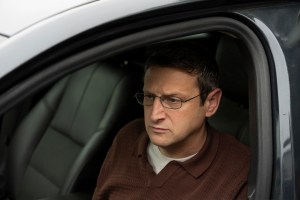
Image Credit: Sarah Shatz/HBO One of the zaniest and most adrenaline-inducing scores I’ve heard in a minute! So many amazing choices for sounds, percussion in particular. Everything was incredibly effective at enhancing the feelings of stress, claustrophobia, and general WTF while watching this amazing series. Loved it. — Nathan Micay, “Industry”
I really loved Tim Robinson, Zach Kanin, Andrew DeYoung, and Keegan DeWitt. “Friendship” was a highlight of 2024 for me. Keegan’s score did an amazing job of keeping the series’ energy perfect, helping to focus the world of the show expertly off-center without ever standing in the way of the humor or the action. — Dan Deacon, “Task”
-
“Lord of the Flies” — Cristobal Tapia de Veer
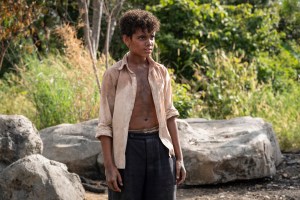
Image Credit: J Redza/Eleven/Sony Pictures Television Cristobal‘s work in the show was absolutely astounding. Every time a score cue came in, I couldn’t help but get lost in the music. I was finding myself rewinding scenes because I was so blown away by his writing. The music is unexpected and orchestral with lush choirs, which contrasts with the very raw natural atmosphere of the show. One would think to go more tribal and found sound percussion, but I love that they went grand and operatic. — Gavin Brivik, songwriter for “The Pitt”
-
“Something Very Bad Is Going to Happen” — Colin Stetson
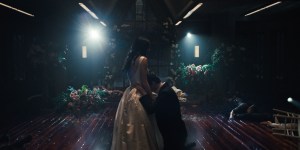
Image Credit: COURTESY OF NETFLIX I’m always a fan of Colin Stetson. I think he’s one of the most inventive and original voices working in TV. This series is yet again a great example of how varied he can be, yet still create a very recognisable and unique sound world — I love the unexpected approaches and sounds he creates. I’m always excited to hear what he does. — Daniel Pemberton, “Slow Horses”
-
“Widow’s Bay” — David Fleming
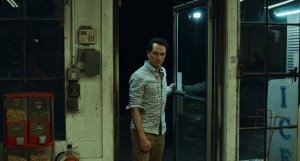
Image Credit: ©Apple TV/Courtesy Everett Collection I have loved watching “Widow’s Bay” so much and have thoroughly enjoyed David Fleming’s score — It walks the tightrope between horror and comedy SO well. Tension and a playfulness that doesn’t take away from the many scares. Don’t think it would be the same show at all with any other score. “The Stone Room” was an immediate standout for me. — Finneas O’Connell, “Beef”
Dave’s “Widow’s Bay” score perfectly captures the idyllic New England island town setting, and also sets us up brilliantly for the thrilling, and sometimes downright horrifying, adventures that befall the main characters. I particularly love how the score blends traditional orchestral colors — woodwinds especially — with electronics and vocals to create a sonic identity that is totally unique. Dave’s score enhanced this show tenfold, and I think that he delivered one of the finest scores for a series in recent years! — Cameron Moody, “Washington Black”
The sense of harmony feels abstract in a way that bypasses the usual musical pathways of your brain and really immerses you in the storytelling. The score’s also able to be both fun and truly scary at the same time, which is no small feat. The sliding vocal textures seem to be a huge part of how that works, as well as the woodwinds when they’re playing in such small note ranges. They kind of make you let go of the scale you think you’re supposed to be hearing. — Dan Romer, “A Knight of the Seven Kingdoms”
-
Seriously, “Widow’s Bay”
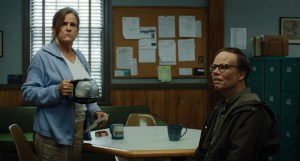
Image Credit: ©Apple TV/Courtesy Everett Collection We first became aware of David Fleming through the TV series “Mr. & Mrs. Smith.” What struck us most was the way he carried such a strong melodic theme throughout the score. With “Widow’s Bay,” he has done something similar, creating a world that feels playful, distinctive, and entirely its own. The score brilliantly captures the series’ unique blend of comedy and horror, moving from quirky, off-kilter passages to darker, more unsettling themes, while remaining cohesive and concise throughout. Eerie vocals, unusual percussion, and pizzicato strings are combined in fresh and inventive ways, yet the music never loses sight of melody. Balancing the dark, the creepy, and the fun is no easy feat, but David achieves it effortlessly. Looking forward to season 2! — TOYDRUM, composers for “Slow Horses”
“Widow’s Bay” has some great score moments by Dave Fleming. I think the show carefully bounces the silly more playful musical ideas along with the traditional horror. That always feels like a hard line to bounce. — Gravin Brivik, songwriter for “The Pitt”
-
Honorable Mention: “The Beast in Me” — Sean Callery and Sara Barone
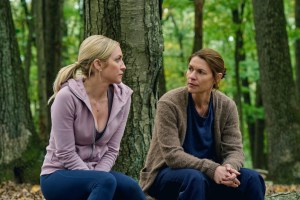
Image Credit: Chris Saunders/Netflix © 2024 I do love a thriller score. Sean and Sara crafted something that is both compelling and spare. It never seemed to be on the nose. The sparseness was so effective in getting me to lean in before the unexpected, and then a melody to make it all ok. So much is hidden in plain sight, you don’t know that it’s guiding you until it’s too late. This score always kept me guessing. — Jeff Russo, “Alien Earth”
-
Honorable Mention: “Wednesday” — Chris Bacon
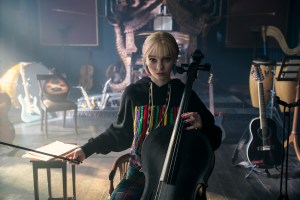
Image Credit: BERNARD WALSH/NETFLIX My favorite score of the year is Chris Bacon’s work on the second season of “Wednesday.” What I love is that he does not just make the world bigger. He takes an established musical universe and lets it expand until the finale feels almost operatic. The final episode of Season 2 is a great example of something that, at least in my mind, is very hard to do: Keep raising the stakes without wearing out the audience.
That finale is basically a chain of climaxes. Agnes and Enid’s rescue is massive enough to feel like the episode’s climax, but then the Isaac and Thing sequence has to go harder, as it is such a massive reveal. Then there’s the Tyler moment, revealing who is terrifying as the Hyde, still leaves room for the wounded kid underneath. Those are very different musical assignments, and the score moves between them without calling attention to the gear shift. That is what I admire most here. The orchestra is huge when it needs to be, but the writing is disciplined. It follows story, not size. Chris gives the episode scale, but he never loses the character at the center. — Carlos Rafael Rivera, “Hacks”