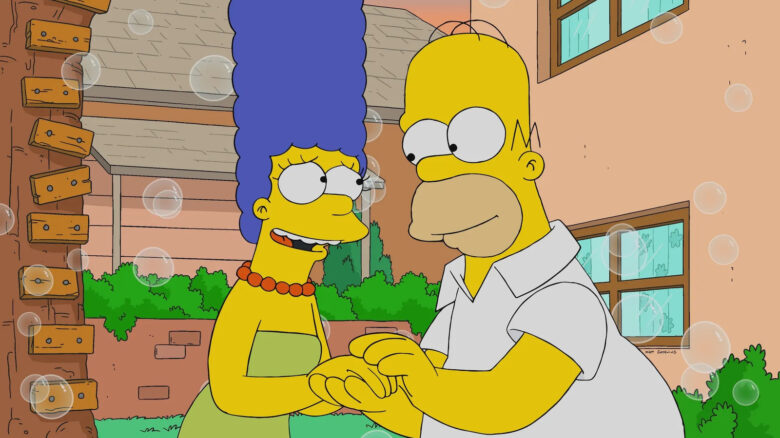
“Underachiever and proud of it, man” was a slogan on a Bart Simpson T-shirt that got it banned from several public schools. “The Simpsons,” the show from which it derived, however, has done anything but underachieve. Thirty-seven seasons in, it has become the longest primetime scripted series ever, and shows no signs of stopping, with a second theatrical film on the horizon, as of this writing.
Many imitators have arisen since, and indeed, “The Simpsons” itself imitated several landmark shows that came before it. In coming up with a list of further shows to recommend, we’ve considered many of its strong suits. It’s an animated family sitcom in which perfect endings aren’t a given. It expanded beyond one flawed family into the massively populated fictional town of Springfield, full of eccentric supporting characters who evolved over time. It also helped prove animation could appeal to viewers of all ages, while popularizing the kind of pop-culture satire that now shows up throughout modern animated comedy.
Here are 15 of the best shows that check off one or more of those key traits; shows that inspired it or were likely inspired by it, for many more hours of similar entertainment.
Family Guy

Fox’s other well-known animated family-centered sitcom with edgy humor is like “The Simpsons” cranked up to ten, and the only reason not to use Spinal Tap’s hyperbolic 11 is that “Family Guy” is still allegedly held to network TV standards and practices. Where Homer Simpson is a bumbling fool, Peter Griffin is an absolute imbecile. Bart Simpson’s a naughty kid? Stewie Griffin is literally a genius-level supervillain. Lisa Simpson feels neglected because of her smarts and activism? Meg Griffin is overtly rejected and insulted by her family.
Only in the mom category does “Family Guy” feel more earthbound — Lois Griffin comes across as a more fully realized character who has to put up with all this crap from her clan, while Marge Simpson often fills a more traditional sitcom-mom role. The creepiest character on “The Simpsons” is either drunken has-been Krusty or the Scrooge-like boss Mr. Burns, whereas “Family Guy” gives us Herbert the Pervert and James Woods as himself.
Additionally, “Family Guy” is even more obsessed with pop culture than “The Simpsons,” full of cutaway gags that often feel like whatever random movie or TV reference went through creator Seth MacFarlane’s head that day.
Bob’s Burgers
If “Bob’s Burgers” had gone with its original pitch of a family of cannibals who make burgers from their victims, it might have been the sort of thing Peter Griffin would actually watch. It would also likely never have aired on network TV. It’s sufficiently ambitious as is — an animated family sitcom that’s also a workplace comedy, because cartoon realities need not follow real-life child labor laws, and they’re all voiced by adults.
“Bob’s Burgers” reverses the Homer-Marge dynamic, with Bob a more pragmatic patriarch and wife Linda the more impulsive one. Their kids are as smart as Lisa and Bart, but weirder — teenage Tina is obsessed with writing fanfics, Gene is easily distracted and over-imaginative, and Louise, always wearing her pink bunny ears, is an often-malicious schemer. “Simpsons” fans at first may see the contrasting animation style and the bizarre specifics and not feel immediately in the comfort zone. Ultimately, though, the loving yet dysfunctional dynamic and social satire hit similar grooves.
The Honeymooners
Virtually every sitcom featuring an oafish, overweight, working-class husband who dreams big yet sometimes lets his temper get the best of him owes a debt to “The Honeymooners.” If you want to know where Homer Simpson came from, he can easily be traced back to Ralph Kramden, Jackie Gleason’s scheming bus driver on “The Honeymooners.” Though the actual series lasted only a year, its impact feels outsized in part because Gleason had previously done the characters in sketches, and continued to revive them occasionally throughout the rest of his career.
Being animated, Homer could deliver on threats Ralph couldn’t. Though the latter infamously threatened to punch his wife “to the moon,” he never delivered, which was the joke at the time. Homer, on the other hand, could actually strangle Bart, albeit less so after the shock value wore off.
Unlike many of the shows that came after, “The Honeymooners” didn’t include kids, and mainly focused on the escapades of Kramden and best friend Ed Norton (Art Carney). Yet the dynamic between Ralph and Alice (Audrey Meadows) set the stage for sitcom spouses for generations, influencing countless family comedies that followed.
King of the Hill
Though it’s animated, “King of the Hill” adheres to the rules of reality more than “The Simpsons” does, but otherwise, it plays like a region-specific variant. A nuclear family with a simple, working-class patriarch and a smart but occasionally myopic wife mine similar humor from parental dynamics. In the town of Arlen, they also finally have a neighborhood that’s as rich in wacky characters as Homer’s Springfield.
While “The Simpsons” was ultimately guided ideologically by creator Matt Groening’s artistic liberalism, “King of the Hill” tells similar familial comedy stories from a moderate conservative position that’s more Texan. It’s also a bit more specific; while Homer’s neighbor Ned Flanders is a benevolent cartoon of a zealous Christian, for example, Hank’s pal Dale is a believably paranoid conspiracy theorist who could actually live in your town.
Arlen is more grounded than Springfield, but Hank is as easily taken aback as Homer and as righteous when he feels wronged. The Hills were allowed to naturally age in ways “The Simpsons” never were, thanks to Hulu’s revival. By having Hank and Peggy return to Texas after a long stretch working in Saudi Arabia, the new episodes create a “family out of time” effect as they struggle to adapt to modern American life.
At the end of the day, though, Hank and Homer both love nothing better than a beer with the guys.
South Park
When “South Park” aired an episode that repeatedly declared “Simpsons did it!” every time Butters tried to conceive a new evil plot, it wasn’t just a catchphrase. It felt like a direct cry of frustration from the show creators Trey Parker and Matt Stone that too many of their show’s episodes felt like unintended “Simpsons” rip-offs.
While “South Park” and its eponymous town are definitely similar to Springfield in “The Simpsons,” its basic cable and streaming nature allows for much more envelope-pushing. The kids of “South Park” are way more foul-mouthed than Bart Simpson, who might occasionally say “wiener.” Designated dumb dad Randy Marsh is as stubborn and oblivious as Homer Simpson, but you’ll never see Homer irradiate his own scrotum. Celebrities want to be guest voices on “The Simpsons,” but should be very afraid if “South Park” decides to mock them unmercifully.
“The Simpsons” is generally safe for kids, and “South Park” mostly isn’t, but they’re both unafraid to show that families who love each other can be hugely dysfunctional. Also, they live in very strange towns with an outsized influence on the world at large.
The Tracey Ullman Show
If you love “The Simpsons” and haven’t seen “The Tracey Ullman Show,” you don’t fully know “The Simpsons,” for it was here that they began, as interstitial short cartoons. They don’t quite look and sound the same, as Groening would refine the designs and Dan Castellaneta was still finding Homer’s distinctive voice. Loosely based on Groening’s own family, these Simpsons shorts often featured Homer and Marge coming off clueless as to how their behavior was freaking out the kids.
As for the rest of the show, it was unconventional for a U.S. sketch comedy show in that it starred an English woman, and didn’t really do specific satire like “Saturday Night Live.” Rather, it was primarily character-based comedy, with Ullman assuming a variety of appearances and accents. Ullman’s comedy can be a bit of an acquired taste, and won’t necessarily appeal to all “Simpsons” fans; however, the show belongs on this list for introducing America to the yellow-skinned clan, and those shorts that, while rough, remain classics.
The Flintstones
The limited animation and groan-worthy dad puns based on rocks and stones feel almost as ancient as the caveman times being humorously depicted, but there would likely be no “Simpsons” without “The Flintstones.” It was the original primetime cartoon to riff on the template set by “The Honeymooners.”
Before Homer Simpson, Fred Flintstone was the original bowling-loving, food-enjoying, working-class cartoon family man with a short temper and facial stubble designated by a boundary line. Barney Rubble was Ed Norton to Fred’s Ralph Kramden, usually ready to back him up but often coming out of situations better than Fred. Homer Simpson worked at the high-tech nuclear power plant, while Fred worked at the most advanced installation in his hometown of Bedrock: a dinosaur-driven quarry.
What “The Flintstones” added to the formula they borrowed was kids: precocious Pebbles and super-strong Bamm-Bamm. Hanna-Barbera evidently understood that to aim at the whole family, they needed characters that kids could relate to as well. Most similar shows since then, from “The Jetsons” to “Family Guy,” have expanded on the child characters in different ways.
Futurama
It figures that if you like one Matt Groening-designed cartoon, you might like another. “Futurama” isn’t remotely the same premise as “The Simpsons,” but it has a very similar comedic sensibility. Rather than riffing on the family sitcom format, “Futurama” plays like a dysfunctional “Star Trek,” following the adventures of an intergalactic package delivery service crew a thousand years in the future.
Lazy protagonist Philip Fry, a delivery guy from our era who awakens from a cryogenic chamber in the future, is a bit like what Bart Simpson might become if he stays an underachiever forever. Similarly, his colleague and eventual love interest Leela, a one-eyed mutant, shares some metaphorical DNA with Lisa Simpson as the group’s sensible voice. Their other coworkers wouldn’t feel entirely out of place in Springfield: penny-pinching bureaucrat Hermes, drunken robot Bender, distracted heiress Amy, mad scientist Farnsworth, and inept alien physician Zoidberg.
“The Simpsons” feels like it’s been on the air forever; “Futurama” feels like it has come back from cancellation more times than any other series. There’s just something about Matt Groening animated comedies… Or is there? (See next item.)
Disenchantment
Three times wasn’t quite the charm, longevity-wise, for Groening-designed animation. That’s probably because “Disenchantment,” created for Netflix, isn’t written to be a perennial show with self-contained episodes in the same way “Futurama” and “The Simpsons” were. Rather, as the streaming model tends to demand, it’s more of a continuing story designed to play out over a finite number of seasons, with a definite series finale. Nonetheless, fans of Groening’s previous work should cotton to it once they get into its rhythm. There’s even a brief “Futurama” crossover moment to help win fans over.
Again, the protagonist is an underachiever, though she’s more like a female version of Bender than Fry or Bart: an irresponsible alcoholic princess named Bean who travels with a literal personal demon named Luci and a goofball half-elf helpfully named Elfo. With more of a fantasy quest narrative, it relies less on a return to familiarity every episode and features a longer, slower story arc rollout.
The Critic
Created by “Simpsons” writers Al Jean and Mike Reiss, “The Critic” evolved from a pitch they had for a Krusty the Clown spin-off show. In its final form, however, it centered on movie critic Jay Sherman, voiced by Jon Lovitz. Though just as sarcastic as Krusty, Sherman was still a relative success in his field, appearing on a TV network run by a Ted Turner-ish caricature named Duke Phillips. “The Critic” focused as much on Jay’s family life as a single dad with eccentric adoptive parents as it did his showbiz-adjacent career.
Like Homer Simpson, Jay Sherman was paunchy, balding, and possessed an endless appetite, similarities emphasized in a crossover episode with “The Simpsons.” Aesthetically, the shows looked very different, and Jay wasn’t a perfect visual match for “The Simpsons” even colored yellow. Yet Jean and Reiss’ comedy stylings translated very easily from one show to another, with “The Critic” occasionally breaking the rules of reality by having, say, kids from Easter Island with literal stone heads.
Duckman
The show’s subtitle read “Private Dick/Family Man,” which summed up the typical plot division on this adult-skewing animated series made for basic cable. Duckman, voiced by Jason Alexander, was the typical smart-mouthed Alexander comedy character, but he was more at ease solving cases than raising a family with his sister-in-law who loathes him.
Teamed with the Jack Webb-like pig Cornfed, Duckman would handle cases that might simply lure him into battles with cartoon villains like archrival King Chicken, or delve into larger metaphors like a search for the American dream. These were often more ambitious stories than those of “The Simpsons,” but the way Duckman was treated at home fueled his exasperations like Homer. His in-laws — sister-in-law Bernice and flatulent Grandma-ma — bear more than a slight resemblance to Marge’s tyrannical sisters Patty and Selma, and uncaring mother Jacqueline.
“Duckman” also frequently portrayed violence against smaller allies for laughs; like Homer strangling Bart, Duckman would often cause violent fates to befall his cute teddy-bear assistants Fluffy and Uranus. The combination of plots and tones makes “Duckman” one of the best and most underrated animated shows of its era.
Married… with Children
While “The Simpsons” was irreverent compared to many other family sitcoms of the late ’80s, “Married… with Children” went all out to be the negative inverse of something like “The Cosby Show.”
Homer Simpson mostly goofed off at his nuclear power plant job; the equally schlubby Al Bundy (Ed O’Neill) got regularly yelled at by overweight women when he tried to sell them shoes. Homer had the support of Marge, while Al just had wife Peggy (Katey Sagal) taking all his money and demanding sex he didn’t want. Kids Bud (David Faustino) and Kelly (Christina Applegate) were like the reverse of Bart and Lisa, as Bud was smart but unpopular, and Kelly was promiscuous and low-IQ.
The Simpsons and Bundys may have been different from one another in key ways, but together they challenged the status quo of perfect family shows where everyone cried and/or hugged it out at the end of each episode. Nobody watched either show to learn any valuable lessons, but to laugh at (and sometimes with) convincingly dysfunctional, lowbrow families whose escapades sometimes got downright surreal.
The Wild Thornberrys
Klasky Csupo’s biggest animated hit, “Rugrats,” was undoubtedly popular with many “Simpsons” fans, but its sister show, “The Wild Thornberrys,” offers a much closer comparison. Where “Rugrats” primarily focused on babies, “Thornberrys” took the family dynamic of “The Simpsons” and crossed it with Dr. Dolittle. Emotionally oblivious dad, smart mom, precocious daughter, sullen rebel kid, and preverbal youngest child: now no longer stuck in a small town, but traveling the globe in a massive RV while filming nature documentaries.
The animation style was quite different from that of Springfield, but in its own way, equally expressive and caricatured. Patriarch Nigel Thornberry has ridiculous teeth, teenage daughter Debbie is over-sullen, and protagonist Eliza, who can speak to animals, has the worst glasses and braces any preteen might fear.
“The Wild Thornberrys” even has one up on “The Simpsons” — counting the crossover movie “Rugrats Go Wild,” it has two theatrical films to its name, while, as of this writing, the second “Simpsons” film is still in production.
Beavis and Butt-Head
At the dawn of the ’90s, Bart Simpson was arguably America’s favorite bad kid. Merchandise both official and bootleg was everywhere, and he even had a hit song and dance on MTV. A couple years later, though, he had to cede the title to two MTV-spawned kids who were even worse: Beavis and Butt-Head.
Like Bart, they sat at the back of the classroom, did poorly in school, and both looked up to and feared the local bully (Nelson in Bart’s case, Todd in Beavis and Butt-Head’s). Unlike Bart Simpson, they had no real-world smarts whatsoever, beyond knowing what was “cool” — explosions, heavy metal, violence — and what “sucked,” i.e. pretty much everything and everyone else.
Both shows featured a wimpy best friend, but while Bart genuinely likes Milhouse despite his dorkiness, Beavis and Butt-Head show nothing but contempt for their would-be sidekick Stewart, unless he has money or something they can steal from him.
Like “The Simpsons” creator Matt Groening, “Beavis and Butt-Head” creator Mike Judge had a keen sense of pop culture satire, which has sustained through multiple revivals. Despite being totally ’90s kids, Beavis and Butt-Head keep adapting by staying simple.
Wait Till Your Father Gets Home
Between “The Flintstones” and “The Simpsons,” only one syndicated primetime animated series lasted more than a single season, and it was, like them, a pop-culture savvy sitcom about a family immersed in pop culture. “Wait Till Your Father Gets Home” began life as a segment on “Love, American Style,” and became a syndicated animated hit for three seasons. Patriarch Harry Boyle, voiced by “Happy Days” star Tom Bosley, predated Homer Simpson with his appearance as a balding, paunchy cartoon patriarch in a short-sleeved, collared shirt. His kids similarly included an underachieving son and a smart feminist daughter, plus a savvy preteen boy who is an opportunistic entrepreneur.
In tune with ’70s issues, “Wait Till Your Father Gets Home” typically pitted middle-of-the-road small businessman Harry between a rock and a hard place with his hippie-adjacent kids on one side, and his red-baiting, right-wing conspiracy theorist neighbor Ralph on the other. A generation before “The Simpsons,” this could have been what Homer and Marge’s childhoods looked like, at least originally.
Like “The Simpsons,” topical references to the likes of writer Helen Gurley Brown and used-car dealer Cal Worthington assumed a certain degree of cultural literacy. It remains one of the most underrated cartoons of all time.