What does it take to dramatize the history of America on television? It must be more entertaining than slumber-inducing historical reenactments and demand more of its audience than being passive observers of a comfortable, sanitized civic mythology. There might have been a time when a network was happy to slap a recognizable actor with a powdered wig, send him through the motions of a founding father’s most digestible biography, and call it a day.
In the age of content oversaturation, that no longer cuts it. To capture audiences today, a historical drama must use America’s past to change how we understand its present and potential future. The 10 series below stand out not only for their storytelling, but for their ability to challenge and reshape America’s understanding of itself. From the Revolutionary War to 9/11, these series showcase the full potential American history has as a small-screen subject.
10. Turn: Washington’s Spies

When you think about the American Revolution, chances are the first images that come to mind are those of overt star-spangled heroism. Founding fathers debating in the halls of a nascent Congress; ordinary citizens rallying their neighbors to the cause of independence at great personal risk; the brave Patriots of the Continental army storming some British stronghold with more spirit than gunpowder at their disposal. True to the tradition of the best dramas on AMC in the 2010s, “Turn: Washington’s Spies” strips away that symbolism to reveal how America’s freedom was won: in the long-casting shadows of espionage.
Adapted from Alexander Rose’s similarly named non-fiction book, “Turn” dramatizes the formation and activities of the Culper Ring, a Patriot spy network that collaborated with then-General George Washington (Ian Kahn). The story unfolds through the eyes of Jamie Bell’s Abraham Woodhull as he finds himself thrust into the underbelly of the Revolutionary War. His recruitment and subsequent missions mirror those of modern spy thrillers — Woodhull is not portrayed as colonial James Bond, but as a vulnerable man being used, often recklessly, as an instrument of a greater cause. That framing elevates the series beyond historical escapism and the sanitized Revolutionary stories that many viewers remember from school. “Turn” is a rare period thriller with genuine psychological complexity.
Despite a promising but less-than-cohesive first season, “Turn” came into its own by its sophomore outing. The introduction of Owain Yeoman’s Benedict Arnold feels like the engine the show wanted from the start, his nuanced portrayal further cementing “Turn” as more than a mere history lesson.
9. The Looming Tower
If you haven’t heard of “The Looming Tower” before now, that is probably due to the fact that it is, for many reasons, nearly impossible to sell audiences on. At first glance, a series about the lead-up to the September 11 attacks might seem like familiar territory. The attack and its aftermath are so deeply ingrained in the national consciousness that one could be forgiven for assuming there’s nothing left to learn. That’s what makes “The Looming Tower” necessary viewing. This isn’t a story about conspiracies or destruction — it’s about the consequences of institutional dysfunction.
The devastation of “The Looming Tower” plays out in missed opportunities and petty professional grievances, as viewers are taken into the back rooms of an interdepartmental feud between the FBI and the CIA with roots in the late 1990s. Jeff Daniels portrays real-life FBI counterterrorism chief John O’Neill, who believes that the country is vulnerable to an imminent attack, suspecting that hostile actors have already infiltrated American soil. He recruits agent Ali Soufan (Tahar Rahim) to help uncover al-Qaeda’s terrorist networks. Their greatest obstacle proves to be the CIA’s own clandestine counterterror operations.
That bureaucratic tension may not sound immediately compelling. But because of how well everyone knows the broad story of 9/11, “The Looming Tower” is able to examine such procedural aspects without gross overdramatization, allowing the audience’s familiarity with history to emphasize the gravity of each failure.
8. Mrs. America
Social movements are the engine of history. Brave activists, protesters, and community organizers have championed the American spirit of progress and liberty without setting foot on a literal battlefield. That doesn’t mean their fights were any less dangerous or are any less thrilling to watch when retold with the style, energy, and ideological nuance of “Mrs. America.”
Created by Dahvi Waller, this FX on Hulu miniseries takes viewers back to the legislative battle of the Equal Rights Amendment. Surprisingly, the drama focuses not on the women attempting to push the amendment through, but on their unexpected opponent — Phyllis Schlafly (Cate Blanchett), a conservative activist who believes the ERA will bring about the end of traditional gender roles. Though you might not have heard of her, she is one of the most powerful and consequential women in American political history, a dark legacy she earned by thwarting the broader aspirations of the women’s liberation movement.
Waller’s choice of protagonist allows her to explore a social movement in a way that other stories of this kind can’t. Schlafly is a cautionary tale of how social movements can be hijacked by opportunists from within who recognize the rewards of lending cover to the status quo. Blanchett’s performance nails the two sides a figure like this must possess to be dramatically compelling — she’s simultaneously ruthless and genuinely conflicted in her self-justification.
7. Godfather of Harlem
In rare cases, the most interesting way to explore a social movement is through one of its central villains. In the case of “Godfather of Harlem,” however, the series stands out for providing a historical villain with new texture. The narrative framing of many Hollywood stories about the Civil Rights Movement emphasizes an almost saintly moral restraint, suggesting that anything less would undermine resistance against a profoundly unjust system. “Godfather of Harlem” is refreshing in contrast, as it asks viewers to witness a struggle for equality through the eyes of someone on the right side of history and the wrong side of the law.
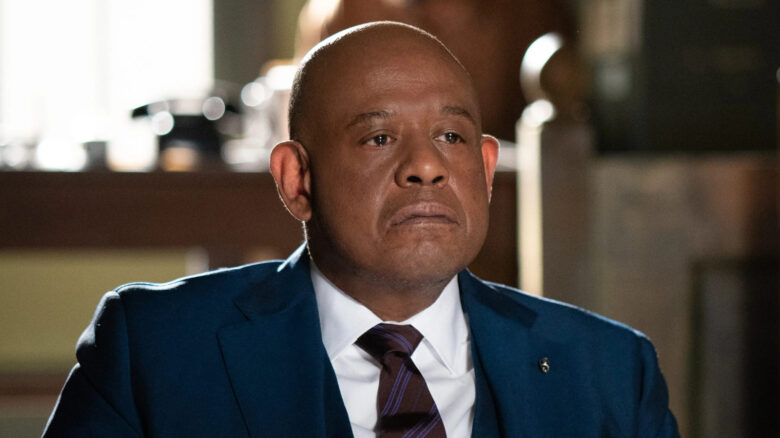
Executive producer Forest Whitaker plays Bumpy Johnson, a legendary Harlem crime boss. The series is set in the 1960s during the latter years of Johnson’s life, following his release from a lengthy term at Alcatraz. His attempts to reclaim his place in Harlem resemble classic mobster comeback stories, but with a rich historical backdrop. While he clashes with the Italian bosses that have taken over his territory in his absence, Johnson walks a path close to such historical figures from the Civil Rights era as James Baldwin (Michael Benjamin Washington), Muhammad Ali (Deric Augustine), Afeni Shakur (Devin Kessler), Frank Lucas (Rome Flynn), and Malcolm X (Nigél Thatch and Jason Alan Carvell).
Chris Brancato and Paul Eckstein created a show that is historically revelatory, but with the same unpredictable sense of danger and tragedy as crime thrillers like “Power.”
6. Boardwalk Empire
As great as “Godfather of Harlem” is, it’s still impossible to compete with “Boardwalk Empire.” The HBO crime drama (created by “The Sopranos” writer-producer Terence Winter) is widely considered one of the greatest gangster TV series of all time, racking up dozens of Emmy Award nominations throughout its five-season run. And though it’s not nearly as culturally relevant as it once was, its fingerprints are still visible on period crime series like “Godfather of Harlem” and “Peaky Blinders.”
“Boardwalk Empire” stars the irreplaceable Steve Buscemi as a fictionalized version of the Prohibition-era gangster Nucky Johnson (called “Nucky Thompson” in the series). When the series begins, Buscemi plays Nucky as a man who believes he can keep each foot in a different world and still walk straight. The outlawing of liquor sales and consumption is an opportunity for the enterprising politician, as eager to auction his morals as his allegiance to any criminal in need of a politician’s touch. Like “Godfather of Harlem,” the series follows many other real historical figures in and around Nucky’s sphere of influence — this includes fellow criminals like Lucky Luciano (Vincent Piazza) and, of course, Al Capone (Stephen Graham).
Where most stories use this time period as mere set dressing, “Boardwalk Empire” fully explores it as a vehicle for unprecedented criminal exploitation, as well as, in some shocking instances, radical cultural and social progression. Winter makes the grime of Atlantic City feel like a grand, seductive metropolitan myth about the dawn of modern civilization.
5. The Knick
The tragedy of “The Knick” is that it’s a show with a premise as immersive and novel as its title is vague and dull. It certainly didn’t help that it aired on Cinemax in 2014, just as Netflix was beginning to dominate streaming. But even the poorest of timing and marketing couldn’t stop Steven Soderbergh from getting two seasons of one of the best medical dramas of all time into the world.
If you were unaware, “The Knick” is a medical procedural in the tradition of “Grey’s Anatomy” — but with a serious period twist. The series is set in turn-of-the-century New York City, where the eponymous Knickerbocker Hospital (inspired by a real institution of the same name) serves as the setting for groundbreaking advances in surgery. Clive Owen’s chief of surgery, Dr. John Thackery, was loosely inspired by William Stewart Halsted, who practiced in New York around the turn of the 20th century. And while he never actually worked at the Knick, he heavily inspired the personal dysfunction and professional brashness that gives the series its vitality.
It’s an unexpectedly bizarre and brutal show that paints a vivid picture of how messy progress can be, both internally (Dr. Thackery is defined by his self-destructive streak, extraordinary even by medical drama standards) and externally. Surgeries are not skillfully executed or technically sophisticated — Soderbergh renders the practice as a kind of chaotic, life-saving butchery that’s as brilliant as it is bloody. The show remains highly regarded despite its cancellation in 2017. A highly anticipated spin-off has been in development since 2020, as of this writing.
4. The Civil War
The legacy of Ken Burns’ PBS docuseries “The Civil War” is a complicated one. Premiering in 1990, it aimed to chronicle the entirety of America’s bloodiest and most painful chapter, in which half the country chose to wage war against their fellow countrymen in an effort to preserve slavery.
The series attracted a cumulative audience of nearly 40 million viewers during its original PBS run and went on to become, without question, one of the most influential pieces of entertainment ever produced. Its stylistic impact on documentaries cannot be overstated. Burns’ techniques became so widely imitated that first-time viewers may not realize how much of what they’re seeing was pioneered by Burns. The epic, bottom-up narrative framing; the immersive sound design and voice performances; the subtle use of post-production camera movement, including the famous “Ken Burns effect” — all of this was popularized through “The Civil War.”
Its inclusion here comes with a significant caveat, however. While there’s no denying the series’ place in the history of this subgenre on TV (so much so that it’s the only documentary we felt compelled to include), its framing of the Civil War is genuinely questionable. With writers Geoffrey C. Ward and Ric Burns, “The Civil War” offers humanity to both sides of the conflict, unnecessarily at the expense of historical and moral clarity. Viewers will likely take righteous umbrage with how much credence the series lends to the view that the war was fought by patriotic rebels over states’ rights — rather than avowed anti-abolitionists who felt entitled to subjugating human beings.
3. John Adams
Of all the series on this list, “John Adams” is unique in how much it works as a showcase of its star’s talent. Paul Giamatti — an actor who has crafted many tortured geniuses whose intellects are both indispensable and alienating — gives a career-best performance as one of the first men to define this archetype. He portrays the founding father across decades, as the seven-episode miniseries captures his journey from lawyer and Patriot to his troubled presidency and death.
The series is based on David McCullough’s seminal biography and is one of two HBO series on this list to have Tom Hanks on the producing team. Tom Hooper directed all seven episodes, showcasing the cinematic flair he would later bring to such period films as “The King’s Speech” and “Les Misérables.”
“John Adams” isn’t just one of the best American history series — it’s one of the best series in the entire historical subgenre. It’s so confident in the audience’s familiarity with Adams that Hooper is uniquely able to emphasize human drama. Giamatti and Laura Linney (who plays John’s wife, Abigail) are lively and arresting in their respective roles, approaching them with passionate commitment and a kind of Shakespearean gravitas.
Adams is commonly remembered as a supporting player in the nation’s founding — a good man who challenged other men to be great. “John Adams” sets the record straight, revealing just how fascinating he really was.
2. Roots (1977)
Countless television series have recounted history. Few have actually made history.
When Alex Haley got the opportunity to adapt his epic historical novel “Roots: The Saga of an American Family” into a miniseries for ABC, he had more faith in his work than the network. Looking back to the 1970s, it’s not hard to see why ABC feared “Roots” would fail. At the time, there was little reason to believe American audiences, especially those gathered around a TV set, were ready for Haley’s in-depth and unflinching depiction of American chattel slavery.
The miniseries is a multi-generational epic that focuses on the life and legacy of Kunta Kinte (played by LeVar Burton and John Amos), a West African boy who is abducted and sold to a plantation-owner in colonial Virginia. Its expansive scope depicts the damning horrors and defiant hope enslaved Africans experienced from the dawn of the United States through to the aftermath of the Civil War. Without ever softening, for the comfort of largely white audiences, what white Americans did to subjugate Kunta and his descendants, “Roots” is able to evoke an unexpected kind of hopefulness — that defiance in the face of injustice is never in vain, even if one knows nothing but injustice in their own lifetime.
ABC attempted to hide “Roots” by dump-programming all eight episodes in a single back-to-back run — it became one of the most watched series in television history.
1. Band of Brothers
It wouldn’t be hyperbolic to describe “Band of Brothers” as one of the greatest television series ever made. It certainly stands out even in the impressive catalog of HBO programming, as well as the even more impressive resume of Steven Spielberg. He co-created the miniseries with then-recent “Saving Private Ryan” star Tom Hanks, the pair apparently not satisfied with their work in the World War II subgenre after delivering one of its most definitive and enduring films. They were nonetheless able to create something even more emotionally captivating and cinematic.
This ensemble drama follows the exploits of Easy Company, 506th Parachute Infantry Regiment, 101st Airborne Division, a unit of soldiers who trained and fought together from D-Day to the downfall of Nazi Germany. Real survivors of the company collaborated with Spielberg and Hanks during the production process and provided interviews featured at the beginning of each episode, lending a sense of reverence to the series’ subject matter. That it balances this reverence with a clear-eyed understanding of the horrors of war (the series resists over-valorizing American soldiers or flattening the humanity of enemies) and a sense for genuine blockbuster entertainment is an astounding achievement no other series on this list can claim. “Band of Brothers” is the rare war drama that depicts, with considerable awe, the incredible bravery it took to win World War II, without underselling the consequences of victory.