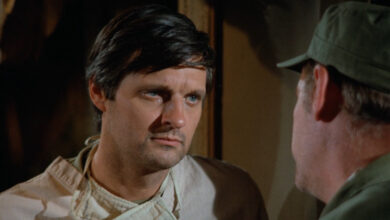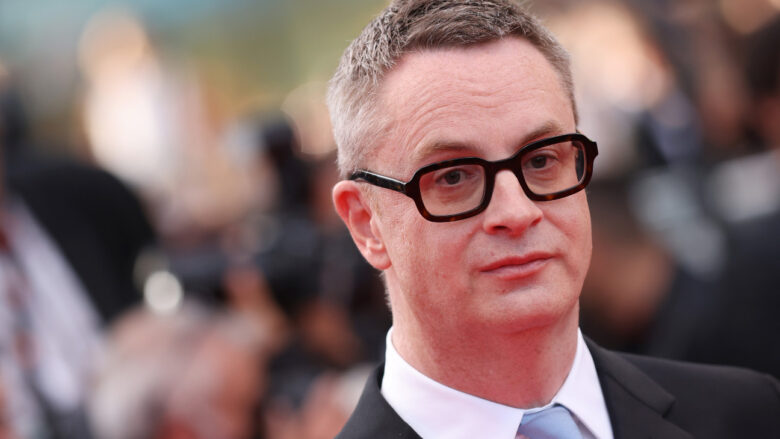
Fifteen years later, Drive is widely regarded as one of the defining films of the 21st century, turning Ryan Gosling into a screen icon and cementing Nicolas Winding Refn as one of contemporary cinema’s boldest auteurs.
According to Refn, though, almost nobody believed in it while it was being made. “Most everyone hated it,” Refn tells It Happened in Hollywood. “Up until the premiere in Cannes, there were people that wanted their name off the movie.”
Before revisiting Drive, Refn discussed Her Private Hell, his first feature in nearly a decade. The film follows a young woman navigating a futuristic, neon-drenched urban landscape and marks the director’s return after a near-fatal medical emergency in which, he says, he was dead for more than 20 minutes.
“It made me very aware of time,” Refn says. “If you’re going to use your time, choose it well because once it’s over, it’s over.”
Refn described Her Private Hell as a reaction against algorithm-driven entertainment, arguing that cinema should challenge audiences rather than simply satisfy them. “Cinema, it’s not just a place for entertainment,” he said. “It’s a place for sharing dreams.”
The film drew a sharply divided response at Cannes, something Refn seems to welcome. As he notes on the podcast, even Drive, now considered a modern classic, was once dismissed by many of the people making it.
The Cannes premiere changed everything. Refn won best director, and Drive was on its way to becoming one of the defining films of its era. But getting there involved a collapsed Harrison Ford project, an emotional breakthrough in Ryan Gosling’s car, and a commune-like living situation for cast and crew at a Hollywood house Refn insists was haunted.
Refn says Gosling first reached out because he admired his earlier work. At the time, however, the Danish director was developing a Paul Schrader script that would have starred Ford.
“I’d been working on a movie with Harrison Ford where he was supposed to die,” Refn says. “It was a beautiful script by Paul Schrader. But while I was developing it, he decided that he didn’t want to die. And it was the whole foundation of the movie.”
Refn’s first meeting with Gosling didn’t seem much more encouraging. Refn says he was battling the flu and “high as a kite” on American cold medicine.
“We had a very peculiar conversation where we didn’t really talk,” he recalls. “We didn’t look at each other because I couldn’t move my body … It was like a blind date gone terrible.”
After dinner, Gosling drove him back to Santa Monica. Then REO Speedwagon’s “I Can’t Fight This Feeling Anymore” came over the radio.
“I’m a sucker for a great rock ballad,” Refn says. “I start to sing the lyrics … and I just start crying. Tears are rolling down my cheeks.”
In that instant, everything clicked.
“I turned to Ryan and I screamed very loudly, because the music was so loud,” he recalls. “‘I got it! I know what we’re going to make! We’re going to make a film about a man who drives around at night in a car listening to music because that’s his emotional relief.’ Ryan looked at me and said, ‘I’m in.’”
Although James Sallis’ 2005 novel Drive had already been adapted by screenwriter Hossein Amini, Refn says the version they ultimately made took shape through an unusual live-work process.
Amini moved into the Hollywood house Refn was renting while they continued rewriting the script.
Carrie Mulligan stopped by for what was supposed to be a meeting.
“The minute she walked through the door, I was like, ‘It’s you. You are her,’” Refn says. “For some reason she ended up also living at the house.”
Editor Matt Newman also moved in, cutting the film downstairs while Refn and Amini continued rewriting upstairs.
“It was like a real, what I would imagine the ’70s would’ve been like — without cocaine,” says Refn.
Refn eventually became convinced the house where everyone was living and working was haunted.
“I was super afraid of the house,” he adds. “Certainly. It was haunted.”
So unnerved was he that producer Adam Siegel would sometimes come over simply so he wouldn’t have to spend the night alone.
The screenplay kept evolving after production had already begun.
“I handed in the revised version of the script on the first day of photography,” he says.
By then, he’d stripped away dialogue, backstory and much of the conventional crime movie structure. Asked why audiences never really learn who the Driver is, Refn offers a simple answer: “You’re not supposed to.”
When executives finally saw what he’d made, they were baffled.
“Some people higher up went, ‘What’s this?’” he recalls. “I said, ‘Well, it’s a Nicolas Winding Refn film.’”
Many of Drive‘s most memorable moments also emerged during production. Refn says the Driver gradually became less of a traditional action hero than a mythic figure. “The Driver is a kind of alter ego,” he says. “The Driver is a superhero. He has a mysterious past and he protects innocence.” That realization inspired the now-iconic satin jacket with the gold scorpion on the back, an idea Refn traced to Kenneth Anger’s Scorpio Rising.
“I wanted him to have an animal,” he says. “Like a superhero.”
The film’s unforgettable elevator sequence also wasn’t in the script. Refn says he wanted Gosling and Mulligan to share “the kiss they never had” before the Driver transforms into the violent figure he was always destined to become.
Preparing for the notorious head-crushing scene, he even called filmmaker Gaspar Noé for advice.
“He gave me a long, complicated description of how he made it,” Refn says, referring to Noé’s own crushed head in 2005’s Irreversible. “I realized I didn’t have the time nor the money to duplicate that.”
Today, Drive (and its synth-heavy soundtrack) is considered a modern classic, and Refn says his creative bond with Gosling hasn’t faded. “I felt very much that we were one person,” he says. “I still think, in a way, we are one person.”
And if he has his way, there is still one chapter left.
“We have one more in us together,” Refn says. “We’ve done two. Now we’ve got to do the third one.”
Listen to the full conversation on It Happened in Hollywood and subscribe to the podcast for more conversations about landmark films with the people who made them.