
According to Albert Einstein, “Nothing happens until something moves. When something vibrates, the electrons of the entire universe resonate with it. Everything is connected.” A solitary person is not a thing, even if they’ve been chosen by power or by prophecy. A protest, a coalition, a revolution; these things are called movements for a reason.
Friends, I came here today to talk to you about the inherent shortcomings of the “Chosen One” mythos. Not that I don’t love a good legendary hero, but many of them succeed because of the party surrounding them, and when the light hits them from a certain angle, the flaws start to show.
We’re led to believe the chosen one is a farm boy, or a servant, or a high school girl. An ordinary person. That’s ostensibly true, but most often they are chosen due to their bloodlines or inherited power. What does that sound like to you? For me, it’s analogous to a monarchy or the scion system. Systems of power that have little to do with merit or worthiness but everything to do with some sort of lineage.
I’m not saying our fantastical heroes aren’t heroes; I’m saying that when their stories are contextualized for the real world, they could be seen as manipulations that keep the existing power structures in place. From prophesied saviors to cautionary tales, our understanding of what it means to be a hero often comes from tall tales, legends, and fantastical TV & film. What if, over time, what started with good intentions eventually became a form of manipulation?

Both Frank Herbert and The Wachowski Sisters understand this well. In “Dune,” Herbert initially builds Paul Atreides up as a teenage chosen one—a religious figure who will save the universe. Yet, Herbert had something else in mind. He wanted to break the allure of corrupt charismatic leaders by breaking the trope. The Bene Gesserit nuns fabricate a prophecy as a tool of control. In doing so, they create a messianic figure so assured of his destined right to rule that he inevitably succumbs to megalomania. When the phrase “absolute power corrupts absolutely” was coined, friends, it could have been a forewarning about Paul Muad’Dib the Kwisatz Haderach.
Likewise, at the opposite end of the trope, we have The One, Neo of “The Matrix” franchise. Even his name implies he is the chosen one spoken of with reverence in the hidden city of Zion. Yet, like Herbert, the Wachowskis had something else in mind. The legend of “the one” is a lie, literally a manipulation to keep the wheels of power turning. The Architect of the Machines uses the legend to give the freed people hope. Then he destroys the dream by destroying the most recent rebooted “one.” Restarting the cycle yet again. Breaking the myth—becoming one of many who fight as one—is the only way to defeat the Machines.
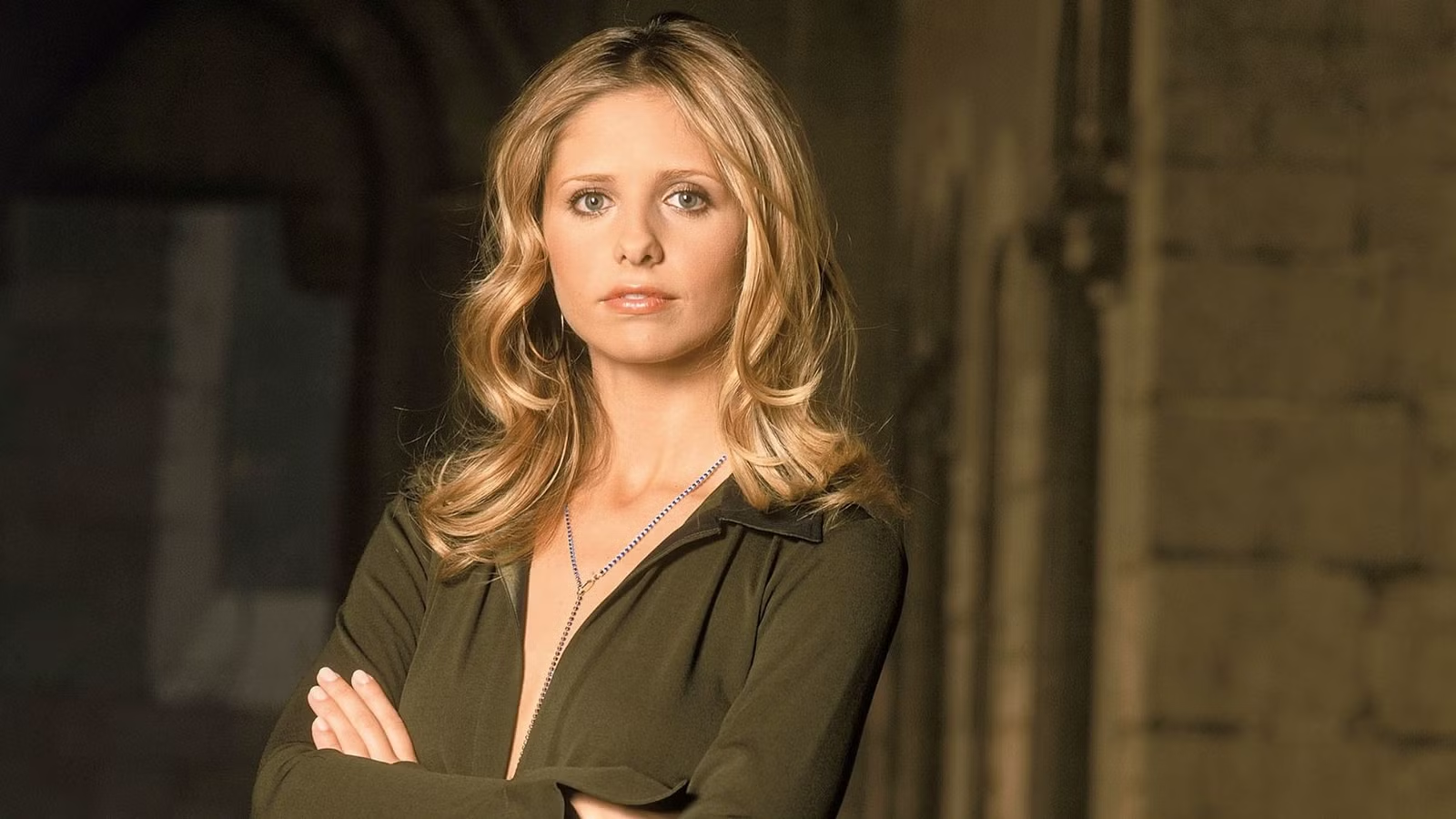
There is also “Buffy the Vampire Slayer,” a chosen one who faces ever-expanding evil and escalating wins and failures until she realizes the battle persists because it’s been fought alone by her predecessors. Rather than a lone Slayer, called one at a time to fight and die, Buffy awakens all the Slayers who might be called. That plurality from sharing The First’s power is what saves the day.
“Power tends to corrupt and absolute power corrupts absolutely. Great men are almost always bad men, even when they exercise influence and not authority; still more when you superadd the tendency of the certainty of corruption by authority.”
–Lord Acton, in his 1887 letter to Bishop Creighton
So why do I say that our beloved “Chosen Ones” might be tools of maintaining corrupt power structures—not in the heroes’ worlds but in ours? We could talk about franchises like “Star Wars,” and how the original narrative requires one chosen one after another, typically named Skywalker. Meanwhile, in between Skywalkers, the galaxy falls into fascist ruin. Repeatedly. It’s like the populations of these worlds were saying: I guess we’ll just stand around and suffer until another guy pulls another sword out of another hunk of rock and/or cave. It’s not until “Rogue One,” “Andor,” and even “The Mandalorian” that we see that fighting the rule of the Empire requires more than one bloodline.
However, none of those properties inspired my initial interrogation of how the “Chosen One” trope, as RogerEbert.com Contributing Editor Nell Minow said in response to this very thesis, “erases the possibility of individual agency, choice, and responsibility.”
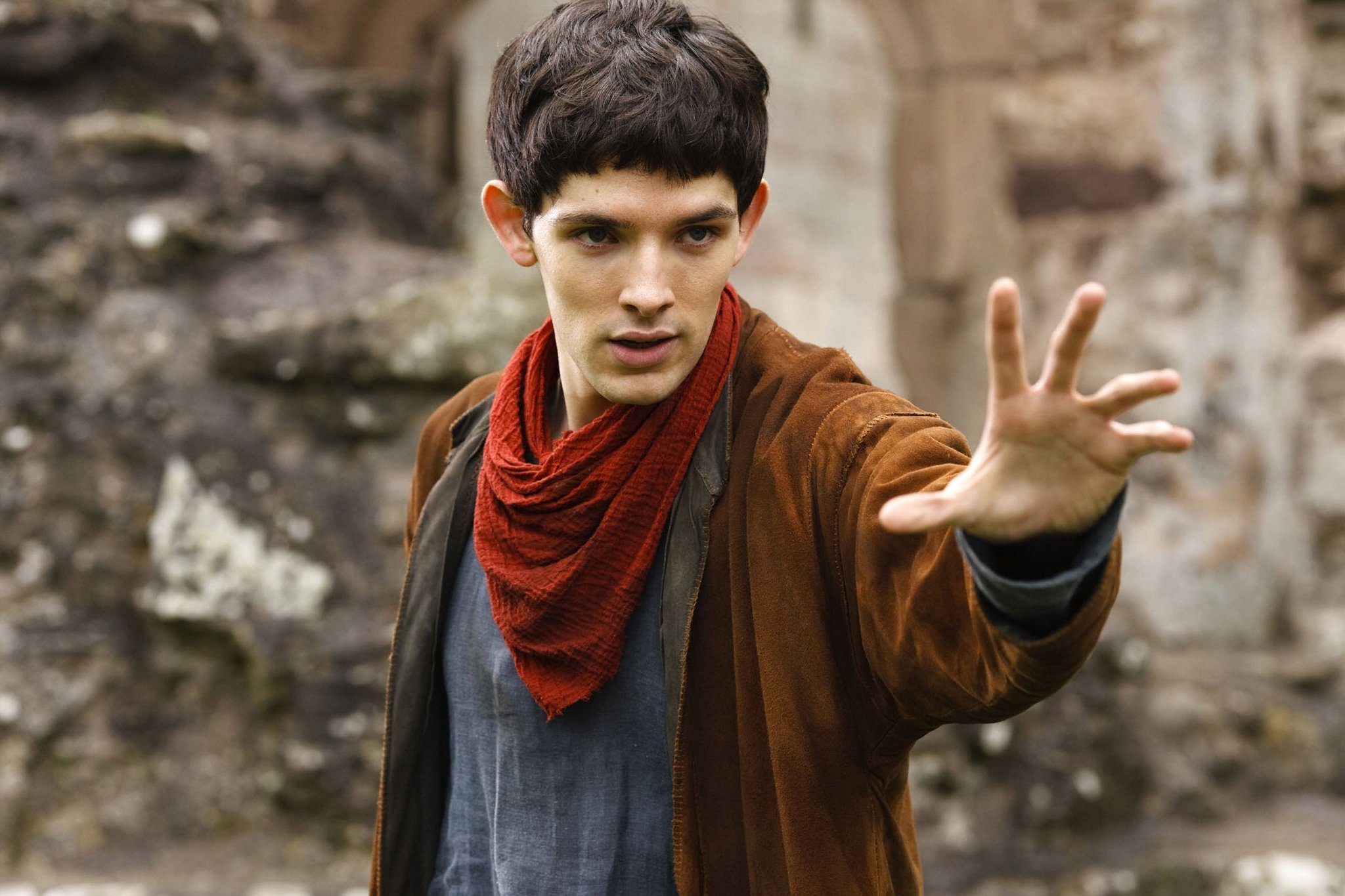
What woke me to that fact was the BBC series “Merlin” (2008). While Arthur is known to be a hero bound by prophecy, this show focused on Merlin as the true chosen one behind the throne. He’s a hero, for the most part. The problem is: Merlin believes being good means swooping in to save evildoers, like Morgana, from destroying themselves. He saves the villains repeatedly. Each time he does, they return to wreak more destruction. After rewatching the series during the pandemic, I began to question whether Merlin is actually good or just nice. As so many of us are taught, he’s convinced morality is rooted in quietly surviving evil. Merlin moves to defend but never to defeat. He takes pride in putting himself and his friends at risk so the villains can live to fight another day. What kind of hero is that? His passive goodness and purity politics made him an accessory to the evil he claimed to fight. And most of his friends die because of it.
Who benefits from allowing wickedness to run amok? So often in the heroic entertainment we consume, villains reign for centuries because everyday people stand by and wait. Too many stories tell us evil is insurmountable, that passivity is virtue, and we must wait for somebody—nay, some “one”—to come save us. The idea that we are unfit to fight or revolt unless someone with the right bloodline or inherited power steps in paralyzes us. That’s not what’s happening inside those fictional realms, but when you break it down, that’s how it translates for everyday people here.
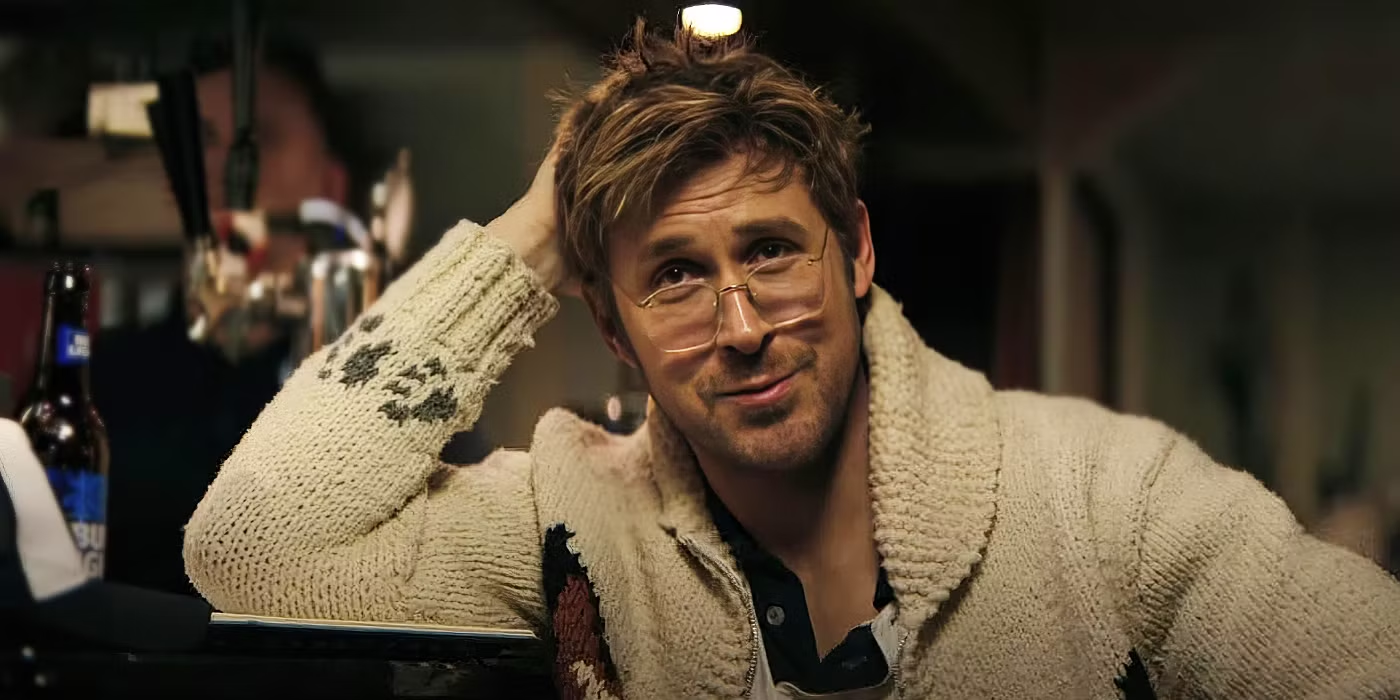
One of my favorite recent movies, “Project Hail Mary,” counters this. Ryland Grace isn’t the chosen one; he’s the last one chosen. He doesn’t want to have to save the universe because he’s scared and feels inadequate, but he wants more than survival. He wants the small group of people he cares about to thrive. That’s why he builds an alliance and gets the job done. Grace isn’t the chosen one, but he and Rocky answer the call for the sake of both their galaxies.
In another response to this thesis, Chaz Ebert, our publisher, says, “Exposing the ‘Chosen One’ trope shows we are all more capable of helping and solving problems than we think.”
When we think about the demoralizing mantra of the moment: “No one is coming to save you,” perhaps we might add a parenthetical afterword: “No one is coming to save you (save yourself).” Then, like the recognition that we cannot vote away someone else’s rights without losing our own, we might realize that to save ourselves, we must also save our communities. Our communities must save our nations. Our nations must save our world—and since we’re talking about sci-fi and fantasy, our world must save the universe.
There is no passive good. Evil enforces its will through action. Counteracting it requires resistance—perhaps an equal but opposite force. Despite the ways the trope might be construed, waiting around for a chosen one can leave us with flawed leaders whose prophecies make them as vulnerable to megalomania as to heroics. Or just as likely to run away as to make a stand. Like democracy, goodness is a verb. We may each find our own way to take action, but first, we must choose ourselves in plurality.