Reis Çelik’s Night of Blindness (Kas Film) has emerged as one of the early front-runners in the Shanghai International Film Festival’s main competition, offering audiences a gripping, tension-soaked experience as it follows one night in the life of a woman trying to escape her homeland during the Turkish military coup of 1980.
And you’d be hard-pressed to find a film that’s more personal among this year’s impressive main Golden Goblet line-up, given that it’s based on the director’s own experiences.
That much is revealed as the credits roll — and the audience is still catching its collective breath — when there’s a note from the filmmaker offering thanks to the people who helped him in that escape.
But for Çelik, the experience of reliving — on film — whatever trauma he went through was never the point here. The veteran filmmaker says he wanted to tap into shared emotions — such as fear — that could be universally recognized wherever his film might screen.
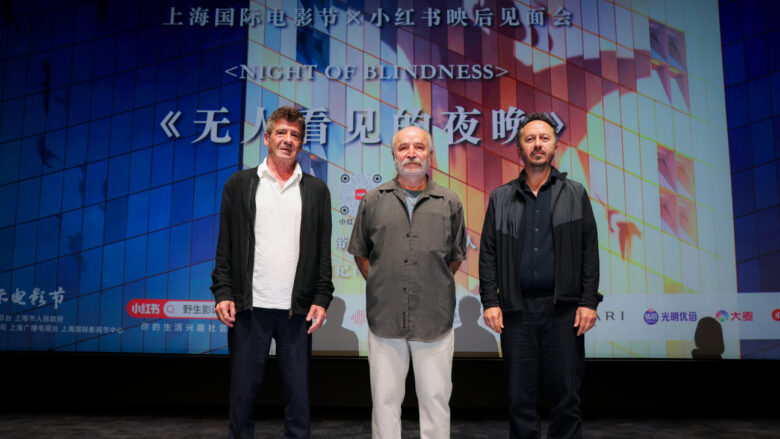
“Though the story unfolds in a distant land, it explores universal human experiences. No matter which corner of the world we come from, we share the same human emotions,” he said, when introducing his film to gathered media. “I believe people around the world are increasingly ignoring and turning a blind eye to reality today. When making this film, I drew on Turkey’s past — especially its political history — to make my point clear. I think if we fail to face the realities of our history, we cannot grow as individuals, nor can our country move forward. That is why I express this idea through art.”
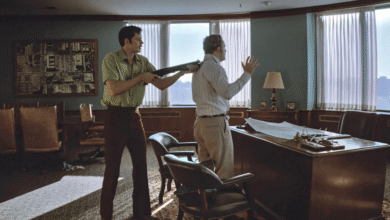
Night of Blindness tells the story — in stark black and white — of a left-wing activist (Özge Arslan) who, while trying to evade military authorities, ends up being protected (or will she be betrayed?) by workers on a building site. As she hides away, almost in plain sight but still safe, she watches, helplessly, as the authorities (led by a particularly nasty inspector, play by İştar Gökşeven) interrogate the workers and inch ever-closer to finding out where she is.
Çelik’s Night of Silence (2012) won the Crystal Bear at the Berlin International Film Festival and Night of Blindness comes as the second part of a planned “Night Trilogy.”
“The reason I choose nighttime is this: in the dark of night, even the smallest detail or a tiny beam of light becomes extremely noticeable,” said the director. “That’s why I chose to shoot this film at night. The same goes for people. We most often confront our true selves and our inner souls after dark. When you light a small lighter at night, that little flame stands out clearly — it strikes you deeply and touches your heart immediately.”
For Çelik, that same concentrated intensity extends to the film’s storytelling itself: “I believe human beings have immense capacity for understanding. With just one look, if portrayed properly, you can convey a long‑lasting feeling and an entire complex story. That’s the core reason I decided to confine the whole timeline to a single night.”
The winners of this year’s Golden Goblet awards will be announce June 20.