Shocking as it may be, there aren’t actually that many Father’s Day episodes produced for television. Maybe that’s because the holiday doesn’t exactly have the universal, commercially recognizable traditions and iconography that lend themselves to good TV -– or maybe it’s because TV dads are so culturally ubiquitous that they don’t need to look for holiday specials to see them celebrated.
For this list, we assembled episodes from a wide variety of television series that depict the equally diverse canon of fathers on the small screen. After all, the experience of fatherhood means something different to everyone who experiences it, either as a parent or child. Together, these 15 episodes showcase just that, proving the best Father’s Day TV doesn’t need to be about a holiday, but about the specific, personal experiences that make us want to celebrate our dads in the first place.
Modern Family (Season 8, Episode 1)

Of the few explicit Father’s Day TV episodes out there (at least the ones worth watching, anyway), one of the best predictably comes from “Modern Family.” Viewers spent the entirety of the 2010s watching the extended Pritchett family grow up before their eyes -– it’s honestly shocking that there was only one hour focused on the show’s unconventional patriarchs.
In “A Tale of Three Cities,” “Modern Family” follows each branch of the family in a different city during the lead up to Father’s Day. The Pritchetts celebrate a wedding in Juárez, where Gloria (Sofía Vergara) and Sonia (Stephanie Beatriz) bristle over some unresolved tensions regarding their own father; Mitchell (Jesse Tyler Ferguson) goes with Cam (Eric Stonestreet) to his grandmother’s funeral in Missouri.
The centerpiece of the episode is the Dunphy family’s trip to New York City, which best serves Ty Burrell’s all-time-great TV dad Phil Dunphy. The parents and kids’ parallel, clandestine escapades in the Big Apple underscore how much Phil loves his wife and children, to the extent that he can’t enjoy the greatest city in the world without missing the grown-up rugrats he tried to ditch.
It’s Always Sunny in Philadelphia (Season 5, Episode 4)
If Phil Dunphy stands as the best TV dad of the 2010s, Frank Reynolds might just be the worst — episodes like this show why we love them both equally. Danny Devito’s grubby and unscrupulous patriarch changed the dynamic of “It’s Always Sunny in Philadelphia” when he was introduced in the second season, the actor ironically having taken the role because his own children were fans of the series. “The Gang Gives Frank an Intervention” finally cuts him loose to see how bad this dad can get as he attempts to woo his recently widowed sister-in-law.
What makes this episode one of the best of the series overall is how it uses Frank’s magnetic depravity to drag the rest of the gang down to his level. By the end of the episode, his drunken family and friends can hardly intervene, their mouths stained and their speech slurred by his innovative method of drinking wine out of a can. If you and your dad share a dirty sense of humor, there isn’t a better half-hour of TV to throw on at the end of Father’s Day.
Avatar: The Last Airbender (Season 2, Episode 15)
As a collection of short vignettes, “The Tales of Ba Sing Se” isn’t consistently excellent. All six “tales” range from amusing to great with one exception — “The Tale of Iroh.”
This five minute sequence of one “Avatar: The Last Airbender” episode single-handedly elevated the entire half-hour to one of the series’ best, and remains one of the most memorable and moving sequences of the show’s three-season run. In it, Prince Zuko’s Uncle Iroh (the late Mako) travels the titular city’s bustling market, offering warm, fatherly guidance to strangers. This seems at first to be a simple, endearing slice-of-life adventure to contrast Aang’s (Zach Tyler Eisen) search for his pet Appa.
Then, the short delivers its gut punch — Iroh’s sunset memorial for his son, who died while a younger Iroh was laying siege to Ba Sing Se as a general in the Fire Nation’s military. All of this is left unsaid, the series showing characteristic restraint and dramatic sensitivity that allows the audience to reframe Iroh’s actions not as random extraordinary acts of kindness, but deliberate, quiet acts of redemption. It’s liable to have you and your father getting teary-eyed in a handful of minutes, especially since the episode ends with dedication to Mako’s memory.
Malcolm in the Middle (Season 1, Episode 13)
Before he played one of the most reprehensible TV dads of all time (if you want the ultimate anti-Father’s Day watch, look no further the “Breaking Bad” episode “Phoenix”), Bryan Cranston staked his claim to the patriarchal archetype in the 2000s with “Malcolm in the Middle.” If fans of the family sitcom had to pinpoint the moment his character Hal first won over their hearts and TV sets, it would undoubtedly be Season 1’s “Rollerskates.”
“Rollerskates” is a story for any kid (or former kid) who has asked their parent for help with something simple and then immediately regretted it. Tired of hoofing it around on foot, Frankie Muniz’s Malcolm asks his father to teach him how to rollerblade, only to discover that Hal is a dead serious — and darn talented — artistic rollerskater. The episode contains two choreographed dance sequences for Cranston, who does an impressive amount of the skating himself.
Overall, “Rollerskates” is downright absurd and hilarious, and a perfect showcase for what made Cranston one of TV’s greatest dads in the 2000s.
Arrested Development (Season 2, Episode 4)
Few sitcoms in the 2000s mined as much unique multi-generational comedy as “Arrested Development.” The downfall of the Bluth real estate empire is told through a farce of fathers and sons, orbiting around Jeffrey Tambor’s bumbling patriarch George Sr. From the first episode, the show found plenty of humor in how he was able to manipulate his children and grandchildren from behind bars — but those hijinks are nothing compared to what he’s able to do “beyond the grave” in Season 2’s “Good Grief.”
The episode is one of the most comedically dense and narratively compact half-hours of TV ever written, beginning with the shocking discovery that Tambor’s character has died while fleeing the country. Of course, he is soon discovered by George Michael (Michael Cera) to be alive and is hidden in the family’s attic, forcing the youngest Bluth to run interference for George Sr. as he observes his own wake from a vent. “Good Grief” is the exemplar of the show’s talent for double entendres, comedic misunderstandings, and emotional subversions, where both fathers and sons make sacrifices for their family.
Frasier (Season 4, Episode 8)
As far as father-son dynamics go on television, Frasier and Martin Crane remain the gold standard. The eponymous ’90s sitcom of Kelsey Grammer’s breakout “Cheers” character was defined by their loving if often dysfunctional relationship, the minor difficulties of which are born of their differences in personality and taste. This is the engine that makes Season 4’s “Our Father Whose Art Ain’t Heaven” hit hard emotionally and comedically.
In the 1996 episode, father Martin (John Mahoney) splurges on a painting as a gift for Frasier. Though Frasier finds it to be ugly, he struggles with what to do with the gift, especially as Martin frames it as something for his sons to remember him by long after he’s gone.
His attempts to swallow his disgust are ultimately in vain, leading to one of the series’ most iconic moments in which the three Crane men burst into tears in front of each other. It’s as sweet as it is funny, and serves to underscore how much Martin cares about what his boys think of him — and how deeply they care about his happiness.
How I Met Your Mother (Season 6, Episode 14)
“How I Met Your Mother” Season 6, Episode 14 — “Last Words” — is arguably one of the show’s most heartfelt chapters. The episode explores a harrowing moment in Marshall’s (Jason Segel) life as he travels to Minnesota for his father’s funeral.
The usually goofy Marshall has been asked to speak at the service, with the overall theme being last words. All the while, his friends confront their own respective relationships with their fathers. In a perfect example of the series’ ability to hold hilarity and heart at the same time, Marshall spends the episode tracing back his last conversations with his dad, all of which disappointingly range from the mundane to the embarrassing.
“Last Words” provides a comforting and earnest perspective to dealing with grief, delivering a powerful message about loving the whole of a person even when they’re no longer there.
This Is Us (Season 1, Episode 11)
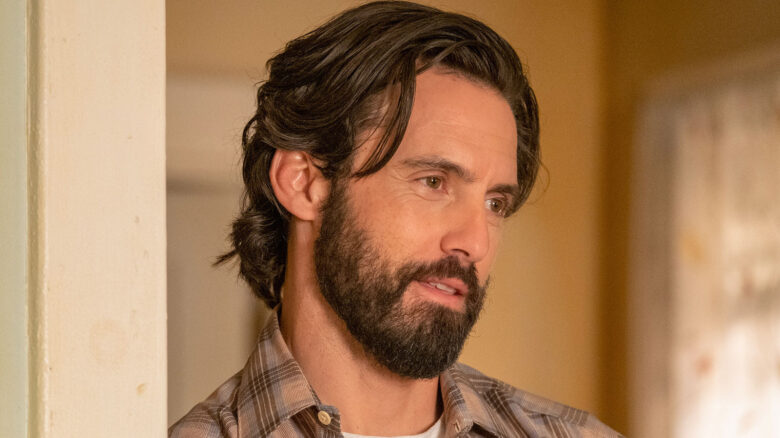
As a father, Jack Pearson’s (Milo Ventimiglia) was in large part defined in “This Is Us” by the failures of his own dad, and his determination not to repeat them. He’s young, flawed, and overwhelmed by the prospect of raising three kids in an environment better than the one he grew up in. Tragically, cutting off the cycle of dysfunction and abuse forces Jack to make a series of sacrifices in the opening sequence of “The Right Thing to Do,” leading up to him asking for a loan from his father (Peter Onorati) to buy a house.
Right away, this episode digs deep into what it means to be a good dad. The unique structure of “This Is Us” allows it to go even further by showing how Jack’s parenting shaped the choices his own children make, however imperfect they may be. Kate (Chrissy Metz) is able to give her boyfriend (Chris Sullivan) the courage to face heart surgery, while Kevin (Justin Hartley) makes sacrifices in his personal life. The episode’s most compelling (and fitting, for our purposes) storyline is Randall’s (Sterling K. Brown), as he struggles to reconnect with his formerly estranged, terminally ill father (Ron Cephas Jones).
The Fresh Prince of Bel-Air (Season 4, Episode 24)
When “The Fresh Prince of Bel-Air” actor James Avery passed away in 2013, Will Smith wrote on social media, “Every young man needs an Uncle Phil.” No episode proves that like Season 4’s “Papa’s Got a Brand New Excuse.” Hailed as one of the greatest episodes of a sitcom ever made, it is the single strongest vessel for one of the show’s central themes — family isn’t who makes you, but who cares for you.
The fictionalized version of Will Smith is cautiously excited when his estranged father Lou (guest star Ben Vereen) comes back into his life and promises to take him on a cross-country road trip. When Lou abandons this plan at the last moment, only Avery’s Phil is there for him. Will’s monologue, where he angrily spits out how he doesn’t need his father before breaking down in Phil’s arms, is arguably one of the greatest scenes (if not the greatest) in all of ’90s television.
The real Smith had a strained relationship with his own biological father to put it lightly, and regarded the Shakespearean-trained Avery as a father figure and acting mentor. He later said that Avery pushed him hard while they were filming this scene, helping Smith to mold the performance that would partially define his career.
The Simpsons (Season 6, Episode 13)
“And Maggie Makes Three” has long been cited as one of the best Homer-centric episodes of “The Simpsons,” showing audiences that, when it comes to the bumbling dad archetype, dumb doesn’t have to mean one-dimensional. The whole thing is a flashback to days before Maggie’s birth, during a brief period in which Homer (Dan Castellaneta) thinks he might finally be free of his job at the nuclear power plant.
The episode opens with a mystery (the absence of Maggie from the family photo albums) that lightly sets up the episode as a bait and switch. Though Homer certainly experiences hardship and disappointment as a result of having to give up his (hilariously modest) dream to support his third child, the memory isn’t about how much Maggie derailed his life — it’s about how she makes his mundane, frustrating work worth doing.
Schitt’s Creek (Season 5, Episode 11)
The relationship between David Rose (Daniel Levy) and his partner Patrick (Noah Reid) was the core of “Schitt’s Creek” for many fans, right up until the series finale. Their best moments brought out many happy tears across the three seasons they were together, like in the Season 5 episode “Meet the Parents.”
When the time comes for the respective families to meet on Patrick’s birthday, David is shocked to learn that Patrick’s family don’t know that he’s gay, something they only find out because David’s father, Johnny (Eugene Levy, the real-life father of Daniel Levy), is so proud and accepting of his son that he assumes Patrick’s parents would be as aware as he is.
Around the chaos of Johnny’s mistake and David’s attempts to smooth things over, “Meet the Parents” delivers several aww-inspiring moments leading up to Patrick’s formal coming out. For anyone that’s had the experience of sharing their identity with a parent, this episode will hit as one of the series’ emotional high-points.
Parks and Recreation (Season 5, Episode 20)
Every sitcom has a character whose sole purpose is to be a punchline. On “Parks and Recreation,” the character was Jim O’Heir’s Jerry Gergich.
No one is going to argue that Jerry was ever secretly the best character on the show, but the specific audience cultivated by the sweetly optimistic NBC series had hoped for the series to find something positive about the otherwise useless parks employee. In Season 5’s “Jerry’s Retirement,” the series brilliantly provides that in the form of Jerry’s beautiful, happy family, who uniformly treat him with the love, respect, and admiration he doesn’t receive at work.
It’s a perfect inversion of expectations that reframes how the audience sees the character who was, for much of the series’ run, the only dad in the main cast. He isn’t a failure — he’s just a guy who clearly cares more about his wife and daughters than the government job that mostly makes his coworkers stressed and miserable.
King of the Hill (Season 13, Episode 20)
Before it was revived in the 2020s, the Fox animated sitcom “King of the Hill” ended its initial 13-season run by resolving what was strangely one of the most quietly developed father-son relationships on TV. Hank Hill (Mike Judge) is a simple man who knows what he likes, and for the majority of the series, that didn’t include anything that could connect him to his awkward son Bobby (Pamela Adlon).
In “To Sirloin with Love,” they finally find common ground when the grill-happy dad discovers his kid has a real knack for evaluating meat. Watching Hank take such pride in Bobby’s nigh-prodigious ability to judge meat competitively is a treat. It’s just the right combination of silliness and sincerity to make the episode land naturally, sunsetting the series with a genuinely tender exchange of “Yup?” “Yup.” It’s the perfect episode to put on after you help dad with the Father’s Day cookout (if he lets you, that is).
Bob’s Burgers (Season 5, Episode 6)
Bend with us a little. “Father of the Bob” is technically a Christmas episode. But who says that Christmas and Father’s Day have to be mutually exclusive? (Aside from, maybe, people who make calendars?)
What’s most important for our purposes is that “Father of the Bob” is the standout dad episode of a series with a wealth of great fatherhood moments. Bob Belcher (H. Jon Benjamin) gets to transform from quintessential animated TV dad into a big, frustrated kid, as his own father (Bill Hader’s “Big Bob”) comes to town to help out in the kitchen.
This episode doesn’t repeat the beats of “To Sirloin with Love” in the slightest. Here, a shared interest leads to rehashed arguments and simmering tensions. But what it’s ultimately able to communicate (poetically through the unwitting intervention of Bob’s own children) is that, no matter how difficult Big Bob can be, his imperfect love is what made Bob the father he is.
Full House (Season 1, Episode 17)
“Full House” has been praised for decades as one of the greatest ABC sitcoms ever produced. This is arguably thanks in large part to Bob Saget, who gave us the father of all great TV fathers in Danny Tanner.
Committed, caring, and communicative, Danny is standard-bearer for TV dads. We considered multiple episodes that showcased this fact (“Terror in Tanner Town” and “The Big Three-O” are up there in terms of Danny episodes), but we ultimately fell on Season 1’s “Danny’s Very First Date.” The loss of Danny’s wife is the foundational wound of the series which rarely gets addressed head-on save for very special, dramatic episodes (the kind you don’t really feel like flipping on while dad’s flipping burgers).
This episode is exceptional in that regard. Danny’s date gives him and the girls a chance to have an open, honest conversation about who he wants to be as a single father. Like many of the episodes on this list, it reminds us that, no matter what form fatherhood takes, a parent’s love for their children is the unifying experience of all great TV dads.