The Scarecrow: Episodes 7-8
by solstices
With our benevolent bookstore brother exonerated, suspicion shifts to a different suspect entirely. But when the authorities are filled with self-serving and self-righteous people in equal parts, it’s no wonder the investigation keeps veering off-course, hurtling down the path to inevitable tragedy. We’re not even halfway through the year yet, but I’m confident in claiming this as my favorite drama of 2026. Take all my beans!
EPISODES 7-8


Just as we think Ki-beom is going to finally receive medical assistance, his transport van is waylaid by the prosecution. They’re none other than Shi-young’s underlings, who acted on his orders to intercept Ki-beom just so the two abusive detectives won’t get exposed for their violence. Ugh, ugh, and ugh.
All Tae-joo can do is request for five minutes with Ki-beom, which he uses to apologize for suspecting him. Tae-joo had been swept up in his suspicions after hearing that Ki-beom had followed Min-ji out that night to lend her an umbrella. Kind as ever, Ki-beom forgives him, and Tae-joo urges Ki-beom to get out safely so he can marry Soon-young before her baby bump starts showing. Aww, but also, why does that give me a bad feeling for what’s to come…

Guilt-ridden over the part he played in Ki-beom’s wrongful arrest and torture, Tae-joo rushes to clear his name, which causes him to form hasty conjectures about Seok-man. The circumstantial evidence adds up — Seok-man’s severe polio limp, his hair sample containing high quantities of metals, his blood type matching the killer’s. Then Tae-joo witnesses Seok-man sprinting in a brief spurt to catch his little sister before she can get injured, and he takes it as proof that Seok-man could have chased after his victims.
Playing dirty out of a dogged determination to nail Seok-man and free Ki-beom from custody, Tae-joo asks Ji-won to write an article mentioning a new prime suspect to spark doubt in the public. Tae-joo refuses to share any information with Shi-young, but the naïvely loose-lipped maknae detective Dae-ho accidentally lets the information slip while speaking up in Tae-joo’s defence. That has Shi-young pressuring Ki-beom for Seok-man’s name, with Detective Do inflicting a cruel beating once more, but Ki-beom refuses. In the past, the police had once coerced the name of a fellow protestor out of him. Ki-beom had been freed afterwards, but his friend never returned. No wonder he’d taken the blame at first to protect his brother.
As it turns out, it seems Ki-beom accidentally left his matching handkerchief at Seok-man’s house. Seok-man tries to return it to Soon-young, but she connects the dots and realizes Seok-man could be the killer. She falls to the ground in fear, and the scene has Tae-joo immediately misunderstanding, seeing red, and forcefully arresting Seok-man. Then Tae-joo finds out that Seok-man liked Soon-young first — thus giving him a motive to hold a grudge against Ki-beom — and it seems like the case is closed.

At long last, Ki-beom is finally freed. Picking him up in his car, Ki-hwan drives them both to the joyous celebration waiting at home. But Ki-beom clutches his stomach in pain. He plays it off as hunger pangs, and Ki-hwan accepts his words at face value. While Ki-hwan leaves the car to buy a congratulatory cake, Ki-beom dozes off. He awakens to a sentimental reunion with Soon-young, sliding a flower ring onto her finger and promising to live a simple life together from now on, but it’s all backlit so dreamily…
Then Ki-hwan returns from buying Ki-beom’s favorite cake, only to find his beloved brother unresponsive. Ki-beom has succumbed to his injuries, due to sepsis from organ damage. Noooooooo. *sobs in devastation*
At Ki-beom’s funeral, a devastated Ki-hwan can’t bear to face Tae-joo. “I’m sorry,” yells Ki-hwan, voice ragged with grief, face crumpling with tears. “But please, just leave.” It’s not just him, for Tae-joo also blames himself for putting Ki-beom in jail in the first place. And it’s true; he is culpable. But so are the abusive detectives who gleefully inflicted such horrible injuries, and so is Shi-young who orchestrated such violence and blocked medical intervention. Ki-beom is dead because of all of them, combined — if even just one person had stopped in their tracks, maybe it wouldn’t have come to this. And that’s the tragedy, because every part of the system failed Ki-beom.
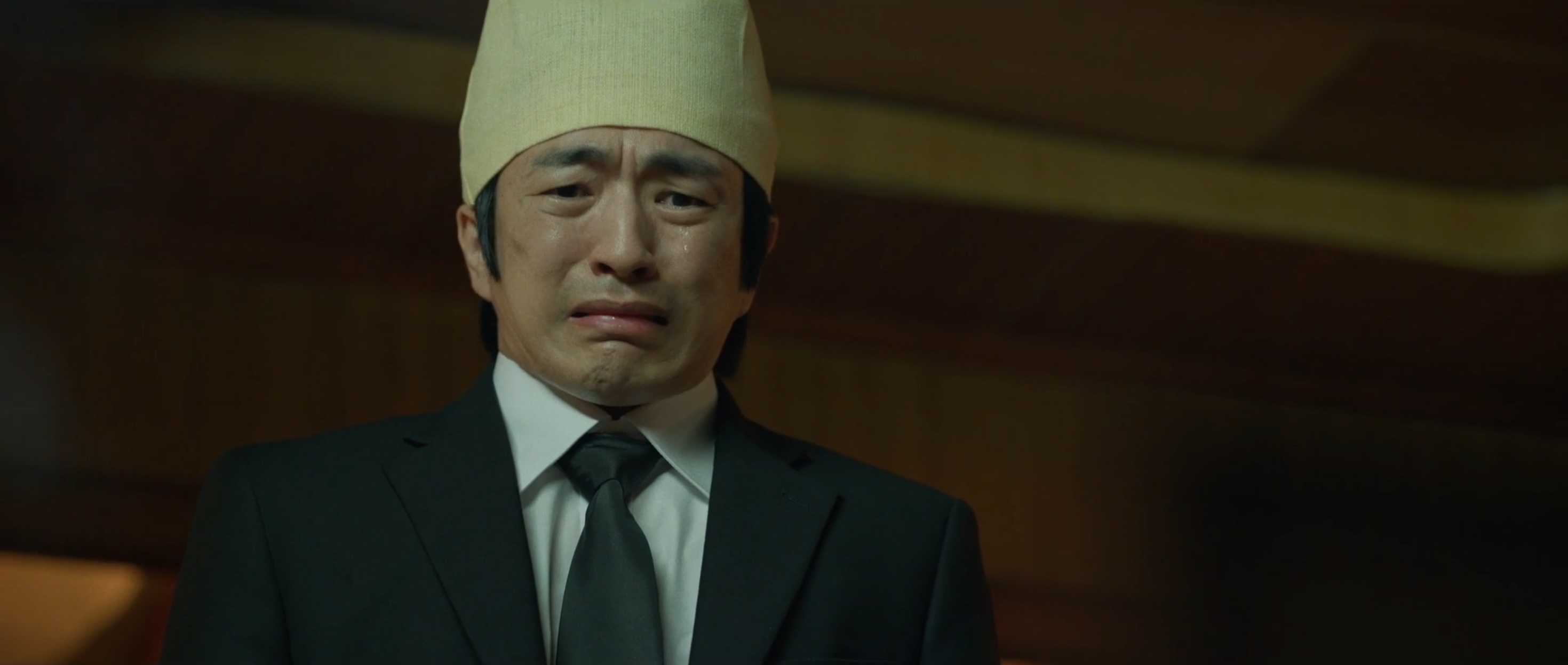

Meanwhile, Shi-young also attends a funeral — not Ki-beom’s, but his own mother, who has just succumbed to dementia. Over here, the mood is vastly different; people in power are chatting away, as if Ki-beom is persona non grata. Not a single police officer had shown up to Ki-beom’s funeral, because they’re all here instead. Ugh. Overwhelmed by regret and rage upon witnessing this scene, Tae-joo falls to the floor in a faint.
Back in the present, Tae-joo has a question for the serial killer. “What about Ki-beom,” asks Tae-joo. “Did Ki-beom not know that you were the culprit?” The camera lingers on the murderer’s hands, and then it cuts to his face, and it’s Ki-hwan.
The self-assured smile on Ki-hwan’s face doesn’t waver. “Yes,” Ki-hwan answers smoothly. “He didn’t know.”
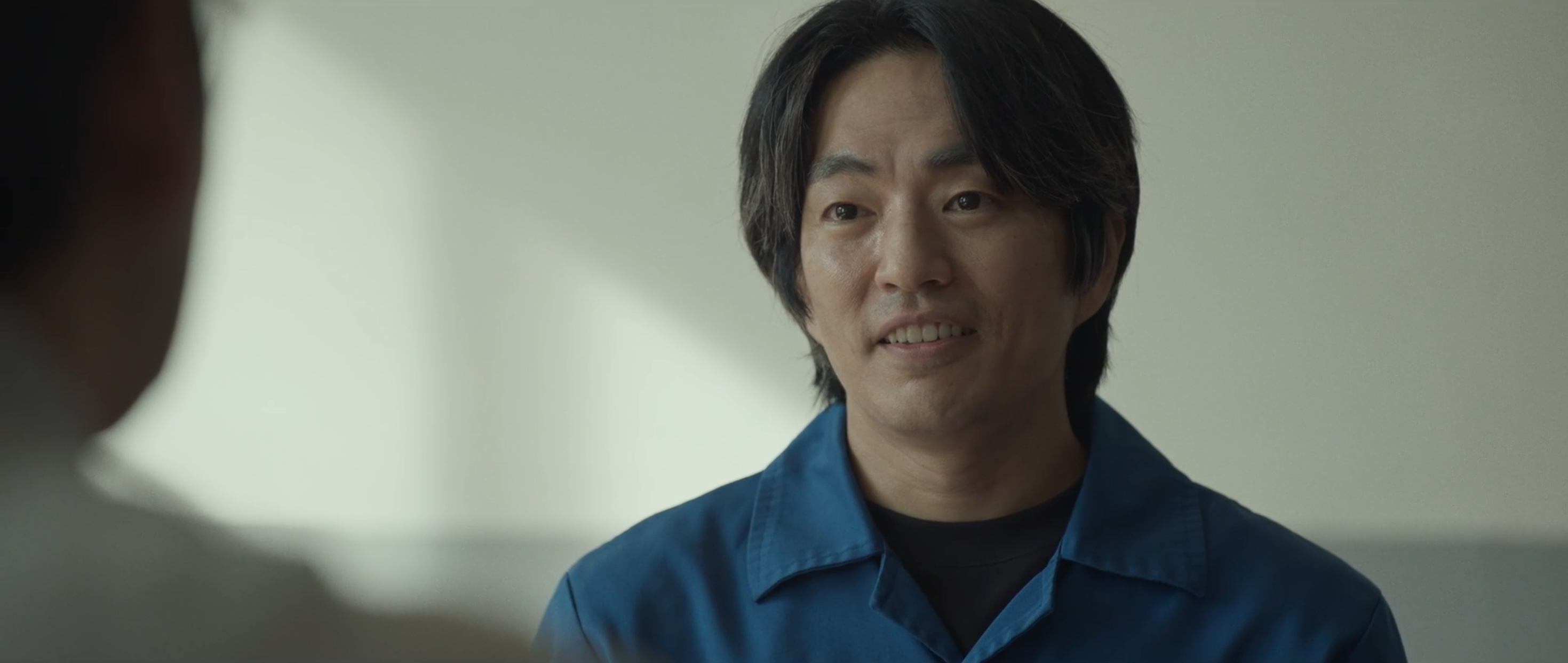
*slams the table* *turns around and wails into my hands* JUNG MOON-SUNG WHY ARE YOU HERE. Oh my god. This drama’s script is so clever, because it lulled us into a false sense of security by how closely it’s been following real-life events till now. Ki-beom’s death due to police brutality, Seok-man’s polio and wrongful arrest, and presumably the factory friend with blood type O just like the actual murderer… And then, right at the moment when our guards have fallen the lowest — right after Ki-hwan wrenched all our hearts with his palpable sorrow at his brother’s funeral — the killer reveal swoops in like a direct punch to the solar plexus. I’m thoroughly winded.
The execution is so well-done, too. After weeks of frustratingly obscure angles and unfocused frames, we’ve been primed to expect more of the same. But what makes the reveal so good, and so shocking, is how it isn’t drawn out in the least. No audio cues for emphasis, no slow pan upwards, no gradual sharpening of a blurry shot. Just a jump cut to the killer’s smug face, right there all of a sudden, with a deliberate pause for the reveal to truly sink in before he speaks. And guess what? While the hangeul name on the murderer’s case file in the first episode reads Lee Yong-woo, the hanja characters read Lee Ki-hwan. It was right there from the very beginning, and yet the drama’s masterful writing and directing skilfully led us to think otherwise.


Flashback to the day of Ki-beom’s passing, where the events play out differently. Weakly, Ki-beom asks if Ki-hwan told Tae-joo about him following Min-ji. But it had been Ki-hwan who followed her out. Ki-beom struggles to hold back his tears — for all that he’s trying to convince himself otherwise, he knows deep down that his brother is the killer. And so, Ki-beom musters up the last of his strength, pleading with his brother to spare Soon-young.
Realizing he’s been found out, Ki-hwan abruptly pulls away and steps out of the car. Then, slowly, a grin finds its way to Ki-hwan’s face as he leaves his brother on the pretext of buying a cake. Ugh, I’m getting goosebumps. What we initially thought was simple-minded naïveté turned out to be a calculated act of neglect. To think even his testimony was a misdirection! Ki-hwan clearly nurses an inferiority complex towards his brother, despite seemingly caring for him. I’m reminded of the scene where their mother slapped Ki-hwan for “allowing” Ki-beom to end up in prison, as well as the scene where the high school students squealed over Ki-beom’s handsome face while insulting Ki-hwan’s looks in the same breath. No wonder, in his twisted mind, Ki-hwan found the impetus to murder the high school girls and frame his brother.

Spiraling from unchecked grief, Tae-joo causes a scene by arresting Shi-young — at his mother’s funeral, no less — for the illegal arrest and assault of Ki-beom. It’s ineffective, for obvious reasons, but Tae-joo’s simply acting out in a helpless despair. Too little, too late.
As for the self-serving Shi-young, he drowns his frustration in alcohol, frustrated over losing his chance to network and ingratiate himself with the big shots at his mother’s funeral. Then Shi-young laments how he nearly gained renown for arresting a serial killer, but then Ki-beom “just had to go and kick the bucket.” Yeah, the “S” in Shi-young stands for scum. Vindictive scum, in fact, because Shi-young then proceeds to insinuate that the abusive detectives could get off scot-free by framing Tae-joo. They do, causing him disciplinary action and a transfer to a remote post, and then they proceed to repeat their violence on Seok-man this time. Utterly despicable.


Unable to come to terms with Ki-beom’s death, Soon-young experiences a brief bout of amnesia. But overhearing an argument between Tae-joo and Ji-won jolts her memory, and she asks Tae-joo to make a roadtrip for her favorite castella. Once he’s away on the long drive, Soon-young breaks down crying in the storage shed, smacking herself in visceral guilt and despair.
When Tae-joo returns, he finds a bloody knife in the empty storage shed and assumes the worst. But Soon-young isn’t one to succumb like that. Instead, she stands in a silent protest outside the prosecutor’s office, holding a bloody message: Punish the murderer Cha Shi-young. Then she coldly slaps him, retaliates to his fiancée’s slap with one of her own, and slaps Shi-young again for good measure. In response to Hee-jin’s hysterical fit, Soon-young tells her to deal with it. “Your man merely got slapped, but my man lost his life.”


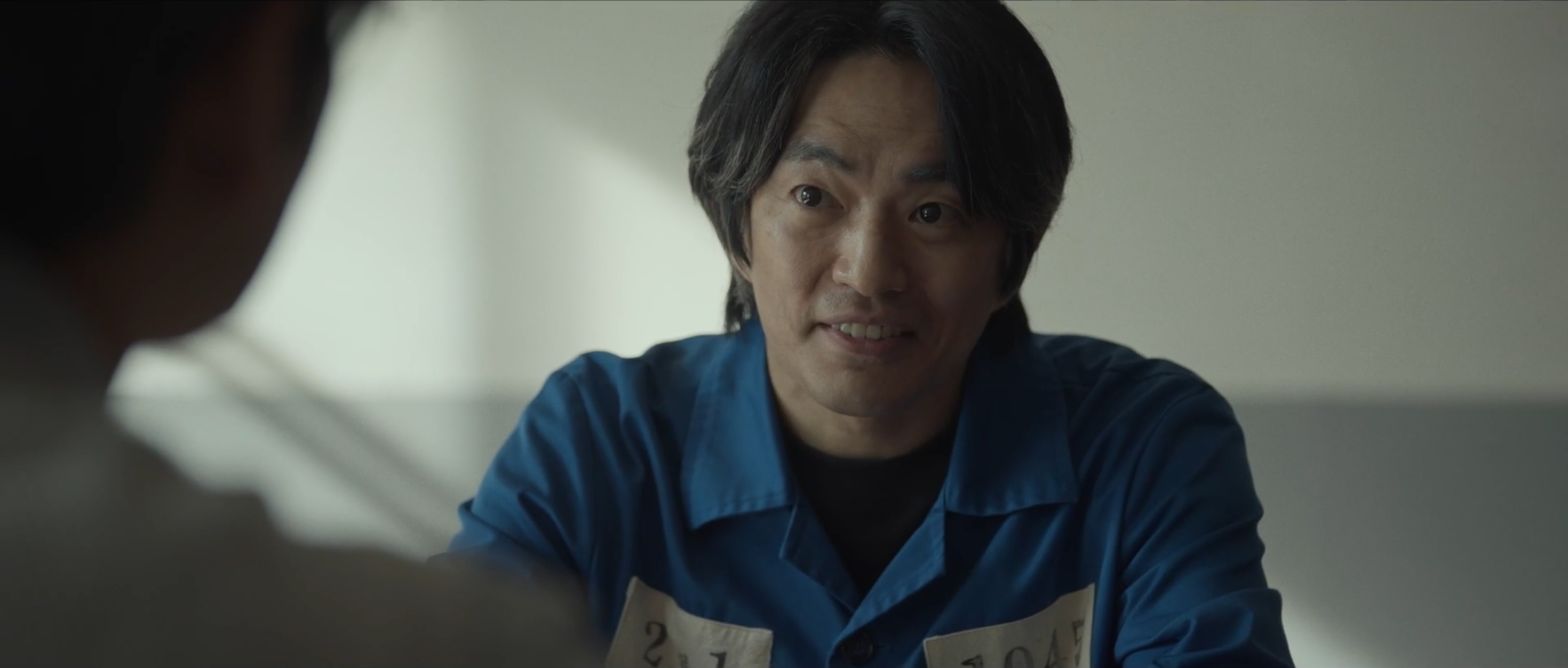
Ki-hwan packs up the bookstore, having decided to leave town and move near his wife’s home. “Let’s never see each other again,” says Ki-hwan to Tae-joo. “Ever.” Then Ki-hwan visits Seok-man in prison. Ugh, the nerve of this man. Not only had Ki-hwan deliberately tossed Ki-beom’s handkerchief into Seok-man’s laundry basket, but he’d also presumably faked a limp to frame him further. Then Ki-hwan breaks the news of Ki-beom’s death by police brutality, exerting pressure for Seok-man to confess before the same happens to him.
In Kangseng, the abusive detectives torture a confession out of a disoriented and sleep-deprived Seok-man. At the same time, over in his new neighborhood, Ki-hwan gleefully strangles a woman with her own stockings. The scenes cut back and forth, like a condemnation of the broken system: look how your wilfully hasty apprehension of the wrong suspect is enabling the killer to claim more victims.
The crime scene reenactment further proves this point when Seok-man struggles to climb the wall of the victim’s residence, only for everyone to be too caught up in lambasting him to care about how he’s unable to trespass without the help of half a dozen officers. Both the public and Tae-joo himself are misappropriating justice in the name of self-righteous, punitive retribution — it doesn’t matter who the culprit is, so long as there is one that they can criticize and lock away in order to feel morally upstanding.

Tae-joo may be our protagonist, but he’s certainly not a hero. Investigations should be led by the facts, not by a misguided righteousness and a faulty gut sense. Tae-joo thinks he’s learning from his mistake with Ki-beom and avenging him by apprehending the right culprit, but he’s wrong. He hasn’t learnt anything at all, because he’s falling into the exact same pattern of jumping to conclusions, affirming culpability through confirmation bias, and rushing to put a man behind bars. Tae-joo had several opportunities to pause and reevaluate his accusation based on the illogical discrepancies, but instead he consciously chose to rationalize his conviction and bulldoze straight ahead. Anything that happens to Seok-man in custody is undeniably Tae-joo’s fault, too.
Tae-joo’s part in Ki-beom’s death weighs on Soon-young, who chooses to remain behind rather than tag along to Tae-joo’s new post. She can’t bear to see him for the time being, and so the siblings part ways. Soon-young visits Ki-beom’s grave, where Ki-hwan watches her from a distance. “Beom-ah, Soon-young looks like she’s suffering a lot. How about I send her off to be by your side, so that you’re no longer lonely?” Ugh, goosebumps. Ki-beom’s murderous plans are foiled by one of Soon-young’s elementary school students, and he grins like he’s just found a new target…
At his new post in Muwon, Tae-joo’s nightmare begins anew when he discovers a used stocking where an old man claims to have seen a dead woman. (Notably, the directing and cinematography of this scene is a clear homage to Memories of Murder.) Over in the present, Ki-hwan toys with Tae-joo, dangling five more undiscovered murders in his face. Ki-hwan claims three of them are high-profile cases, but the remaining two are far more interesting. After all, one of them had been a very young child.

It’s a testament to the strength of the narrative and its direction that even with history as a spoiler, we’re still kept on our toes, swept up by a gamut of emotions. So much of this drama is true to real-life events, and it not only highlights just how much tragedy unfolded as a direct result of the flawed investigation, but also just how easily the culprit was able to weasel away. The serial killer takes on the role of the titular scarecrow, but at the same time, the police and prosecution are also chasing scarecrows, misled by their false impressions of the actual person. And we, as viewers, have been doing the same.
It’s deeply frustrating to watch the certificates of commendation being conferred upon Commissioner Cha, the abusive detectives, Dae-ho (the only one who looks conflicted), and Shi-young. But it’s only right for the drama to unfold this way, because this is exactly how things were back then. Three decades of injustice built upon the violence and incompetence of the authorities; three decades of shame and suffering for an innocent man who never deserved any of it.

I think the execution of the killer reveal was singlehandedly one of the best in K-drama history, not just in its creative direction, but also in terms of its timing in the larger context of the narrative. The focus of this drama isn’t the suspense of a whodunit, but the sorrow of the injustice inflicted upon innocent victims over the course of decades. It is a tribute to those who suffered, a criticism of every cog in the system that perpetuated that suffering, and a warning that we should never repeat history’s mistakes.
Revealing the culprit this early affords the drama more freedom and flexibility in delving deep into his psyche, laying bare just how brazen he was and how disgraceful the authorities were for overlooking it anyway. Jung Moon-song acts out grief in a heartrendingly convincing manner, even as we know it’s all a ruse, and that dissonance makes Ki-hwan’s audacity all the more hypocritical and contemptible. Every aspect of his facade is deliberately calculated, and it’s deeply unsettling to watch just how little regard he has for other people, and how he uses them as pawns to spin a web of lies with so little remorse. And just how easily he can pretend to grieve, in order to manipulate other people’s empathy. The diametrically opposite, duplicitous faces of Lee Ki-hwan will linger in my mind for a long time to come.

RELATED POSTS