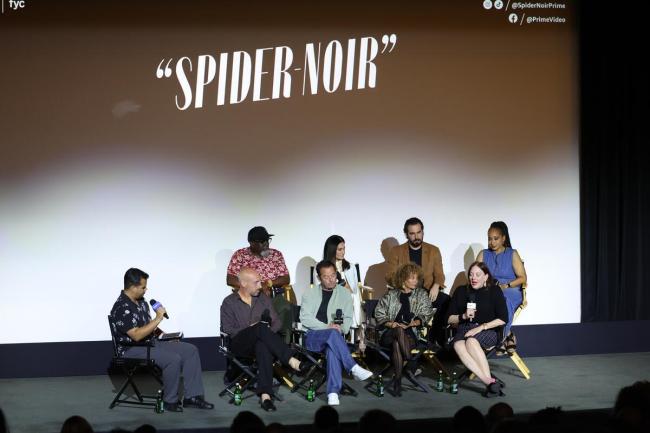
A show with the scale and artistry of “Spider-Noir” only comes together when talented artists from every above and below-the-line department work harmoniously. From Nicolas Cage’s film noir-inspired performance to the black-and-white cinematography to visual effects, music, editing, and more, every level of the production had to bring their A-game.
IndieWire recently celebrated the process of the entire show at an event presented in partnership with Prime Video. Two panels moderated by IndieWire awards editor Marcus Jones highlighted the production and post-production processes that turned “Spider-Noir” into one of the most distinct superhero projects we’ve ever seen on TV.
The production panel featured “Spider-Noir” creator and showrunner Oren Uziel, casting director Rachel Tenner, cinematographer Darran Tiernan, costume designer Trayce Gigi Field, makeup department head Lana Horochowski, prosthetic designer Vincent Van Dyke, and hair department head Theraesa Rivers.
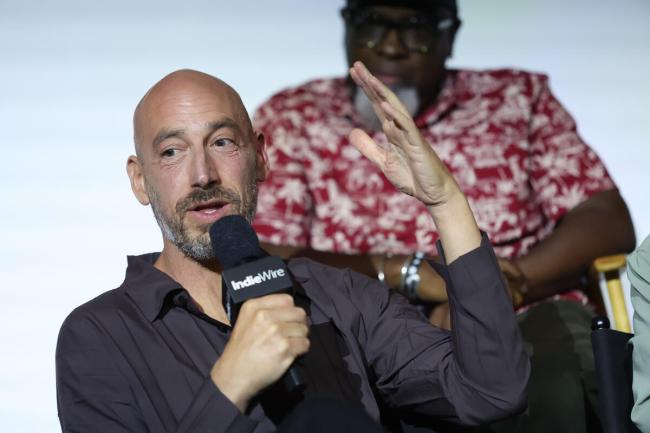
Uziel explained that the show, which was inspired by Cage’s brief voice role in “Spider-Man: Into the Spider-Verse,” was built around the actor’s physicality and love for classic film noir. Everything flowed from his Humphrey Bogart-inspired performance, which gave the other departments the framework required to create their own film noir aesthetics.
“It was 70 percent Bogart and 30 percent Bugs Bunny,” Uziel said. “We talked a lot about ‘What if you could make a Bogart movie where Bogart just happened to be Spider-Man?’ And we worked hand-in-hand with his ideas, just building a version of this character that no one has ever seen before and a version that he could really sink his teeth into. And it just gets weirder and weirder as the show goes on, because he’s more spider than man.”
With Cage on board from the beginning, Tenner understood that she had to find actors who could hold their own against one of the most celebrated and dynamic performers in the world.
“Knowing that Nick Cage is going to be Spider-Man brings a very specific tone to it,” Tenner said. “You want people who are going to rise to that level.”
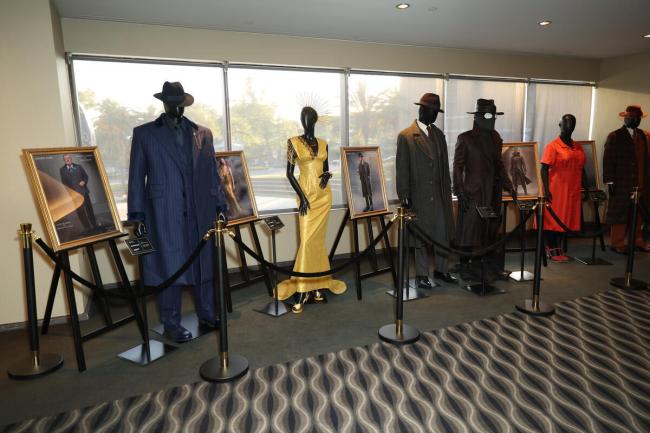
Recreating the worlds of film noir for a big budget superhero show would have been a daunting enough task, but the crew received another challenge when it was decided that the show would stream in both black-and-white and color. That meant that every visual decision had to be made with both color palettes in mind.
“The trick is, you hire them first telling them it’s only going to be black-and-white,” Uziel said with a laugh. “Then you double their workload because they’re stuck and excited.”
The unprecedented task of shooting a series designed to be viewed both ways required massive amounts of collaboration between departments. Tieranan explained that his role as cinematographer required a lot more than what we see on camera. In addition to working on the actual shots, he served as every department’s sounding board about how their work will appear on various cameras.
“We were all very lucky to start together,” Tiernan said. “So from that point of view, so from that point of view we could all be in sync as much as we could to figure out what the black-and-white was going to be and what the color was going to be. We set up cameras in each department with a particular LUT so everybody knew what this red looked like in black-and-white and what that red looked like in color. It was very mindful, and it took a while before we got there. But I feel like we did.”
Field recalled her close collaborations with Tiernan on set, saying it consisted of “Lots of calling him and asking questions and saying ‘Can you come down here? I need to show you some fabric in person’
“And I was very happy with that,” Tiernan said. “To be closely collaborating with all these brilliant artists was fantastic, because we were just discovering everything at the same time together.”
“Spider-Noir” is now streaming on Prime Video. Watch the complete conversation with the production team in the video above.