For most artists, a work eventually reaches a point where it has to be let go. Albums are mixed, films are locked and books are sent to the printer. Not so for Sting.
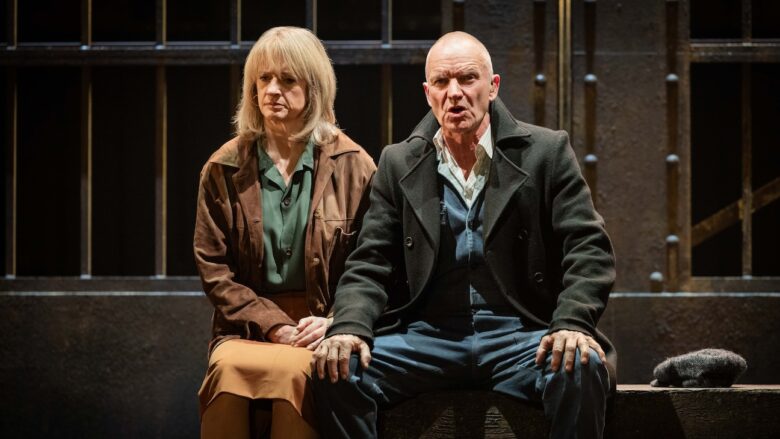
More than a decade after The Last Ship first premiered, the former Police frontman is still rewriting, refining and reshaping the deeply personal musical inspired by his childhood in the shipbuilding town of Newcastle in England’s northeast. The production, which recently played in Amsterdam, Paris and Brisbane (Australia), arrives at New York’s Metropolitan Opera from June 9–14 and has become something of a living document — part memoir, part love letter to a disappearing working-class community and, perhaps most poignantly, an ongoing conversation with the parents whose lives helped inspire it.
When we sat down backstage in Brisbane, Sting spoke candidly about the musical’s long evolution, the catharsis of performing it night after night and why he still isn’t convinced the show is finished. Along the way he reflected on seeing Jimi Hendrix as a teenager, the songwriting lessons that have guided him for decades and why he believes human creativity will ultimately outsmart artificial intelligence.
“I think I’ve been writing the songs for this musical all my life,” he says at one point.
After speaking with him, it’s hard not to believe it.
I found The Last Ship incredibly moving. I’m curious about your songwriting process. What’s the relationship between your conscious and subconscious mind when you’re writing? With a project like this, I imagine many of the songs were written to serve the story rather than arriving as flashes of inspiration.
I think I’ve been writing the songs for this musical all my life. They emerged around 2011 or 2012 as if they’d been sitting inside me for decades. I described it as projectile vomiting. They just came out in a flood.
“Shipyard” was the first song I wrote and it arrived almost fully formed. The musical is based on people I knew, people from my community, my father, my mother and myself. It’s not a straight autobiography by any means, but there’s a lot of me in the play.
When you talk about the subconscious, I was bringing up things that weren’t always particularly pleasant. At the same time it was very therapeutic. I feel as if I go through some kind of catharsis every night when I perform it. It sounds pretentious, but I do. My parents are on stage with me the whole time.
Was the seed of the show planted when you wrote “The Soul Cages” in 1991?
I think so. I wrote “The Soul Cages” after my parents died. I’d gone back to Newcastle to see them before they passed away, and it coincided with the closing of the shipyard where this story takes place. I saw it as an interesting metaphor — an elegy for a way of life and an elegy for my parents. The germ of the idea was there. I wrote “Island of Souls” at that point and thought there might be theatrical potential in it somewhere down the line. It began as a prolonged mourning process for my parents and somehow, more than 30 years later, it’s become this.
How did the writing process evolve? You had the original story, but you also worked with several playwrights along the way.
I had the basic story from the beginning. It was about shipyard workers taking back control of their work from the owners and the government — a gesture of defiance and identity. I knew it needed a love story and there are elements of my own life in that. But I’d never written a play before, so I needed help. Brian Yorkey worked on it first with me, then John Logan came in. Now we’ve been working with Barney Norris. They’ve all done a good job, but it’s taken this long to figure it out. And honestly, it’s still not finished.
“Good musicals are often about communities under threat,” says Sting of The Last Ship. “Fiddler on the Roof is a perfect example.”
Mark Senior
That’s interesting because when you make a record, eventually you have to let it go. A musical seems different.
Exactly. I’m still tinkering with it. I was thinking about adding a song the other night. Not that I can just do that instantly, but the point is that it’s never really finished. Even while I’m acting in the show, I’m listening to the band, thinking about arrangements, hearing what the bass player is doing. I’m never completely finished with it.
The current version is noticeably leaner. Characters have been combined and streamlined.
Jackie White is now an amalgamation of the priest and the foreman. He’s become the father confessor of the community. Those changes helped focus the story.
And what about Shaggy? His presence feels transformative.
The ferryman character had always been there, but it wasn’t originally a huge role. Then I started thinking about Greek mythology and the ferryman Charon, the figure who takes people to the next world. When I thought about Shaggy, I knew he could bring something unique. He’s Jamaican. He’s different. He has tremendous stage presence and personality, but he also has a sense of mischief. The play can be quite dark and it needs moments of lightness. He provides that.
One of the things that struck me was the strength of the female characters.
That’s deliberate, but it’s also truthful. It was the women who kept my community together. That’s simply reality. The play reflects that.
Even though it’s set before mobile phones and in a very different industrial world, it feels surprisingly contemporary.
We’re all under threat. Today our jobs are potentially under threat from artificial intelligence. I’m optimistic that we’ll find ways around that, but the themes of the show remain relevant. Good musicals are often about communities under threat. Fiddler on the Roof is a perfect example.
Do you see AI as a bigger challenge than previous technological changes in music?
When photography was invented, painters couldn’t compete with it in terms of reproducing reality. So they shifted sideways. Instead of painting the object, they painted the light around it. That’s human ingenuity. AI can make perfectly serviceable pop music, but would you actually want to listen to it? Hearing something and truly listening to it are two different things. At the moment I don’t feel particularly threatened by it.
You’ve spoken about Newcastle as a huge influence on your development. Was it a vibrant music town when you were growing up?
Absolutely. There was a thriving folk scene, a healthy jazz scene, rhythm and blues. I played Dixieland jazz, trad jazz and later in big bands. The Animals came from Newcastle. There was a famous club called the Club A’Gogo where, when I was 15 years old, I saw Jimi Hendrix.
That must have blown your mind.
It really did. He’d just appeared on Top of the Pops and a few days later he was in our town. There weren’t many Black people in Newcastle then, and suddenly here’s this extraordinary figure from another planet with a left-handed guitar making sounds we’d never heard before. He completely recalibrated what a pop star could be.

“AI can make perfectly serviceable pop music, but would you actually want to listen to it?,” asks Sting. “At the moment I don’t feel particularly threatened by it.”
Mark Senior
You’ve often talked about songwriting beginning with a phrase. Is that still true?
Very much so. You’ll arrive at a refrain like “Every Little Thing She Does Is Magic” or “Don’t Stand So Close To Me” and think, “That’s a good title. What’s it about?” You work backwards. Starting with a great first line isn’t always useful. But if you have a compelling refrain, you’ve already got the puzzle. Then you fill in the crossword around it.
You seem incredibly disciplined. Do you write every day?
No. I avoid it like the plague. Writing is difficult. I’ve learned to be patient with the creative process and not get anxious about it. Sometimes you need input rather than output. You can’t be constantly producing. I don’t really want to say anything unless I have something useful to say. There’s so much noise in the world already. I don’t want to add to it. If that means saying nothing for a while, then that’s probably what I should do.
As The Last Ship heads to New York’s Metropolitan Opera, are there still changes ahead?
Absolutely. I’ve already got changes lined up. They’re incremental — moving a verse, cutting a section, reshaping something — but they’re important. We’re close. Very close.