

10 Best TV Shows For Fans Of Christopher Nolan Movies
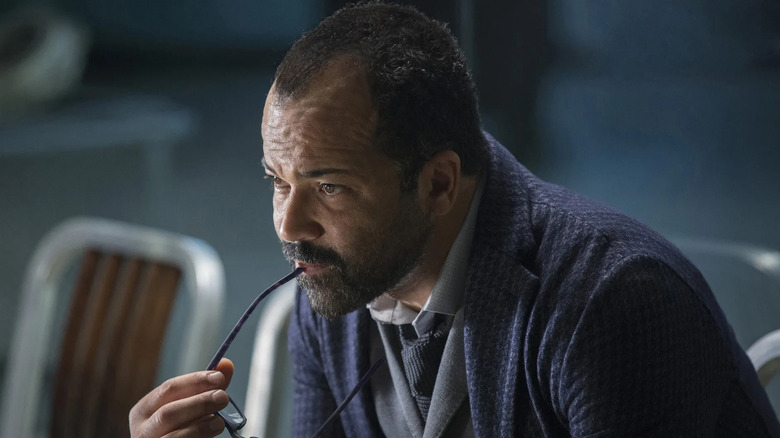
"The Odyssey" will likely be remembered as one of the movies that defined Christopher Nolan's career. Nolan changed what superheroes could be while validating the populist concept of the "reboot." Looking back at Nolan's entire filmography, we're able to use his perspective to find great TV shows.
The following 10 series will show you pre-apocalyptic horror, the limitless potential of the human mind and memory, the potential dangers and rewards of constant innovations, and the tragedies of the great people witnessing the ends they thought would justify extraordinary means. These are stories of guilt, triumph, self-deception, and brilliance, and they're the 10 best TV shows for fans of Christopher Nolan movies.
The Prisoner
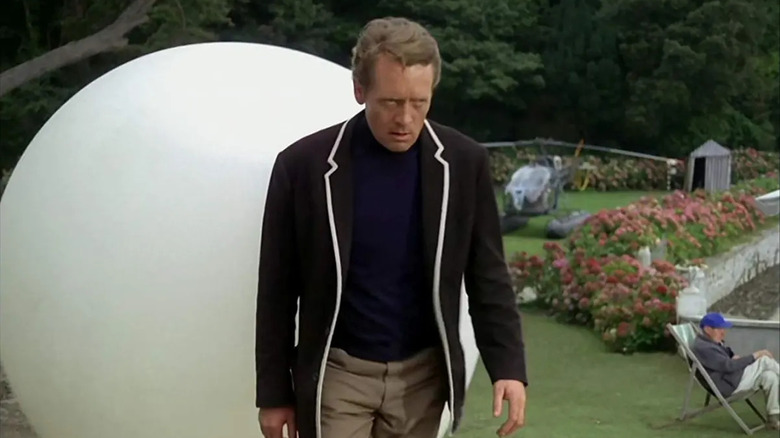
Created by and starring Patrick McGoohan, ITV's "The Prisoner" is quietly one of the greatest British television shows of all time. McGoohan plays the mysterious "Number Six," a disillusioned former intelligence operative who awakens one day in a secluded, artificial town referred to as "The Village." In reality, this place is a futuristic prison where he is constantly tortured, coerced, and interrogated by equally mysterious agents wishing to know why he left British intelligence behind. It is widely regarded as a precursor to the modern mystery box show, inspiring even American TV classics like "Twin Peaks" and "Lost."
Nolan was attached to a proposed film adaptation in the late 2000s, though the successes of "The Dark Knight" and "Inception" likely made it easier for the filmmaker to focus on his own work. After "Oppenheimer" won the Academy Award for best picture (and before it was announced that "The Odyssey" would be his next work), rumors swirled around Hollywood that Nolan would finally get back to this project.
"The Prisoner" is the prototypical Nolan sci-fi epic. There's a government conspiracy, advanced yet loosely plausible science fiction concepts, tension between individual success and collective interest, deliberately opaque worldbuilding, and an everyman protagonist who desperately wants to leave his past behind and return home. As an added bonus, the series also boasts a classically ambiguous Nolan-esque ending — so much so that McGoohan had to go into hiding after the finale aired in 1968.
Devs
There's a fascinating, nigh-oxymoronic quality to the characterization of Christopher Nolan's heroes that "Devs" understands better than any show on this list. The director goes to great lengths to preserve the mortal quality of his aforementioned everymen — to the extent that gods are never seen and magic is only "apparent" in "The Odyssey," and that his superhero trilogy has nothing supernatural about it. Every one of his post-"The Dark Knight" stories is about the impulse for these mortals to play god, from the mass surveillance of the 2008 film to the world-ending invention of "Oppenheimer."
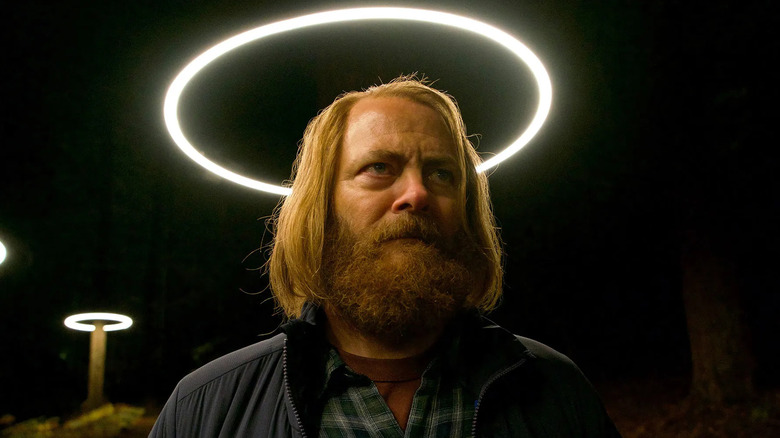
"The Odyssey" reconciles this by asking if humans are capable of seeing themselves as imperfect while seeing a stranger as divinely worthy. It's the exact inversion of the dynamic explored in the mind-boggling Hulu-FX series "Devs," in which an egotistical tech CEO (Nick Offerman) attempts to subvert religious belief while inventing a new god through quantum computing. His titular device is a super computer ostensibly on the verge of being able to predict the entire history and future of humanity, down to the most intimate acts of a single human being.
Its obsession with determinism and the precise (read: malleable) nature of what we understand as free will is reminiscent of both "Tenet" and "Inception." The former wrestles with the idea of the past and future in present conflict with one another; the latter argues that a man's moral direction is not the result of present choice, but an escalation of thoughts that can be manipulated. The entire eight-episode miniseries is written and directed by Alex Garland, one of Nolan's contemporaries in British sci-fi filmmaking.
Westworld
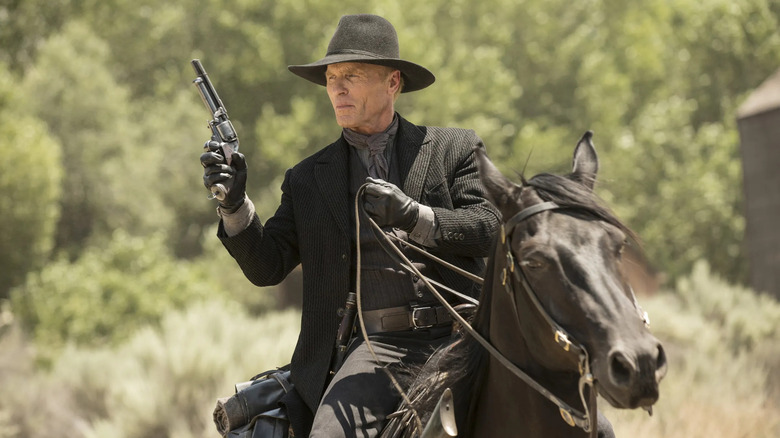
Despite the disappointing circumstances of its end, HBO's "Westworld" is a landmark of television adaptations and serialized sci-fi storytelling. The structural ambition of the first season had the capacity to change the way a viewer thought about time in relation to the perception of events and the overarching narrative. Christopher Nolan's films have done this in their own way going back at least to his 2000s breakout "Memento," a film which was famously inspired by a short story penned by his brother, Jonathan Nolan. The brothers worked together on several movies through "Interstellar" in 2014, after which Jonathan set out to adapt "Westworld" for HBO, working alongside his wife Lisa Joy.
A small spoiler alert for a season of TV that came out over a decade ago — the revelation that the first season of "Westworld" is actually two cross-cut timelines, unfolding decades apart from one another, remains one of the greatest TV twists of the 21st century. It's a direct, subversive use of time in storytelling that Christopher Nolan has only been able to use reservedly (the flashback framing device of "Inception"). It's simply brilliant, and the kind of thing you can only do as effectively on a serialized program. Alongside the recurring themes of free will, morality, religion, and institutional distrust, this twist feels so totally Christopher Nolan that it helps one imagine where Jonathan's direct influence might've been on their joint efforts.
Dark
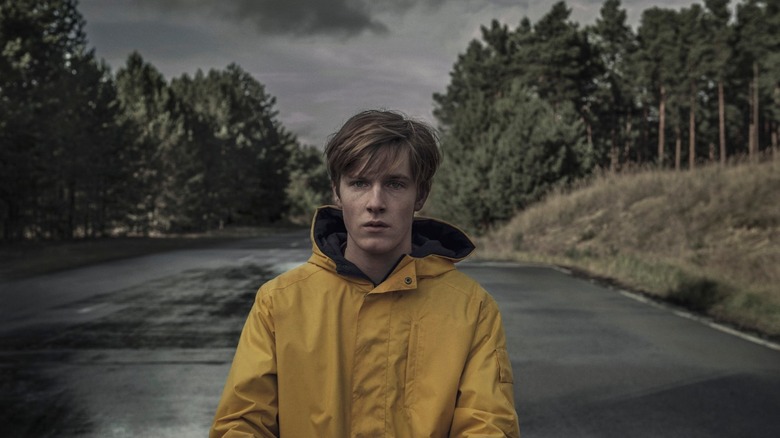
Sometimes, it can be a bit difficult to be a Christopher Nolan fan. While the broad ideas, themes, and moral dilemmas of his films remain consistent, their setting, genre, and tone vary wildly. That's what makes "Dark" such a special entry on this list — it actually appeals to multiple sides of the total Nolan fan, who craves the twisty sci-fi concepts of "Tenet" and "Inception" and the grounded, historical character drama of "Oppenheimer" equally.
There are only a handful of shows like Netflix's "Dark." The German series takes place in a small town that is inexplicably connected to 1986 and 1953. What begins as a time travel mystery thriller in the first season evolves into a profound and refreshingly agnostic meditation on the nature of free will and determinism. Its philosophical approach is similar to that which is exploited in "Inception" — as characters in "Dark" say throughout the series, actions are technically chosen, but the innate desires that influence those actions are not. As these characters attempt to avert an apocalyptic catastrophe in the near future, they must find a way to combat the deterministic arcs of their own lives. Often, they must do so by using time travel to influence their younger selves.
This is how "Dark" cuts to the heart of Nolan's fixation on control. His characters aren't trying to defy the gods to assume their role because of some Nietzschean will to power. Rather, they are people of great, morally complex ambitions who must defy that which seems naturally possible in order to succeed. "Dark" explores that need through many branches, and with a rigorous approach to continuity that will please attentive viewers.
For All Mankind
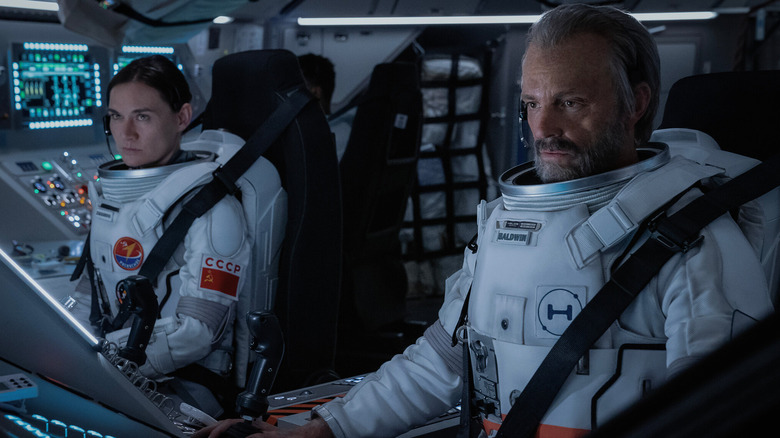
While Christopher Nolan's "Interstellar" is forward-facing speculative fiction about what the near-future human race might require of astronauts in order to survive, "For All Mankind" looks backward to a "What If?" alternate history. The inflection point for this cosmic period drama is, of course, the original space race. In "For All Mankind," Soviet Russia is able to beat the United States to the moon, a short-term national humiliation with unpredictable long-term consequences.
The show's approach to this "catastrophic" hypothetical is fascinatingly nuanced. The Soviet victory in "For All Mankind" has the immediate effect of eliminating complacency within the U.S. space program, forcing them to take risks in order to compete with the East. This actually has some positive effects — space travel and technology evolve at a rapid pace compared to reality, while women are trained as astronauts much earlier in an effort to prove the U.S. is as progressive as the U.S.S.R. At the same time, the prolonging of the Cold War and the atmospheric expansion of national territory leads to military conflict we can hardly imagine.
The political and existential anxieties that have become increasingly present in Nolan's most recent work are what drive "For All Mankind." Even if it's a little more optimistic about the benefits of constant human innovation, it emphasizes the reality that said innovation usually paves the way for new methods of self-destruction as well.
Chernobyl
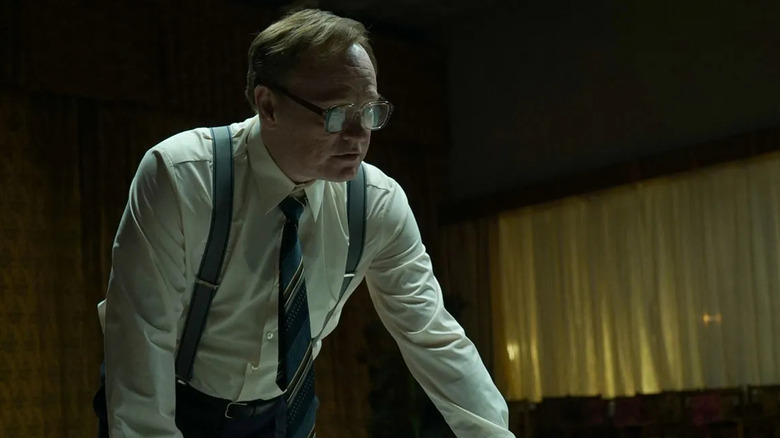
The ten-time Emmy Award-winning series "Chernobyl" is, without question, one of the greatest historical miniseries ever produced, right up there with "Roots" and "Band of Brothers" in terms of urgency and emotional impact. Like Christopher Nolan's "Oppenheimer," "Chernobyl" proves the historical drama can, in certain circumstances, be combined with horror. This isn't just done by embellishing history with supernatural elements, but by simply forcing the audience to confront the emotional reality of the darkest moments in human history.
Both "Chernobyl" and "Oppenheimer" achieve this effect without taking the viewer directly into a warzone. Instead, they explore scientific malpractice. "Chernobyl" recounts, with admirable attention to scientific and historical accuracy, the aftermath of the Chernobyl Nuclear Power Plant disaster. The shared element of Cold War-era nuclear anxiety between this series and "Oppenheimer" is significant. "Oppenheimer" uses the creation and deployment of the atomic bomb as a cautionary tale about hubris with warnings for the future of humanity. "Chernobyl" uses the insidious fallout of its nuclear disaster to explore how institutional dishonesty can quietly be just as deadly.
Both projects carry an air of existential dread that can only be described as pre-apocalyptic. The horror comes from the growing realization that a society has begun the process of total collapse. In "Chernobyl," we watch that disintegration happen in real-time.
Mr. Robot
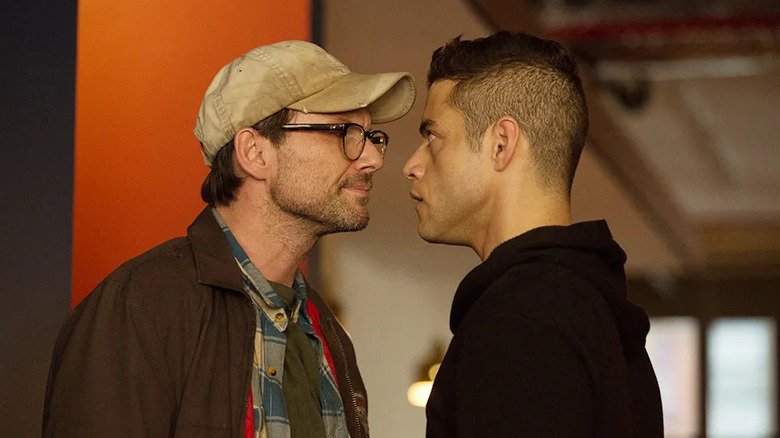
Christopher Nolan will largely be remembered for the big stuff — his devotion to shooting in IMAX, his increasingly apocalyptic view of mankind, his extensive use of practical effects and filmmaking techniques, his complicated faith in innovation as a form salvation, and his talent for cutting genuine epics into breezy three-hour adventures. What has the potential to get lost is his smaller contributions — like, for example, the attention he calls to character-level subjectivity in cinematic storytelling. His peer in this regard is Sam Esmail, the creator, showrunner, and director of USA Network's "Mr. Robot."
The unreliable narrator rarely escapes the world of literature. When they do, in shows like "The Boys" or "You," the camera and performances maintain as much objectivity as possible, giving the audience the experience of observing someone's dishonesty or flawed perspective from the outside. In "Mr. Robot" (and in "Oppenheimer" and "The Odyssey," for that matter), the filmmaking is so dedicated to putting the viewer inside the protagonist's mind that it becomes just as hard for the audience to determine what's actually happening and what isn't. In the case of Rami Malek's Elliot Alderson (a brilliant hacktivist prone to vivid, reality-altering hallucinations), this distrust creates an exquisitely paranoid viewing experience that feels, perhaps paradoxically, more real, more implicating and engaging.
There's also something to be said of its exploration of another minor element of Nolan-esque storytelling, one which we mentioned while discussing "The Prisoner" and which seems to be eking its way to the forefront of his films. Nolan is presently wrestling with the idea of collectivism as both vital to the survival of humanity and a potential lever for total self-destruction. Over its four-season run, "Mr. Robot" explores this idea with more focus without sacrificing complexity.
Homecoming
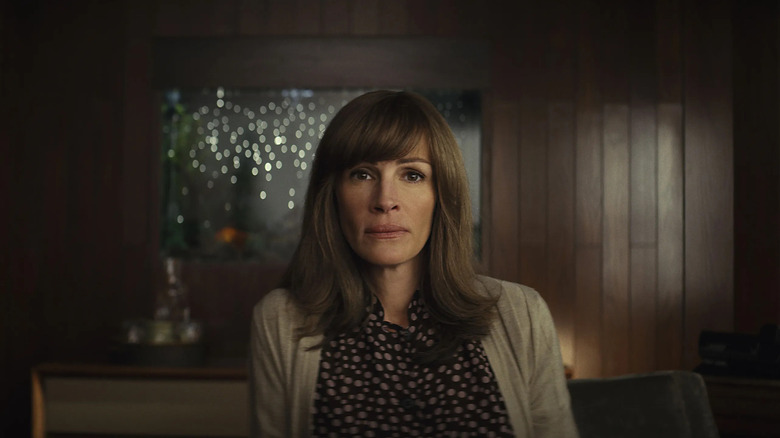
While most viewers are likely already aware of "Mr. Robot," it's likely that fewer have come across "Homecoming" on Amazon Prime Video. Sam Esmail directed the first season, telling a story of two intertwining timelines by capitalizing on the audience's attention to format. Similar to how Christopher Nolan used different film stock to indicate shifting perspectives between two different characters in "Oppenheimer," Esmail switches between past and present by altering the aspect ratio of the shot. It's a small choice, but one that gives "Homecoming" a distinct and retrospectively Nolan-esque vibe in and of itself.
As for the content of the story itself, the central mystery of the first season of "Homecoming" concerns memory. Julia Roberts stars as a social worker who counsels soldiers at a clandestine private facility. As she assesses their post-traumatic stress disorder and prepares them for re-entry into regular, civilian life, she begins to question if her work might have some hidden purpose underneath the talk-therapy. The series intercuts this narrative with sequences from four years later, when her character is seemingly living an entirely different, simpler life with no memory of her previous job.
The first season is one of the most underrated Prime Video shows since the platform launched. It not only rises to Nolan's level in terms of presentational ingenuity, genre, and thematic interests, but overall quality as well.
Severance
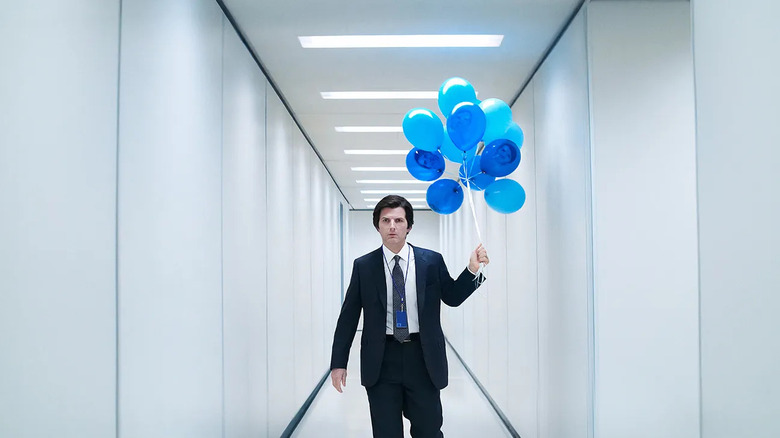
You don't need us to pitch you on "Severance" — chances are, Season 2 converted most of you into lifelong Lumon devotees. Praise Kier. Apple TV's flagship science fiction thriller is already one of the biggest shows of the decade, thanks to its idiosyncratic tone and visual style, as well as its incisive interrogation of corporate culture. The parallel themes should be obvious at this point — mainly the focus on memory.
Like "Memento" and "Inception," "Severance" positions memory as the foundation of one's personality and personhood. It arguably takes it a step further than Christopher Nolan's films, seemingly implying that (at least from the perspective of the series' most zealous characters) memories are functionally the atheistic human soul. Unsettlingly, "Severance" then imagines what might happen if a corporation found a means of editing that soul — separating it, perhaps even cleansing it through the miracle of biotechnological innovation.
Adam Scott's Mark is a fairly Nolan-esque tragic hero in both seasons, grieving the memory of his wife (Dichen Lachman). We won't get too deep into spoiler territory here — though it should be praised that creator-showrunner Dan Erickson has somehow managed to literalize the concept of self-deception even more than Nolan. The series also occasionally explores collective gain and self-interest, though more so from the Teller ("Oppenheimer") and Dr. Mann ("Interstellar") idea that self-interested actors can doom movements from within. Suffice it to say, "Severance" is on par with Nolan's work as defining entertainment in the 2020s, and we can't wait for Season 3 to drop. Eventually.
The Rehearsal
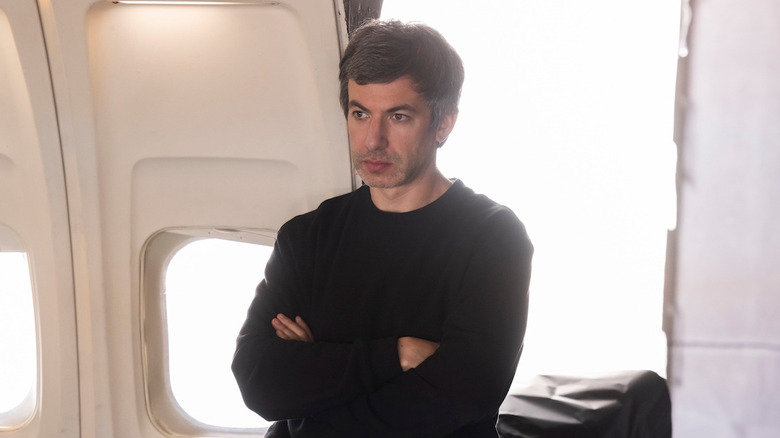
As strange as it may seem at first, "The Rehearsal" is absolutely a quintessential Christopher Nolan-esque piece of art. The only reason that's hard to see immediately is because the HBO comedy series is imbued with so much of the singular style of creator-star Nathan Fielder that viewers are hesitant to compare it to anything else. Maybe they're right — maybe Fielder's storytelling style is truly one-of-one. But consider for a moment that, in this hyperreality he's created for his truly bizarre body of work, Fielder may have molded his on-screen persona into the perfect Nolan-esque tragic hero.
For starters, the Fielder of "The Rehearsal" (a dubiously "real" docu comedy series in which Fielder stages elaborate recreations of real-life situations) exists on the outskirts of human experience, clawing his way toward understanding with tragically Homeric effort. His wholly committed approach to inhabiting the lives and experiences of others is technically amazing, executed with the same breathtaking genius and sacrifice of the creatively industrious heroes of "Inception" or "Oppenheimer." Yet, despite his successes, there's always a feeling that at least one element of his journey has prevented him from closing the gap between observing and connecting — the question of his impact on the child's life in Season 1; the unanswered phone call at the end of Season 2. Both hinge on a kind of moral isolation and deliberate self-deception that are consistently the primary motors of Nolan's characters.
For what it's worth, the comparison between Nolan and Fielder likely wouldn't be unwelcome by either artist. Nolan excitedly hosted a Q&A for Fielder's series "The Curse," which he described as being as unprecedented and creative as "The Prisoner." He also described "The Rehearsal" as "absolutely revolutionary television."