

10 Best TV Shows Like X-Men '97
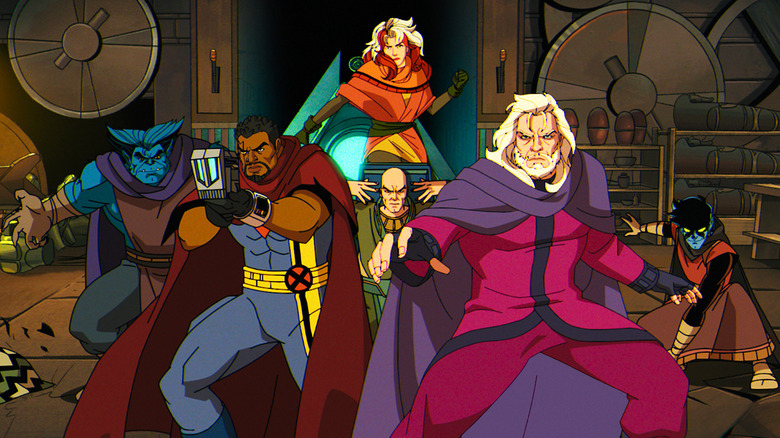
It's a pretty good time to be an "X-Men" fan. Between the Marvel Cinematic Universe's planned reboot from the creators of "Beef" to the rumored appearance of Jean Grey in this summer's "Spider-Man: Brand New Day," there's no shortage of on-screen representation for the most iconic superhero team in the entire Marvel universe. However, even the most ardent "X-Men" fans might be unaware that the well-reviewed "X-Men '97" Season 2, the critically-acclaimed revival of "X-Men: The Animated Series," has already begun airing on Disney+.
"X-Men '97" isn't your typical animated superhero show, nor is it a series cashing in on nostalgic fans' desire for more of their favorite Saturday morning cartoon. "X-Men: The Animated Series" was a groundbreaking show in the superhero genre, providing serialized storytelling that drew heavily from Marvel Comics in both plot and visuals. It's no overstatement to say that the 1990's take on "X-Men" was a major influence on future iterations of the team and superhero television as a whole, leading to many TV shows that touch on similar themes or even feature the same characters.
Whether they're alternative adaptations of Marvel's mutants, comparable sci-fi series focused on group dynamics, or just superhero stories with lovable casts, these 10 TV shows will be familiar company between the weekly releases of "X-Men '97" episodes.
Futurama
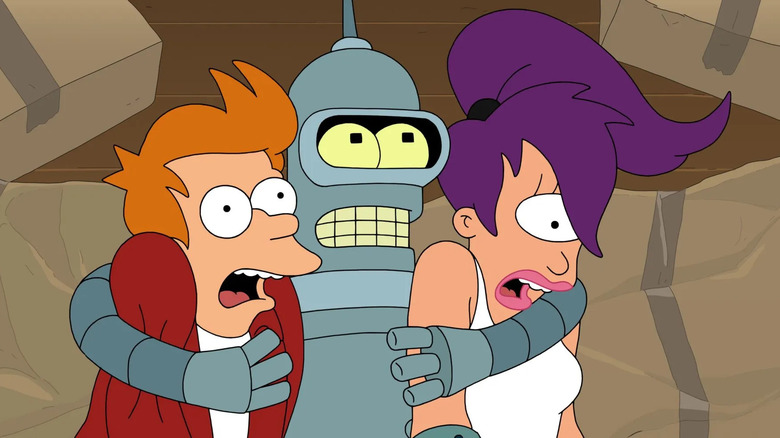
"Futurama" is known by most to be the less popular, more cult-ish show like "The Simpsons," given they're both from the same creator: Matt Groening. However, as far as adult animated television goes, it's probably the closest comparison to a show like "X-Men '97" in terms of its themes, influence from science fiction television, and above all else, an emphasis on showing how its eclectic characters adapt to working together. Albeit, instead of working together as a superhero team saving the world, they're lowly delivery employees in a dystopian future.
Obviously, "Futurama" being aired by the likes of Fox, Comedy Central, and Hulu throughout its run permits it to have a little more edge than the fairly wholesome "X-Men: The Animated Series," but both shows also offset their futuristic sci-fi adventures with some biting commentary about social issues. Whereas "X-Men '97" might allude to mass shootings and technocracy in its storylines, "Futurama" would more bluntly satirize the state of the world, the threat of climate change, and the consequences of late-stage capitalism.
The shows also have another key similarity: They were both revived around the same time. "Futurama" officially made its comeback after a decade with an eighth season on Hulu in 2023, and is nearing the start of its eleventh season on the streamer. It was only a year later, in 2024, that "X-Men '97" ended a 27-year hiatus with its first season on Disney+. Sometimes, the most relevant shows are ones that started before the 21st century.
Wolverine and the X-Men
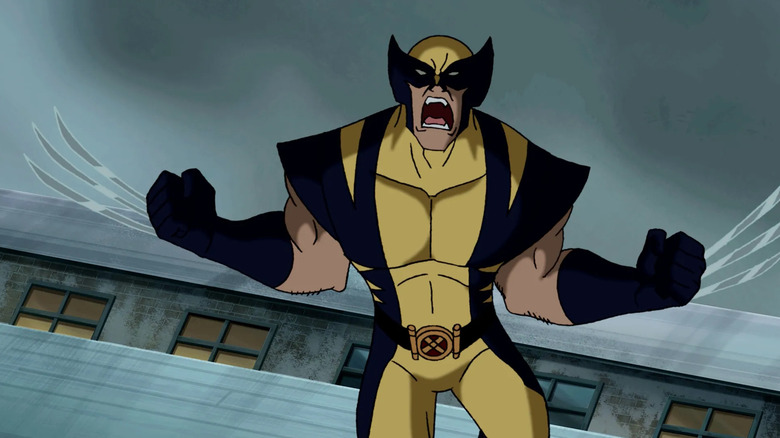
"X-Men: The Animated Series" wasn't the first attempt to adapt the Marvel Comics characters on TV, and it won't be the last. A little over ten years after the last episode of "X-Men: The Animated Series" aired, "Wolverine and the X-Men" premiered on Nicktoons, capitalizing on the character's popularity following Hugh Jackman's portrayal in the 20th Century Fox "X-Men" films.
In particular, "Wolverine and the X-Men" sees the titular mutant take on more of a leadership role than in other animated "X-Men" shows, reforming the group after the disappearance of Professor X and Jean Grey. For fans of "X-Men '97," the rest of the series covers similar ground to the first season of the Disney+ revival, from seeing the X-Men grapple with being a team without the mentorship of Charles Xavier to the appearance of supervillains like Mister Sinister and Apocalypse.
Though it sadly only aired for one season before getting canceled, it is available to stream on Disney+ alongside new episodes of "X-Men '97." Unless you're the type of "X-Men" fan who feels a bit sick of Wolverine given the character's overexposure in comic book media, "Wolverine and the X-Men" does a similarly remarkable job as "X-Men: The Animated Series" and its revival at faithfully adapting comic book storylines and bringing characters both popular and obscure to life on-screen.
Legion
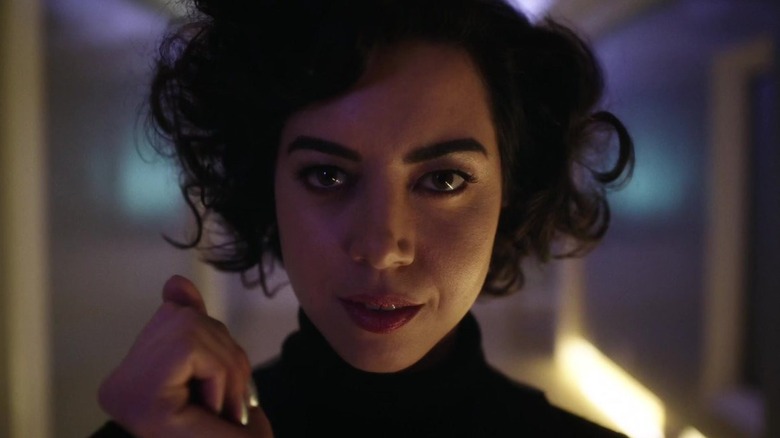
Given that it premiered in a time when superhero movies, especially in the "X-Men" franchise, were embracing their grittier sides, it's not surprising that the FX series "Legion" took a much more grounded, thriller-inspired approach to adapting the comic book story of Charles Xavier's son. Played here by Dan Stevens, the series primarily follows David Haller, who is hunted by government agents after learning that his lifelong schizophrenia diagnosis might actually just be a cover-up for his latent mutant powers.
Without many ties to more recognizable "X-Men" stories, "Legion" spends a lot more time focused on the inner psychology of Haller's character, particularly surrounding the death of his best friend Lenny (Aubrey Plaza), whose likeness is co-opted by the terrifying mutant telepath the Shadow King, who haunts Haller's mind. Whether you like comic books or not, "Legion" is an exhilarating delight, and it's incredibly groundbreaking for a superhero series to focus on mental health as deftly as it does.
Though it's certainly undeniable that "Legion" covers ground few "X-Men" series have managed to do by accurately portraying the struggle of mental illness, it can also feel a bit heavy for a superhero series, especially if you're expecting more color and charisma like "X-Men '97." Still, its status as a much different show in the same Marvel Comics universe warrants checking out if you're at all a fan of previous "X-Men" stories.
Castlevania
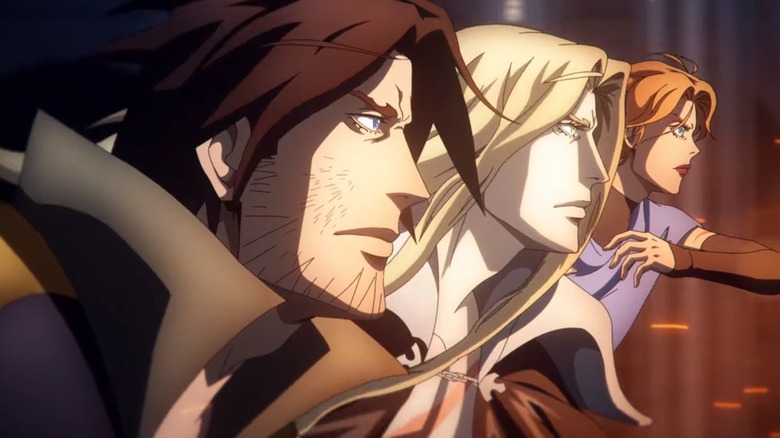
"Castlevania" may not be part of the Marvel universe or feature any mutant superheroes, but the way it adapts its source material for both familiar and unfamiliar audiences evokes predecessors like "X-Men: The Animated Series" and its "X-Men '97" continuation. For the unaware, "Castlevania" has been one of the longest-running video game franchises, beginning on the Famicom in 1986 and continuing to this day.
The Netflix animated series draws primarily from games like "Castlevania III" for the NES and "Castlevania: Symphony of the Night" for the PlayStation. The show mainly follows Trevor Belmont, the last in a long line of monster hunters, who sets out to confront Count Dracula's army alongside the great vampire's son, Alucard, and orphaned magician Sypha Belnades.
As one of the most underrated fantasy shows of all time, "Castlevania" doesn't just rival "X-Men '97" in terms of action and faithfulness to the video games — it came out at a time when animated TV was getting increasingly lazy and visually unappealing. "Castlevania" prioritized dynamic visuals and a strong voice cast while catering to longtime fans of the video games as well as those who've never touched a controller. The same can be said for "X-Men," which was likely a beloved Saturday morning cartoon even for those who've never read a comic book.
Big Hero 6: The Series
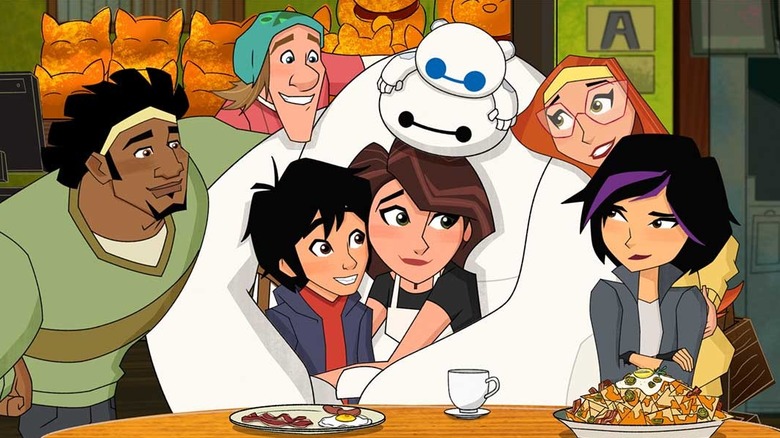
"Big Hero 6" doesn't often get considered when talking about iconic Marvel characters, even though the original comic book originated from Marvel Comics in the late '90s. However, the group's newfound popularity is largely thanks to Disney's animated adaptation of the superhero team, beginning with a film in 2014 starring Scott Adsit as the inflatable reinterpretation of Baymax, who in the comics is originally a synthetic draconic mecha.
"Big Hero 6: The Series" mainly exists in the same continuity as the film version, reuniting the entire voice cast (except for T.J. Miller and Damon Wayans Jr., whose characters Fred and Wasabi are now voiced by Brooks Wheelan and Khary Payton, respectively) as the lovable found family of amateur superheroes protecting the city of San Fransokyo from technologically advanced threats. Despite having a completely different animation style from the movie, "Big Hero 6: The Series" perfectly recaptures the film's heartwarming character dynamics, wholesome tone, and above all else, butt-kicking action.
Though the Big Hero 6 team is unlikely to share the screen with the X-Men or Avengers in any upcoming "Secret Wars" film, this Disney Channel series feels like a throwback to some of the best superhero TV shows of all time, like "X-Men: The Animated Series." It was sadly canceled after its third season, but it wouldn't be the last "Big Hero 6" television series ever made, thanks to the Disney+ miniseries "Baymax!"
WandaVision
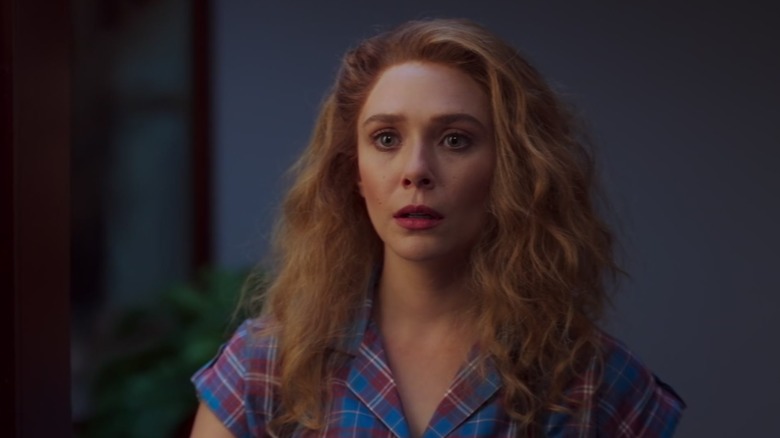
You wouldn't know it if you only watched the Marvel Cinematic Universe films, but traditionally in Marvel Comics, Scarlet Witch and Quicksilver are closely associated with the "X-Men" franchise. Their mutant origins were never acknowledged in the MCU until the 2021 Disney+ series "WandaVision," in which Quicksilver is recast from Aaron Taylor-Johnson in "Age of Ultron" to Evan Peters, who played the character in the Fox "X-Men" films starting with "Days of Future Past."
Aside from the pseudo-mutant connections between Scarlet Witch and the X-Men, "WandaVision" harkens back to "X-Men: The Animated Series" and perfectly sets up the revival of "X-Men '97" by being a nostalgic trip back to TV's past. In the series, Elizabeth Olsen's Wanda Maximoff has created a false reality in a small New Jersey town, living out sitcom-esque fantasies with a reanimated Vision while unknowingly forcing the townspeople to play along against their will. Whereas "X-Men '97" frequently evokes the feeling of Saturday-morning cartoons, "WandaVision" at times feels like catching a sitcom rerun early in the morning, albeit with a "Twilight Zone" edge to it.
Even over five years after airing, there are still plenty of questions we have after watching "WandaVision." Still, as a stand-alone entry in the MCU, it's one of the best and most ambitious projects they've ever produced. It's as much a love letter to sitcom eras as it is an exploration of Wanda Maximoff's grief and mental health, turning Scarlet Witch into a new fan-favorite of the film franchise.
Invincible
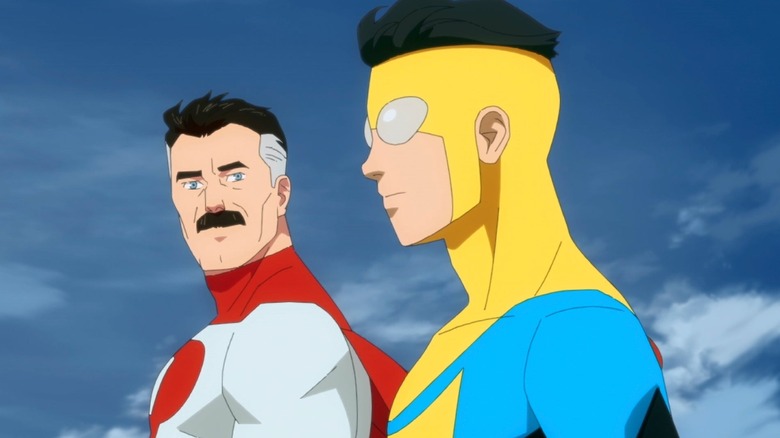
It's rare these days that we get a brand-new adaptation of a comic book series that does justice to its source material as well as "Invincible." The superhero story comes from the same creator of "The Walking Dead" and doesn't skimp on letting its narrative get violent and grim in its depiction of a world where the presence of super-powered individuals is more akin to real-world politics.
The most obvious parallel between "Invincible" and "X-Men '97," aside from both being animated superhero shows, is the fact that most of the protagonist Mark's latent superpowers develop when he's a teenager, as an allegory for puberty. The first season mostly centers on Mark developing his superhero persona with the mentorship of his father, Omni-Man, whose true motivations for being on Earth are revealed to be nefarious as the season progresses.
Having just aired its fourth season and already renewed for two more, shows like "Invincible" prove that there's room on TV for superhero stories that are more thematically complex than your typical DC or Marvel fare. Nevertheless, "X-Men '97" fans who might want to watch something edgier than the Disney+ series but not stray too far from faithfulness to the comics or traditional superhero tropes will find a lot to enjoy from "Invincible," even if the series leaves them feeling more bittersweet than warm on the inside.
Extraordinary
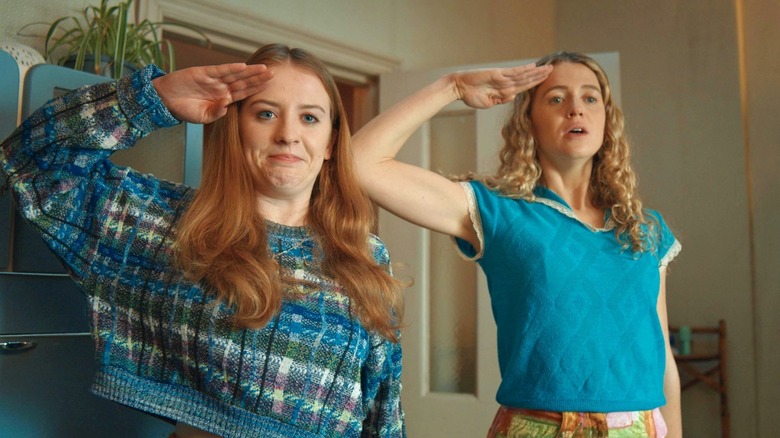
When we talk about superhero TV shows that defined the genre, it's also worth acknowledging the shows that had so much potential to do so but weren't given the chance. We're talking about "Extraordinary," a brilliant British sitcom that aired on Hulu in the U.S. and Disney+ internationally, set in a world where, much like the mutants of "X-Men '97," most people develop superpowers during adolescence — the only exception being the series' protagonist, a wayward 25-year-old woman named Jen (Máireád Tyers).
As a sitcom that spanned only two seasons before getting canceled, "Extraordinary" expertly merges the grounded, roommate comedy genre with superhero antics, albeit the superpowers that manifest in the series can at times be much more absurd than anything you'd find in a Marvel series. While Jen's roommates, Carrie and Kash, can channel the dead and rewind time, respectively, other characters in "Extraordinary" summon fish and can make people orgasm with a simple touch.
The second season, in particular, explores Kash trying to form a proper team of superhero vigilantes, which gives the show its closest similarities to a show like "X-Men '97." However, above all else, "Extraordinary" is a fascinating character study of what it's like to be an outsider in your world, with Jen's mental state being at the forefront of the show's two-season arc. If only it could continue, as "Extraordinary" definitely had the potential to be a modern classic in superhero television.
Your Friendly Neighborhood Spider-Man
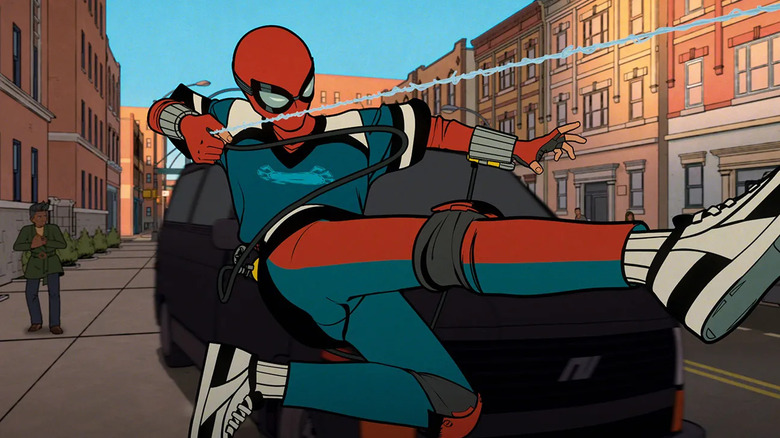
"X-Men '97" isn't the only animated Marvel series on Disney+ that feels like a throwback to the franchise's much earlier TV output. "Your Friendly Neighborhood Spider-Man," which has thus far only aired one season in 2025, focuses on the early days of Peter Parker's adventures as Spider-Man, albeit not in the same timeline as the Tom Holland-led films. The key difference here is that, rather than being mentored by Tony Stark as he is on the big screen, Peter Parker (Hudson Thames) becomes the mentee of Oscorp CEO Norman Osborn (Colman Domingo), whose transformation into the Green Goblin parallels Parker's development as Spider-Man.
The series does have its ties to the main MCU timeline, however, with Charlie Cox reprising his role as Daredevil in the series. For the most part, though, it plays out like a traditional Saturday morning cartoon iteration of "Spider-Man," just with a more drawn-out exploration of Peter Parker's origin story and the emergence of his iconic rogues gallery.
You might not assume that "Your Friendly Neighborhood Spider-Man" is one of the best Marvel cartoons of all time, given the stiff competition. However, the show earns its acclaim by feeling fresh, which says a lot for an adaptation of Marvel's most popular hero. It's further proof that Marvel has a much better track record with creating animated TV than live-action movies as of late.
Eyes of Wakanda
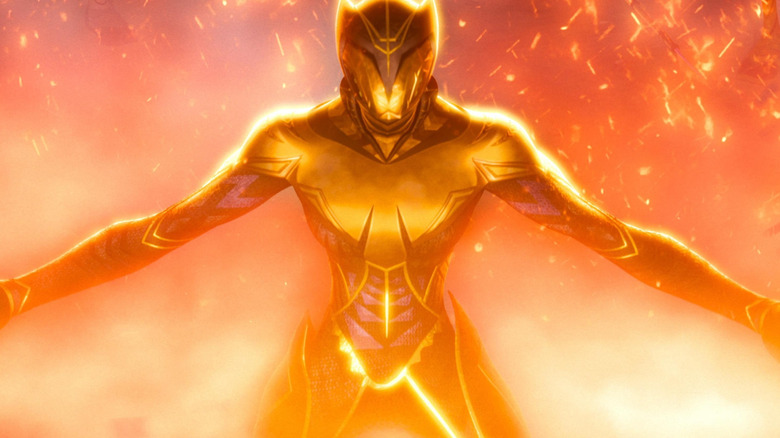
"Eyes of Wakanda" is certainly the most unique show on this list, despite its status as a Marvel property. Similar to the early seasons of "What If...?," "Eyes of Wakanda" is an anthology series exploring various characters in the history of Wakanda, tracing the legacy of the Hatut Zeraze, aka the War Dogs, through ancient Greece all the way up to the events of 2018's "Black Panther" across four episodes.
Of all of Marvel's Disney+ shows, "Eyes of Wakanda" certainly ties in the most with the mainline film continuity, but along the way also ties in the history of Marvel superheroes with real-life parallels in Achilles and Odysseus, not unlike how Season 2 of "X-Men '97" sees the mutants traveling back to ancient Egypt. Along the way, "Eyes of Wakanda" doesn't just play out like a history lesson of the iconic, secretive African country, but also a worthy prelude to one of the most critically-acclaimed installments in the Marvel Cinematic Universe.
Overall, as far as superhero TV goes, "X-Men '97" and its original series are tough acts to follow. "Eyes of Wakanda" proves that not every Marvel series on Disney+ has to be the same, instead using the structure of TV to tell meaningful stories, tying in not only comic book origins but current events and real-world history.