The Teenage Mutant Ninja Turtles may have started in the comics as a parody of superheroes like Daredevil, but they quickly became heroes (in a half shell) in their own right when the first animated series started airing in 1987, and it’s one of the best shows to make you nostalgic for the era.
The turtles became a pop culture behemoth, with several animated shows, live-action movies, games, and comics hitting the shelves over the last 30 years. Recently, the Teenage Mutant Ninja Turtles had a resurgence after the “Last Ronin” comics imagined a gritty alternate future. In it, a mystery member of the team goes on a revenge mission after the deaths of his brothers.
There had been talk of “The Last Ronin” getting a live-action treatment, and a video game is in development. But until that comes to fruition, there are a handful of animated shows to keep audiences happy, although some are better than others.
Rise of the Teenage Mutant Ninja Turtles (2018-2020)

“Rise of the Teenage Mutant Ninja Turtles” is more fast-paced and energetic compared to the older TV shows, and it definitely leans more toward younger audiences than young teens and above. The clean animation style and a completely rebooted universe also makes it a fresh take on the traditional story, especially when it comes to characters like Shredder (Hoon Lee) and Splinter (Eric Bauzer).
However, it adds magic, demons, and mystic ninja powers into the mix, which feels like a step away from the usual storylines. While it’s good that Nickelodeon did something completely different with the franchise, it feels incredibly silly and over the top at times.
Yes, the other shows have dabbled in the supernatural too — but making Shredder into a demonic set of armor created by the Krang (Jim Pirri) just took the reinvention too far. It’s not a complete misfire, but it isn’t for everyone.
Tales of the Teenage Mutant Ninja Turtles (2024-2026)
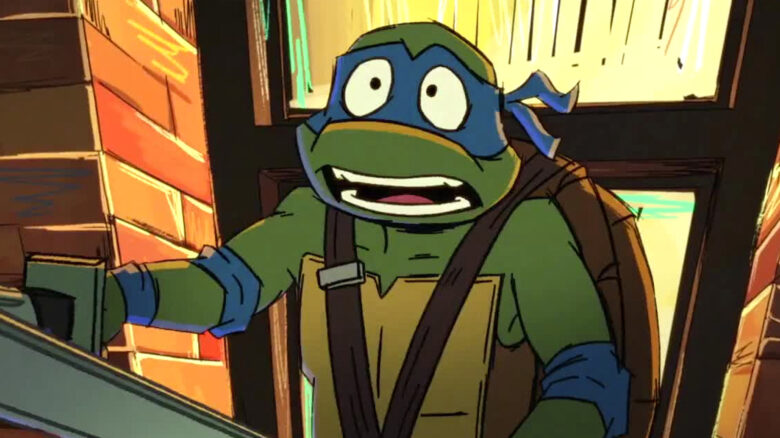
“Tales of the Teenage Mutant Ninja Turtles” picks up with the most recent version of the turtles on Paramount+, spinning off their 2023 movie “Mutant Mayhem.” It’s gorgeously animated in the same style as the movie and is reminiscent of the “Spider-Verse” movies, but it still retains its own unique voice rather than a copy-and-paste attempt.
The voice acting from the whole cast, including Ayo Edibiri as April O’Neil, is top notch, and the episodes themselves are incredibly fun and lively. But the annoying thing about the show is how every story is framed as if one member of the team is telling it in an unreliable fashion. Yes, they are literally telling “tales” to one another, meaning some of it might not have actually happened.
It makes the events of the show feel inconsequential, especially after the movie. Clearly co-showrunners Christopher Yost and Alan Wan approached the series with the idea that it shouldn’t impact any future sequel. But this makes “Tales of the Teenage Mutant Ninja Turtles” feel like an afterthought instead of a worthy project in its own right.
Teenage Mutant Ninja Turtles (2012-2017)
Don’t let the 3D animation style put you off — Nickelodeon’s 2012 “Teenage Mutant Ninja Turtles” series is more impressive than you might remember. It works hard to develop Splinter (Hoon Lee) away from just being the turtles’ mentor, introducing his long-lost daughter, Karai (Kelly Hu), who has been brainwashed into thinking he killed her mother. The show also expands the typical cast of characters. April O’Neil (Mae Whitman) is a key player once more, but her father, Kirby (Keith Silverstein), gets kidnapped by the Krang in Season 1, which creates a unique motivation for her.
This insightful streak continues through Seasons 2 and 3 as Splinter tries to repair his relationship with Karai while Krang even manages to take over New York. Yes, the turtles actually lose in a story beat similar to “Star Wars: Episode V — The Empire Strikes Back,” and they become an underground resistance.
In Season 2, they even team up with the 1987 turtles in a dimension-hopping storyline. While it wasn’t the first project to do the crossover, it is incredibly fun to see the two squads work together and incredibly rewarding for longtime fans.
Teenage Mutant Ninja Turtles (2003-2009)
The 2003 “Teenage Mutant Ninja Turtles” had a fresh animation style and was a little edgier than the original show. It’s no surprise, really, since many superhero shows and movies were reinvented for a moodier tone to move into the 21st century.
In tone, it’s a little closer to shows like “Batman: The Animated Series” — it still leans in to what makes the comics great, but with a darker edge. It also takes the cosmic storylines and runs wild with them. Time travel, intergalactic wars, ninja gods — the 2003 series has it all. But equally, it spends time dealing with how the turtles’ adventures actually affect them.
One example is in Season 4, when Leonardo (Michael Sinterniklaas) is forced to deal with his own PTSD as a result of taking on Shredder (Scott Rayow). It’s these moments of depth that put the 2003 show ahead of the more recent versions of the turtles. Plus, it gets bonus points for doing a multiverse crossover with the 1987 show over a decade before anyone heard the words “Spider-Verse.”
Teenage Mutant Ninja Turtles (1987-1996)
The 1987 “Teenage Mutant Ninja Turtles” set the bar for how the turtles should be seen in animation, and it nabs the top spot on our ranking purely for its iconic killer theme song. Fun fact — the tune was co-written by “The Big Bang Theory” creator Chuck Lorre.
Not only that, but the series brilliantly balanced the lore and style of the comics with the fun, lighthearted tone needed for a Saturday morning cartoon for kids. But among all the battles with Shredder (James Avery), Krang (Pat Fraley), and all the other monstrous villains is a journey of growth.
It sounds silly, but the four brothers go from relying on Splinter (Peter Renaday) to tell them how to run their missions, to saving New York and the rest of the world without needing guidance. By the time Season 10 aired in 1996, Splinter tells them that he’s taught them everything he knows and they no longer need him as their master. In fact, he sees them all on the same level. It’s a wholesome ending that absolutely feels earned.