
In the summer of 2021, my family moved to Costa Rica.
Like many parents, I was looking for activities for my children. Brazilian Jiu-Jitsu seemed like a good fit. My oldest children started first. Then my younger children followed. Before long, all four of my kids were training several times a week.
I sat on the sidelines. For nearly two years, my professor encouraged me to join. Every week, he would ask. Every week, I would politely decline.
Then one evening, my eight-year-old son slipped behind me and locked in a rear-naked choke. I didn’t have perfect technique. It wasn’t even particularly tight. But it was enough. Enough for me to realize that if he were a few years older, a little stronger, and a little more experienced, he might very well make me tap.
A few days later, I attended my first class. I thought I was learning Jiu-Jitsu.
What I did not realize was that I was learning core principles that would reshape my view and approach to being a father.
The first lesson was humility. As a lawyer, I am accustomed to operating in environments where experience matters. Credentials matter. Accomplishments matter. On the mat, none of that mattered. I was a beginner. There is something profoundly humbling about being submitted to by people who are smaller than you, younger than you, and less accomplished than you in every area except the one that currently matters.
Jiu-Jitsu strips away ego because reality is impossible to negotiate with. Either the escape works, or it doesn’t. Either the guard pass succeeds, or it doesn’t. Either the choke is there, or it isn’t. Fatherhood has taught me the same lesson.
Children are remarkably effective at exposing the gap between who we think we are and who we actually are. They do not care about our resumes. They care whether we are present. They care whether we listen. They care whether we keep our promises.
The second lesson was consistency. One of the things I admire most about Jiu-Jitsu is that there are no shortcuts. In theory, you can purchase a black belt. You can buy one online this afternoon and have it delivered to your front door by the end of the week. What you cannot purchase are the thousands of hours of practice, failure, confidence, and experience that a black belt is supposed to represent. Those things must be earned.
Fatherhood works much the same way. Titles are given. Trust is earned. The most influential fathers are rarely the most talented or the most successful. They are the ones who keep showing up. School plays. Bedtime stories. Soccer games. Long conversations. Difficult conversations. Ordinary Tuesdays. Children remember consistency far longer than they remember perfection.
Jiu-Jitsu gave me another lesson that applies directly to parenting: there is no blueprint. There are fundamentals. There are principles. There are examples worth studying. But eventually every practitioner develops a game uniquely suited to his body, temperament, strengths, and limitations. Some people apply pressure to pass. Others move constantly. Others build their game around timing and patience. No two Jiu-Jitsu players look exactly alike.
Fatherhood is no different. There are books. There are mentors. There are fathers we admire and try to emulate. But every child is different. Every family is different. Every challenge is different. At some point, every father must develop his own game. The goal is not to copy another father’s approach, per se. The goal is to build one that best serves your family.
My professor often says, “Sometimes you’re the hammer. Sometimes you’re the nail.” On the mat, that means some days you’re applying pressure and other days you’re constantly tapping out, without ego. Fatherhood has taught me the same lesson. There are moments when your children need encouragement. There are moments when they need accountability. There are moments when they need comfort. There are moments when they need boundaries. There are moments when they simply need you to listen. Every situation is nuanced. Every child is different. Every season of life requires a different approach. The challenge is having enough humility and awareness to recognize which role is required of you in that moment.
One of the most surprising lessons Jiu-Jitsu taught me was to seek instruction from those around me. As adults, we often assume leadership means having answers. My experience on the mat has been the opposite. The fastest path to improvement is asking questions. I routinely ask professors and coaches: “How can I improve?” I ask higher belts where I am making mistakes. I ask training partners to do situational drills, where they start off in a dominant position, and I ask them what errors they saw in my game. Over time, I realized I should be asking my children some of the same questions.
How can I be a better father? What am I missing? What do you need from me that I am not providing?
Jiu-Jitsu taught me that improvement begins with the willingness to receive honest feedback. That is true whether the lesson comes from a black belt on the mat or a child sitting across the dinner table.
Perhaps the greatest lesson has been learning the difference between firmness and selfishness. Good Jiu-Jitsu requires both compassion and boundaries. You can be respectful while remaining difficult to move. You can remain calm without becoming passive. You can be kind without surrendering your position. Fatherhood requires the same balance. Children need love. They also need structure, freedom, boundaries, support, and accountability. Too much of either extreme creates problems. The challenge is finding the balance.
As my three years on the mat have accumulated, I have become convinced that the deepest lessons of Jiu-Jitsu have very little to do with fighting. John Danaher has said, “Training is about skill development, not about winning or losing.” The objective is improvement, not perfection. Fatherhood demands a similar mindset. There is no scoreboard. No championship podium. No perfect season. There is only growth. Growth as a father, as a provider, and as a man.
The objective is not perfection. The objective is to become slightly better than you were yesterday. Children change. Families change. Circumstances change. The problems that existed last year are not the problems that exist today.
Fatherhood is a dynamic challenge requiring constant adaptation. There are no rehearsals or answers. Only opportunities to learn and improve.
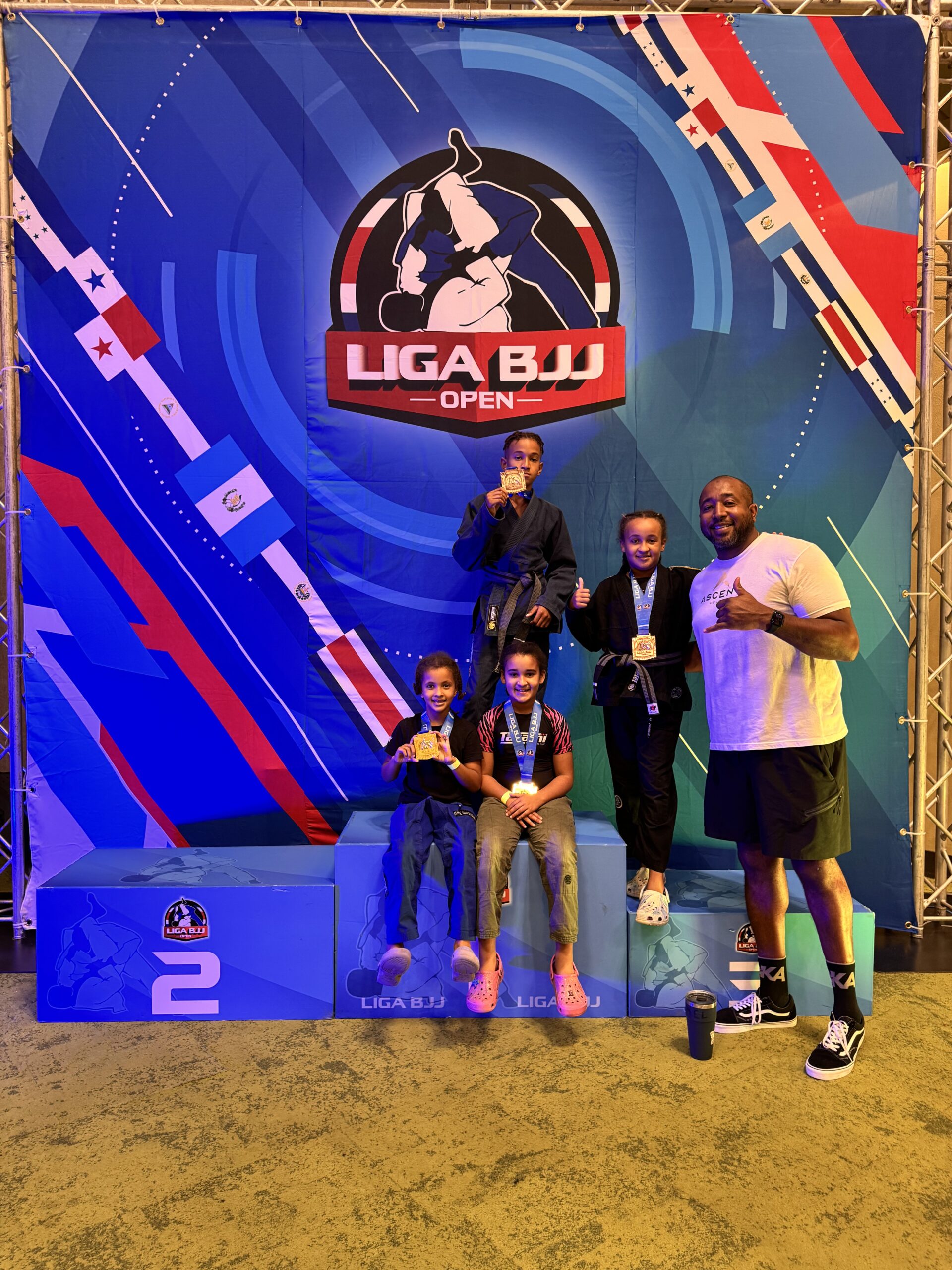
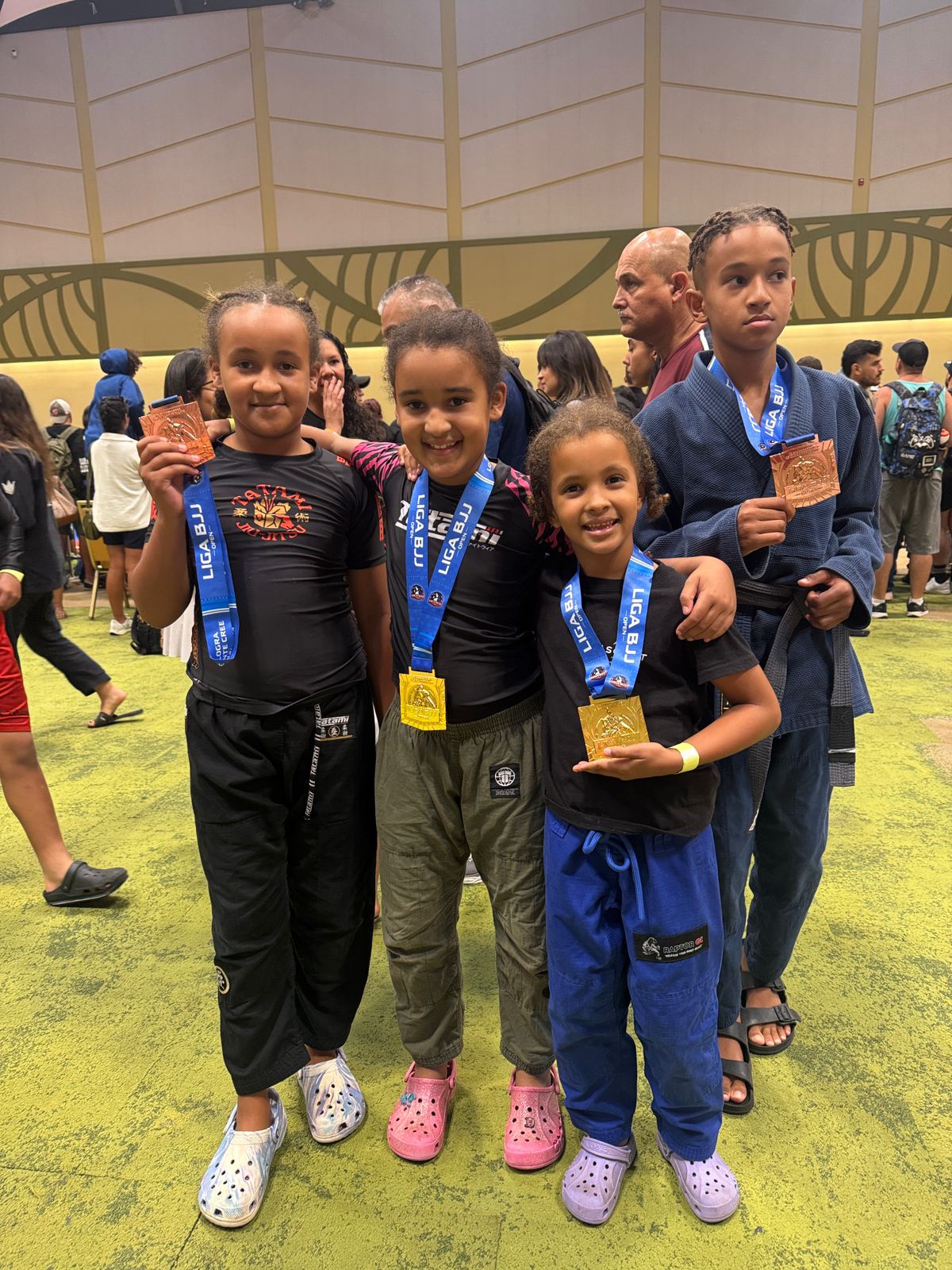
Today, all four of my children train. My oldest two have spent nearly half a decade on the mats. My younger two have followed closely behind. We have celebrated victories together. We have cried after losses. We have traveled throughout Central America with gis folded into our luggage. We have found community in places where we knew no one. What began as an activity for my children became one of the greatest gifts they have ever given me.
I started Jiu-Jitsu because my eight-year-old son caught me in a rear-naked choke. I stayed because it made me a better father. The greatest lesson I have learned is that fatherhood and Jiu-Jitsu share the same destination: Show up. Stay humble. Keep learning. And when necessary, ask for help from the people you love most. Sometimes they are the students. Sometimes they are the teachers. And if you are fortunate, they are both.