
Aleshea Harris’ seething, stylish “Is God Is” vibrates on a frequency that’s hard to fully get one’s arms around. It’s a séance for the anger that Black women share, an exorcism for the indignities we’ve been forced to swallow down. It is commiseration, maybe even a call to arms, taking cues from a handful of films featuring Black anti-heroines. I’d call it the onset of a new trend, but it’s actually the third story in the past year that’s spoken to a part of myself I’ve tried to suppress, uprooting memory, survival instincts, and ingrained respectability.
The film reminds me of a handful of moments in my life that I’ve felt shame (and “handful” is probably an understatement), and one in particular that shaped my psyche for the worse. It happened when I was a junior in high school, one of maybe four Black girls in my grade, and regularly attending football games with my friends. I wore my hair out then, braiding it haphazardly at night and unfurling it in the morning—but after this game I remember reconsidering that. Because after about 30 minutes of this consistent, subtle pinching at the crown of my head, I turned to discover that a group of boys had been throwing used candy—hastily chewed lollipop sticks and Jolly Rangers—into my hair. My friends, sitting on either side of me, had been picking the candy out as best they could. They hadn’t let me turn around. They hadn’t told the boys to stop. And after my discovery, they wouldn’t express any interest in moving.
In the moment the shame came from being Black in a white, unwelcoming space. From having a head of hair that became something else—a dumping ground; a moving target—behind my back. That shame stemmed from a lie: that I was somehow unworthy of protection. But now, when I’m hit with the memory of that day, I’m ashamed of the truth. The anger I felt, the desire to fight somebody (hell, everybody) was just, but I let the apathy convince me that it wasn’t. Denying it only made it worse, of course; any anger I shelter now feels tied to that moment, the proverbial pilot light in the furnace of my rage, always burning.
It’s that same rage that Harris has spent the past 10 years weaving into her work. The award-winning playwright holds a vested interest in misogynoir, a form of misogyny that explicitly affects and diminishes Black women. “At that intersection, people can be quite dismissive of us, and certainly of our anger,” Harris said at a Q&A hosted by Film Independent. “People just don’t take it seriously… They really flatten it. They’re not interested. They’re not curious in any nuance in why a Black woman might be mad.”

It’s why Harris penned “Is God Is,” a tale of revenge that pushes back against that indifference. It began as a play, borrowing from Greek tragedy and spaghetti westerns, and now takes on a second life as a cinematic tribute to the Black feminine in all its righteous, messy fury. It’s such a crucial film because to many, a mad Black woman is a nuisance. Any expression of anger gets in the way of our “natural” role: that of the caregiver, the ultimate bystander. Adopting a posture of anything other than utter compliance is a shot across the bow, a glitch in the matrix. It breaks every rule set down to keep the wheels of society turning. “It is dangerous,” Harris says, to be a Black woman who is also angry, to point out the systems that have been “dehumanizing” us for centuries.
Harris’ debut is not afraid of the danger. It follows twin sisters (Kara Young and Mallori Johnson, both are immaculate tours de force) who’ve grown up disfigured after their father, the “Monster” (Sterling K. Brown), set their mother on fire for the crime of trying to leave him. Years pass before they reunite with the woman they call God (Vivica A. Fox), who, in her final days, requests that they finally take vengeance against their dad. He tried to kill her, after all — it makes sense that someone return the favor. And harrowing as it is to watch these women wrestle with the rage and grief tied to such trauma, there’s also a sense of healing that comes with Harris’ compassionate approach to it.
While there’s rarely been an outright shortage of the kind of on-screen Black anti-heroines we see in “Is God Is,” a lot of the films we regard as gospel now are tinged with stereotypes and prejudices that still leave a sour taste. For every “Jackie Brown”—a film that sings with a surprising empathy for its Black protagonist—there are a half-dozen films that sink beneath their thinly veiled misogynoir. It’s (sort of) like what Harris says: a nuanced look at Black female anger is much harder to find than one that turns it into a punchline. Until recently, that is—in the past few months, the concept of the Black female vigilante has become inescapable. More than that, it’s taken on the nuance that I’d given up hope of seeing.
“Is God Is” is the latest in a growing roster of films that let their heroines express the full breadth of their fury. Indie films have been quietly building up a foundation for this trope, but this new, improved expression of the Black vigilante seemed to launch into the mainstream with 2025’s “One Battle After Another.” Perfidia Beverly Hills (Teyana Taylor) became the new face of complex Black femininity overnight, and a lightning rod for thorny discourse shortly after. The spitfire revolutionary grates against two pervasive racial caricatures—the Angry Black Woman and the sex-crazed Jezebel—with a womanist twist. She cares deeply about her crusade, but she won’t neglect her own desires, either. Perfidia wields her sexuality as readily as she does her anger: they’re weapons in her arsenal, especially to fend off fiends like the lecherous Col. Lockjaw (Sean Penn), but they’re also a response to a world determined to wear her down.
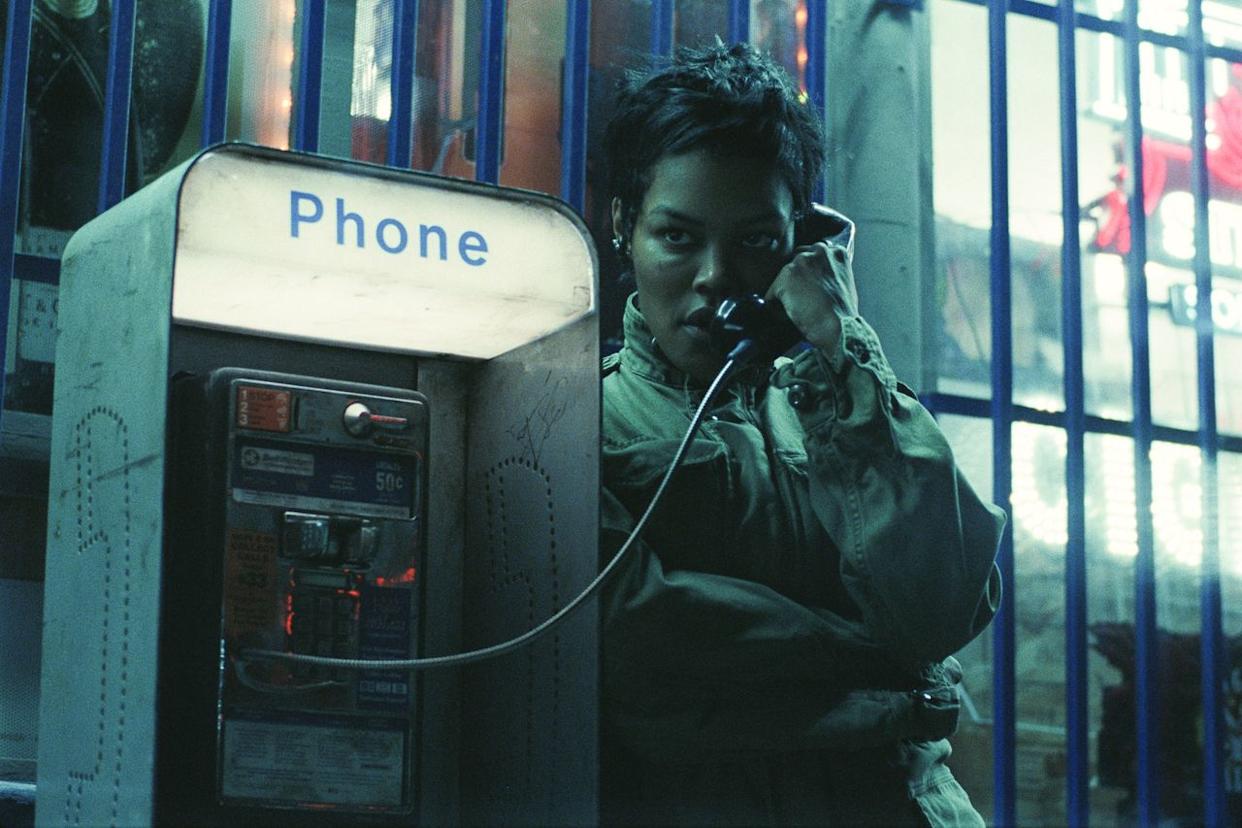
Perfidia lashes out in ways that might not make sense to outsiders looking in—but, as Taylor told the Los Angeles Times, they’re justified for a woman who feels “the least protected” out of anyone in society. “You see this woman be ignored,” the actress points out. “You see this woman be fetishized.” Her bravado is the result of that dehumanization: she chooses herself because she fears no one else will.
“It felt good to see a woman actually be selfish,” Taylor said of her Oscar-nominated role. “I know it’s probably tough to take in, but that’s what we got to see because everybody is not wearing capes.”
Taylor isn’t wrong: love her or hate her, Perfidia is a concerted response to another tedious trope, the Black Superwoman. That trope canonized the long-suffering, independent woman who powers through daily indignities with a selfless smile and virtuous grit—think Diahann Carroll in “Julia”—and it caused almost as much harm to our collective image as her messier contemporaries. Characters like Perfidia, like “Is God Is” sisters Racine and Anaia, might represent a pendulum swing more aggressive than seems necessary, but in so many ways their bluster is a matter of survival. There’s a pinch of Pam Grier, the patron saint of the blaxploitation era, in their need to fight violence with violence. What sets them apart from the Coffys and the Foxy Browns is, perversely, their selfishness. While they can take a page from their book and defend their community, this new class of Black vigilante defends herself first. Reparations are hers to claim, and the catharsis that stems from watching her work belongs to the Black female audience.
The rise of Afropessimism—the school of thought arguing that society was built on antiblackness—is another crucial ingredient here. If our dehumanization is the key to keep the world turning, and if it is built into the very fabric of the world order, then there’s nothing to do except tear it all down. In “One Battle,” that looks like insurrection and violent disruption; in “Is God Is,” it’s about dismantling toxic dynamics within the Black community itself. And in Honey, a new novel from Imani Thompson, that very theory becomes the justification for a murder spree: her femme fatale, a doctoral student at Cambridge, kills men to balance the scales in “the spectacle of Black death.” In the hands of better writers, “The Boys” might have also tackled Afropessimism through the lens of the superhero genre. In its final season, Susan Heyward’s Sister Sage briefly tries to bring about the end of the world solely to get some peace. Her nihilistic motivations are perversely… kinda relatable. (I’m not a psychopath, I promise—in fact, it’s because characters like these exist that I know I’m not alone in my exasperation).
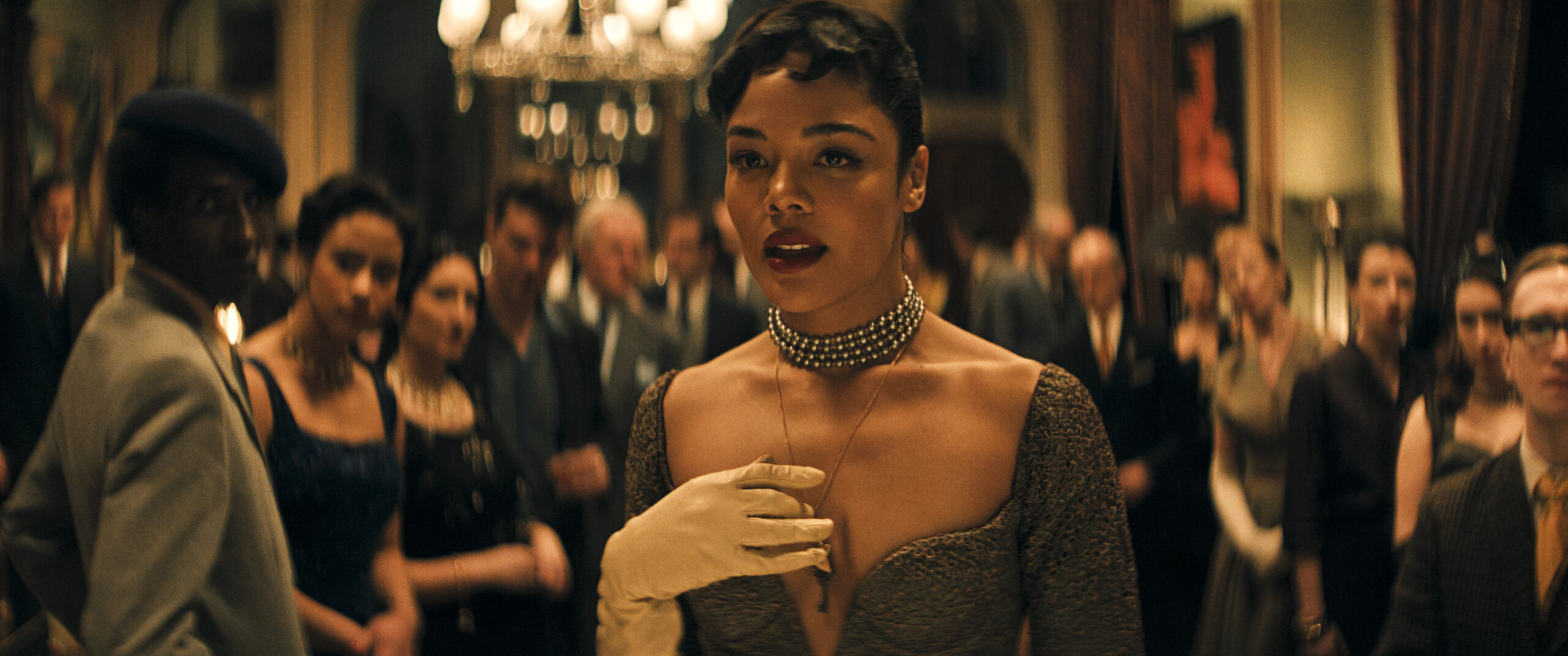
It’s not always about textbook violence, though. In Nia DaCosta’s “Hedda,” societal payback can be as simple as one bored housewife (Tessa Thompson) ritualistically humiliating the affluent guests at her housewarming party. Boots Riley’s “I Love Boosters” follows a disenfranchised girl gang as they get their lick back against an exploitative Bay Area designer. In HBO’s “Industry,” it’s a genius mixed-race Black woman (Myha’la) climbing the ladder the same way a privileged, white finance bro would. There is room for a kaleidoscope of characters in this new category; room for messiness, mistakes, and humanity. “I think that’s really what builds empathy,” DaCosta told Refinery29 in 2025, “not making a small box for ourselves that we have to fit into.”
The parameters that define this newfound trope are still being drawn, but it’s definitely not for Black female characters who make themselves small for their white counterparts—that, or those who lack a complex inner life. It’s the latter, especially, that’s kept promising vehicles like the otherwise riotous “They Will Kill You” from making a real mark. Kristoffer Borgli’s “The Drama” likewise fails its female lead. The film glances at the idea that a Black girl, isolated and bullied at her majority-white school, would adopt a form of violence that white men have all but trademarked without unpacking why—and that lack of curiosity feels like a slap in the face. Even “Industry” is teetering into exploitation after its fourth season, which strips Myha’la’s Harper Stern of most of her interiority, using her instead to prop up the characters in her orbit.
That disinterest isn’t always malicious, but it does speak to a flaw in the design of the Black female vigilante, at least when written haphazardly. Not every use of the trope is created equal, which makes the sudden, surface-level interest in it—particularly over “softer” explorations of Black femininity—a little concerning. Black heroines are still denied the girlhood that their white counterparts have monopolized in every medium that matters: film, TV, even TikTok. Refreshing as it is to see our anger brought to life in a new way, it can’t be the prevailing image of the Black woman. Otherwise, it’s the same tropes of yore, just with a trendy facelift; the harvesting of our pain with a splashier sheen.
Perhaps that’s why Harris’ debut works so well: “Is God Is” actually acknowledges that this cycle of violence can’t last forever. Finding an outlet for our anger is just one half of the equation, but where does it go once we’ve plugged in?
