
“Finnegan’s Foursome” is the fifth re-teaming of writer/director/star Edward Burns and co-star Brian d’Arcy James. They play brothers whose father was a golf pro who delighted in beating them in their cutthroat annual family golf tournament. In his will, he asked them to maintain the tradition and to spread his ashes in four meaningful locations. So, the two men bring one’s son and the other’s daughter to Ireland to play some very competitive golf and sort through some family conflicts.
In an interview with RogerEbert.com, Burns and James talk about their real-life friendship, why stories about siblings are so meaningful, and how Broadway musical star and five-time Tony nominee James prepared himself for one of the film’s highlights, a gorgeous performance of the bittersweet Irish folk ballad “Parting Glass.”
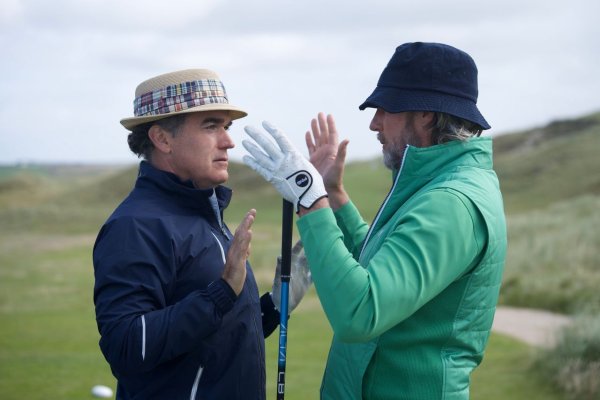
This is your fifth film together. What keeps you coming back to each other?
BRIAN D’ARCY JAMES: When “The Brothers McMullen” came out, that was right when I started my New York time here. So, I’ve been a fan of Ed Burns from the beginning. And then to get to know him and to see his dedication to the thing that he loves, which is making movies, and his kind of relentless effort to tell the stories that he wants to tell, is very inspiring. I have learned from him to appreciate pursuing one’s own goals, which Eddie does beautifully.
One of the consequences of working together is getting to know someone, and I’m happy to report that I would love to spend all the time with Eddie Burns. It’s a nice combination of things, the friendship and also the work that gets this done.
EDWARD BURNS: So much so that we’re playing golf together on Thursday.
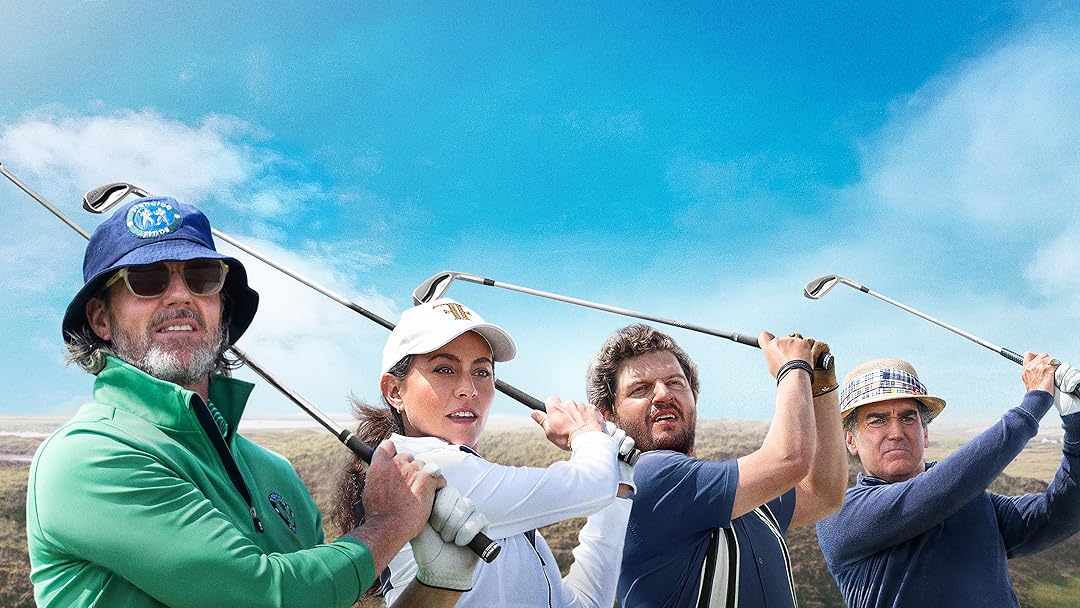
Are you as good at golf in real life as you are in the movie?
EB: Absolutely not, no. Editing works wonders.
But I want to tell you about Brian. I met Brian when I was making a micro-budget feature. We shot a film in twelve days with no money, and Brian was friends with another actor in the cast, and she said she’s got somebody great for the part.
Bd’AJ: Shout out to Marcia Bennett.
EB: Brian drove himself out to Long Island. He had five scenes to shoot in one day, and he did it all in one day. Was the greatest guy, and we became friends ever since. When you’re an actor who will show up and do that on a film with that tiny budget, you’re there for all the right reasons, like you love what you do and you kind of appreciate the kind of movies that I’ve been trying to make for such a long time.
So, this is our fifth film together. I think part of why I was so excited to have Brian in the film and so thankful when he said, “Yes,” was that we became very good friends and have, like, a very easy way with one another. And I knew it was going to give me, as an actor, the freedom to feel comfortable playing the horse’s ass that I play in this movie. I knew I was in good, safe hands with my dancing partner, if you will. And then, as a filmmaker, I just knew Brian’s understanding of tone. This movie’s got a tricky tone because we’re playing with real emotions and grief, yet we’re letting ourselves get a little big at times with our comedy. That’s a tricky balance, so for all of those reasons, I knew Brian had to play this part.
Why do so many of your films explore sibling relationships? Why is that endlessly appealing to you?
The movies that I fell in love with as a young kid in film school were character-driven drama comedies, right? Many of those are films that revolve around families and family dynamics. Even when I think about the literature that I love, that’s what I like to read.
People say, “Write what you know.” I’ve almost never written anything that’s autobiographical, other than a novel that I wrote that came out last year, A Kid from Albemarle Road. This movie was inspired by an experience we had after my mom died during COVID. We couldn’t have a proper burial till like a year later. We ended up taking her ashes and distributing them all over New York City to the places that were important to her: her high school, the church where she was baptized, and the church where my parents were married. This movie is not autobiographical, but it was certainly inspired by real events in my life.

Brian, I was so happy that you got a chance to sing “The Parting Glass” in the film, and it is just beautiful.
BdAJ: I’d never heard that song, which is kind of sacrilegious to admit as an Irish American. It’s a beautiful song. And of course, the way it relates in the film to the passing of our father, to the grandchildren’s grandfather, and to having them sing it as well. It’s a great story point, but it’s also a nod to the pub culture in Ireland, where it’s not unusual for people to get up and sing a song, which I think is a beautiful, beautiful thing. When people sing, they’re most in touch with their vulnerabilities. And it’s really a unique view of a human being when all defenses are down, and you’re doing something as vulnerable as singing a song. There’s something inherently dramatic about that.
It was an interesting calibration of how to express a song on film rather than on stage. Being in a pub obviously is a more intimate gathering. But, also, you want to be mindful of how the song is coming across, not only as a tune, but also what the character is going through. It was super exciting to try to figure that out and deliver it in a way that would be helpful to the story.
Another stunning moment in the film is the murmuration. How did that come about?
EB: A friend of mine is Irish and lives just outside of Dublin. I was telling her about the screenplay I was writing, playing with ideas about an American family that is going to take their deceased father’s ashes back to Ireland. And she’s the one who said, “Oh, well, you’ve got to include a murmuration.” And I was unfamiliar with the murmurations. She explained it to me, and I said, “Oh, I love that.“ And then she explained to me that some people think it’s a sign from the other side. And I was like, “Oh, well, that is beautiful. Okay, so we’ll write that into the script.”
Your two characters are very competitive, and they really needle each other. Is that as hostile as it appears, or do they see it as affection?
EB: I don’t think there’s a genuine hostility at all, at least in my experience coming from an Irish-American family with a lot of sort of Irish-American friends. The way I tell Brian’s character in the film that I love him is to make fun of him and give him a hard time. To actually be upfront and honest with your emotions, like the father in the film says, “Like some Yank,” just isn’t something that we do. I say “I love you, Teddy” by insulting him.
BdAJ: The thing about siblings is that you can’t hide. All of your warts and all of your foibles and all of your misdeeds are in my head as well as his. So it’s fun to reveal those, especially to the next generation. If you’re putting on airs, if you’re trying to be something that you’re not, the sibling’s going to be the first one to say, “What are you doing? I know who you are.” I don’t think there’s true hostility. I think it’s just baked into their DNA. This is their love language.
What does this movie mean to you?
EB: I like the way Brian says it.
BdAJ: What this movie delivers is the idea that when you’re going through something that’s difficult, hopefully, you’re going to be able to lean on the people that you love the most, your family. In this case, you have four people who are literally walking through the past of their father and grandfather and honoring his wishes, but also dealing with their grief. The fact that they have each other is a beautiful thing. It is safe to let your guard slip and show your emotions, and you can heal by being with the people you love. Golf is a great metaphor that wraps all that up in a fun way. But at the end of the day, I think it’s really about a family leaning on each other to deal with something sad.