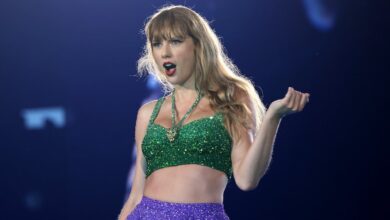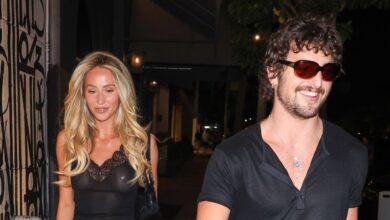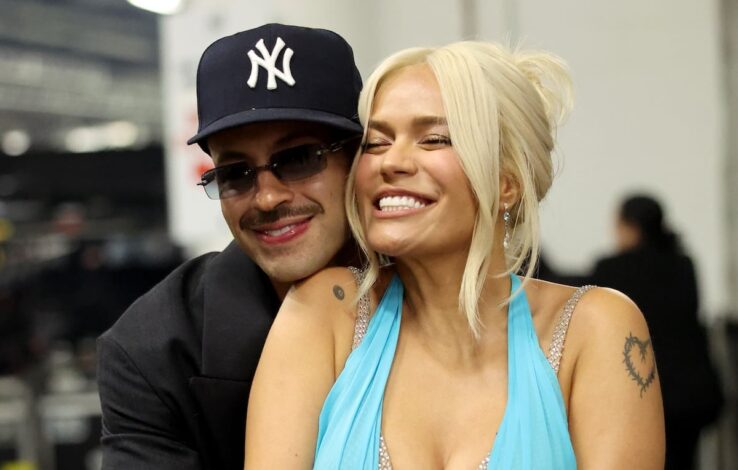
Karol G is opening up about her breakup from Feid after three years, her Latina identity, the inspiration behind her music, and lost love.
The 35-year-old Colombian pop star appears on the Summer 2026 digital cover of ELLE, out now.
During the conversation, Karol spoke about being a representative of Latin culture, growing up as a “tomboy” in Colombia because her parents expected to have a boy, what she said to the CEO of the company behind Coachella, and much more.
See highlights from the Karol G digital cover story…
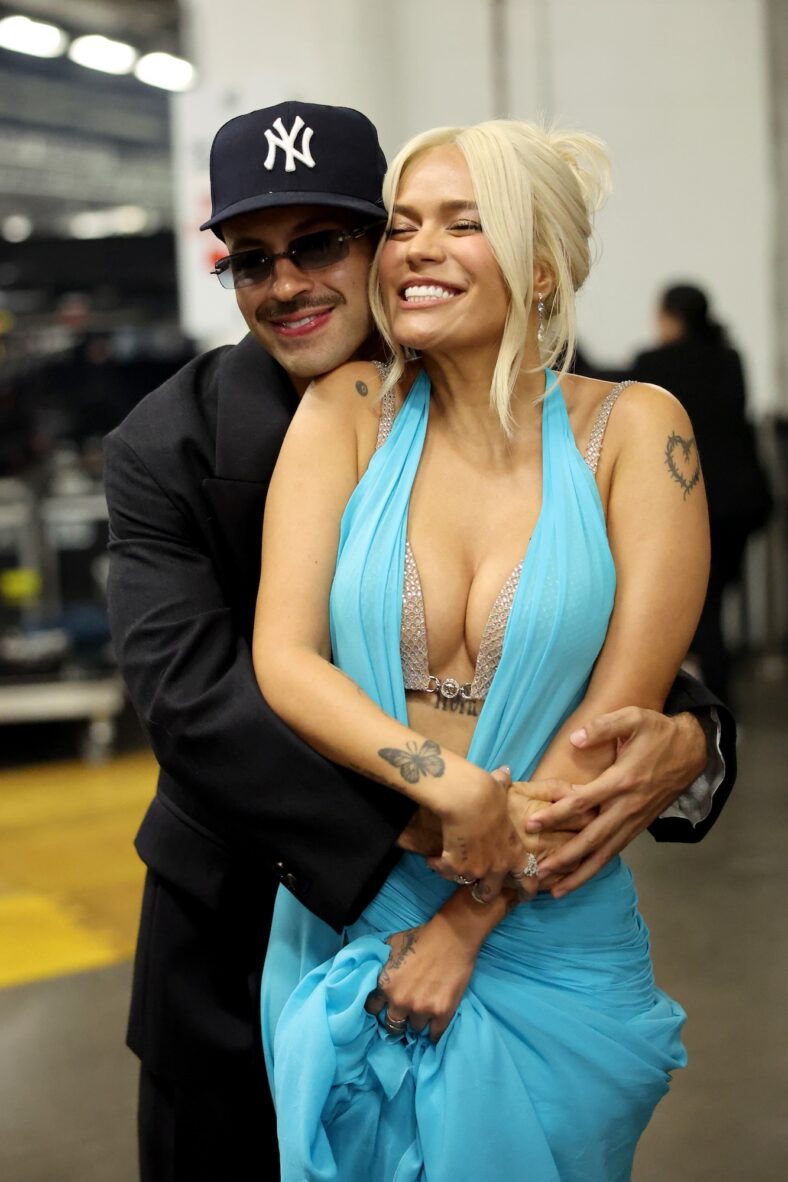
On her split from Feid after three years, which she maintains was due to misalignment and not a catastrophic series of events, and going to Hawaii for four weeks to grieve and unwind before the story went public:
“Before, I was trying to be a super powerful version of myself all the time. It was like I put on a shell, like an armor—‘I can handle it, nothing touches me, nothing gets to me.’ But you have to exist in all your versions in order to have that power. People say, ‘Why me? Why did I love him?’ No…I don’t want my fans to feel that they always have to be a bichota [“boss”]. I also want to teach them to live through sadness. When time passes and you see things more clearly, you say: ‘It had to happen to learn this, to understand this, to value this more.’”
On embracing her role as a representative of Latin culture:
“I wondered how I could be someone worthy of standing on those stages. I was always asking myself, ‘Who should I be? What kind of music should I make?’ I thought I had to be something else. But when I first played Coachella [in 2022], not on the main stage, [I realized that] what I wanted to do in my life was to represent who we are…as Latinos.”
On using her 2026 Coachella show to speak out for the Latin community:
“That felt like the first time in my life I really made a strong statement. I wanted to [show] people at every single concert that our [community] deserves those big stages. It wasn’t about transforming ourselves to fit into that space. It’s not really about me; I’m just a bridge, helping them feel proud of where they come from.”
On her conversation with Paul Tollett, CEO of Goldenvoice, the company behind Coachella, following her historic performance:
“I mentioned how crazy it was that it took 27 years [since] the festival [began] to finally bring a Latina to the stage as a headliner. So he came up to me. He was very kind. He said, ‘I should apologize.’ I didn’t want to make him feel bad, but he acknowledged that it was the reality.…Before me, there were so many who could have undoubtedly filled that spot. What if Daddy Yankee had headlined Coachella? Or Ricky Martin, Enrique Iglesias, Gloria Estefan, Shakira? The fact that I was the first one just feels wrong—it feels incorrect.”
On drawing inspiration from the 1992 feminist text, Women Who Run With the Wolves: Myths and Stories of the Wild Woman Archetype, for her Coachella performance:
“Many things I’ve done since were inspired by that book, often without me even realizing it. That ‘wild woman’ persona is a state we should all strive to reach. Reconnecting with ourselves, our intuition, our sensuality, and our sexuality—I wanted to bring that to the stage. And I wanted to capture our Latino essence: our history, our music, that fiery spirit we have. We come from a long history of resilience and rising up from adversity.”
On the deeply personal inspiration behind her collaboration with Cigarettes After Sex frontman Greg Gonzales on the song “Después de Ti”:
“[‘Después de Ti’] came from a love that was lost, without me even knowing it was lost yet—after that, I kept pursuing that love. Then I had a little cousin who died. And when I spoke to his mother, she said things that were exact phrases from my song. I feel it can be for someone who went to heaven, or for people who are no longer together. It resonated with Greg, because of a personal loss he had also experienced. We clicked immediately.”
On growing up as a self-described “tomboy” in Medellín, Columbia, and her parents expecting her to be a boy:
“So for a large part of my life, I dressed like one. I think it comes from them calling me Tomás all the time [what they would have named a son]. But I admired [Mexican pop stars] Thalía and Selena Quintanilla. I was so far from seeing myself like that then. It wasn’t that I wanted to re-create what they did, but I wanted to understand why it connected with me.”
On revisiting the version of herself before fame:
“I was the ultimate romantic. Back then, it was still cool to dedicate songs [to your crush] over the phone. I used to leave letters—I went a bit overboard, I was a little cheesy. But how incredible it was to be dramatic and romantic. How incredible it was to cry over a song, even when you didn’t really know what heartbreak was yet!”
For more from Karol G, head to elle.com.
Posted To:Feid Karol G Music