The bottle episode is a time-honored TV tradition. Taking advantage of lower production costs and increased chamber drama, this kind of episode keeps its characters in one location from beginning to end. By stripping away elaborate locations and distractions, these episodes force the writing, performances, and character dynamics to take center stage. Think of it like a ship in a bottle, where the “ship” is the cast of “Friends” and the “bottle” is Monica’s apartment.
Now, let’s take the bottle episode and raise the stakes by trimming the fat. Some episodes are so tightly contained that they never leave a single room. No movement from a living room to a kitchen. No leaving a house for some fresh air before going back in. In these episodes, the characters are stuck. And so, too, is the viewer, glued to the couch by the compelling episode they’re watching.
Across sitcoms, dramas, and thrillers alike, writers have repeatedly proven that a single room can be more than enough space to tell an unforgettable story. If you’re ready for some special episodes that do a lot with a little, check out the 15 best TV episodes set in just one room.
Archer Vision Quest (Season 6, Episode 5)

Many “Archer” episodes have the brisk pace and globe-trotting scope of a classic spy adventure. But one of its finest half-hours unfolds in a location that literally can’t go anywhere.
Getting stuck in an elevator is a hackneyed sitcom plot that “Vision Quest” indulges in with full force and commitment. Mallory (Jessica Walter) summons the entire intelligence agency formerly known as ISIS for an early morning team-building exercise. But when the elevator gets stuck near the top of the building, nearly every major “Archer” character is forced into a very different kind of team-building exercise.
At their core, the best sitcoms place their characters as close as possible to each other and luxuriate in the chemistry of its cast popping off jokes. Remove every possible distraction, and all that’s left is dialogue, timing, and character dynamics. When “Archer” operates in this mode, as it does in “Vision Quest,” it’s like watching a comedy masterclass, especially as the characters become increasingly unhinged and turn on one another.
Black-ish Hope (Season 2, Episode 16)
A bittersweet episode of television that sadly never seems to lose its relevance, “Hope” is “Black-ish” at its most powerful. It channels the spirit of Norman Lear’s classic sitcoms, diving into social issues with equal parts humor and pathos. Its single-room setting also makes the single-camera comedy feel more like a classic multicamera sitcom, or even a piece of theater.
The Johnsons, spearheaded by one of the best Black TV couples, Dre (Anthony Anderson) and Bow (Tracee Ellis Ross), are in their living room, watching news coverage of a court case involving police brutality committed against a Black teenager. When the disappointing but unsurprising verdict arrives, the Johnsons process their emotions in real time. That’s all the episode needs, using the familiar framework of a family sitcom to spark conversations that are, or should be, happening in living rooms across the country.
Of particular dramatic punch is the episode’s struggle with how to speak to children about such generational trauma. Should we preach righteous anger, resigned pessimism, or unfettered optimism? The episode’s title may hint at its conclusion, but the journey is still well worth taking.
BoJack Horseman Free Churro (Season 5, Episode 6)
“BoJack Horseman” is a show full of emotional gut punches, a cartoon more than willing to make you cry. In “Free Churro,” series creator Raphael Bob-Waksberg achieves that by stripping away everything except a single setting and one voice actor: Will Arnett, who plays the title role.
No one else speaks in the episode; even a brief table-setting flashback features Arnett voicing BoJack’s father, Butterscotch. After that vignette, BoJack attends his mother’s (voiced by Wendie Malick in the rest of the series) funeral, delivering a rambling eulogy filled with tangents, sadness, rage, and a desperate search for closure. It’s effectively a one-man show (or, perhaps more accurately, a one-Horseman show) of staggering power, one that deservedly earned Arnett an Annie Award.
It reminds one of Robert Altman’s “Secret Honor,” a one-man play depicting Richard Nixon (Philip Baker Hall in the film adaptation) at a moment of crisis, raging against the dying light through his abandoned home. “Free Churro” plays with a similar level of anguish and righteous anger, with its resolution ringing particularly authentic for anyone who’s dealt with a toxic family member.
Breaking Bad Fly (Season 3, Episode 10)
“Breaking Bad” usually moves at a breakneck pace, with Walter White’s (Bryan Cranston) climb up the New Mexico meth trade leaving a growing trail of bodies in its wake. Then, in Season 3’s “Fly,” one of the best episodes of “Breaking Bad,” everything screeched to a halt as Walter and Jesse (Aaron Paul) tried to find a literal fly in the ointment.
Besieged by insomnia, Walter insists that he and Jesse can’t cook another batch until they find and kill a pesky fly buzzing around the lab, convinced that even the slightest contamination is too great a risk. So the pair spend the day stalking the lab, determined to kill the bug even if the effort nearly kills them.
Directed with characteristic flair by Rian Johnson, this deceptively simple premise smuggles a deeply character-driven exploration into a series that’s usually propelled by plot, building toward a metaphor Walt eventually says out loud. It’s a grim and devastating episode precisely because of its mordant, occasionally slapstick sense of humor. Few episodes have translated the adage that “crime doesn’t pay” into something so artful and emotionally resonant.
Community Cooperative Calligraphy (Season 2, Episode 8)
“Community” is often a television show about being a television show (though there are other television shows like it, too). Its characters, particularly Abed (Danny Pudi), have as layered and intelligent media literacy as you, dear TVLine reader. So it’s fitting that, in the Season 2 bottle episode “Cooperative Calligraphy,” the characters literally announce that they’re doing a bottle episode.
The episode is sparked by a deliberately flimsy premise. Annie (Allison Brie) is missing her pen, and assumes that one of her ungrateful study mates took it. So the gang turns their study room into a psychological torture chamber, throwing around accusations of petty theft with the grandest of commitment.
The episode isn’t just a nifty metafictional experiment. It dives into the hearts and sometimes unstable emotions of its characters with unprecedented depth. And of Jeff Winger’s (Joel McHale) many inspirational speeches, this one has particular staying power for its blend of sentiment and absurdity.
Family Guy Brian & Stewie (Season 8, Episode 17)
No non sequitur cutaways. No fast-paced references. For one half-hour, “Brian & Stewie” pumps the brakes on “Family Guy,” giving it one of its best episodes in the process.
As the title suggests, the episode only features talking dog Brian and talking baby Stewie, both voiced by series creator Seth MacFarlane. The pair are accidentally locked in a bank vault over a weekend and get into a series of arguments and revelations that deepen, and potentially undermine, their relationship.
Typically, “Family Guy” will do anything for a joke. But in “Brian & Stewie,” the best parts of Gary Janetti’s script are deadly serious, even morbid. There is deep pain and ample empathy in these characters, and MacFarlane’s dual performances are sensitive and stinging in equal measure.
But, to be clear, it’s still “Family Guy.” The episode opens with a staggering, disgusting display of toilet humor that this writer can’t even summarize without gagging. The tonal whiplash gives the episode even more intrigue; as its characters are at odds with each other, so too are the show’s own creative impulses.
Frasier My Coffee With Niles (Season 1, Episode 24)
“Frasier,” one of the best ’90s shows, referenced the similarly erudite film “My Dinner With Andre” in this brilliant season one finale.
Like that film, “My Coffee With Niles” is comprised of a conversation between two men. Brothers Frasier (Kelsey Grammer) and Niles Crane (David Hyde Pierce) meet for their daily coffee and talk about everything and anything. Is Niles developing feelings for Daphne (Jane Leeves)? Is Frasier getting what he wants out of his move to Seattle? And is either brother truly happy?
Many of the best “Frasier” episodes move with the energy and plot machinations of a farce. But “My Coffee With Niles” plays with a slower pace, allowing its brilliant performers room for discovery and quiet playfulness. It’s often laugh-out-loud funny, but it’s also willing to sit in stillness and even discomfort. It makes for compelling television, and even though you can guess how Frasier’s existential questions will be answered (given that there are several more Seasons to go), you’ll be locked in along the way.
Friends The One Where No One’s Ready (Season 3, Episode 2)
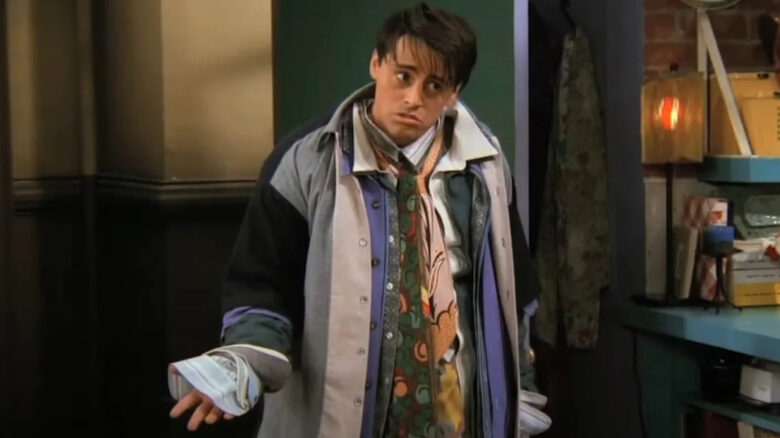
The essential “Friends” episode “The One Where No One’s Ready” is packed with so much classic iconography, comedic conflict, and cultural lightning (“going commando,” anyone?) that it feels like an entire season of television smushed into one episode — and into one room.
Ross (David Schwimmer) has an important work event he wants all his friends to attend. Besides Phoebe (Lisa Kudrow), no one is ready. And soon, she, too, will be discombobulated, so fast and furious are the interpersonal and physical shenanigans that fly throughout Ira Ungerleider’s script, getting more and more in the way of Ross’ nice night.
This is a fleet, surprising, and constantly funny episode, with each “Friend” having at least one wheelie pop. These moments all compound atop each other, feeling both fresh yet lived in, understandably motivated yet absurdly heightened. It also has a sweet and sexy resolution moment for one of the great will-they-won’t-they TV couples, Ross and Rachel (Jennifer Aniston), tying many of the episode’s knots back together neatly.
Homicide: Life on the Street Three Men and Adena (Season 1, Episode 5)
“Homicide: Life on the Street” is one of the best police procedurals of all time, a work of uncompromising intensity in form and content. It stands to reason, then, that its one-room episode — set entirely in an interrogation room — radiates with anxiety, authenticity, and straight-up ugliness (in the best way possible).
“Three Men and Adena” stars regular “Homicide” detectives Kyle Secor and Andre Braugher interrogating guest star Moses Gunn as alleged child murderer Risley Tucker. Secor and Braugher are desperate to get a confession out of him before a 12-hour deadline expires, or he’ll legally walk free.
With this simple setup and ticking clock, these characters walk to the edge of humanity’s darkest abyss before ruthlessly pushing each other in. Tom Fontana’s script is grim and uncompromising, with Gunn especially plumbing the depths of a broken man to devastating effect. You may need a shower after watching “Three Men and Adena,” but for fans of hardboiled crime television, few other episodes meet its peak.
Mad About You The Conversation (Season 6, Episode 9)
All of these episodes take place in one room. But the Season 6 “Mad About You” episode “The Conversation” takes this minimalist approach one step further, presenting its events in one unbroken 20-minute shot. NBC played ball, too, originally airing it without commercial interruption for maximum effect.
Any new parent will immediately understand the core of this episode: Jamie (Helen Hunt) and Paul (Paul Reiser) have just put their infant daughter to bed, and they are trying the Ferber method for the first time. For those who aren’t new parents, the Ferber method involves letting a child cry and soothe themselves to sleep rather than immediately entering the room to comfort them. As you might imagine, this activates and aggravates Jamie and Paul, leading to a deep, titular conversation outside of their daughter’s room.
Their conversation doesn’t just traffic in the usual sitcom humor; both characters confront surprising, difficult truths and assumptions about each other and how they want their family to move forward. It’s the best kind of sitcom episode, one that takes a seemingly mundane, domestic issue and expresses it with the emotional magnification it deserves.
Maude The Analyst (Season 4, Episode 9)
When writing the aforementioned “BoJack Horseman” episode “Free Churro,” Raphael Bob-Waksberg cited the “Maude” episode “The Analyst” as a key inspiration, saying it was helpful to structure his episode’s monologue “in terms of A/B/C stories so it’s not just this stream of consciousness thing.”
Interestingly, “The Analyst” is ostensibly framed, though not fundamentally constructed, as a “stream of consciousness thing.” Maude (Bea Arthur) sits in her therapist’s (Gene Blakely) office and talks about any and everything that comes to mind. As one often does in therapy, she zeroes in on her difficult feelings about her parents, connecting those emotions to her upcoming 50th birthday.
One of Norman Lear’s best TV shows, “Maude” is no stranger to theatrical, drama-tinged episodes; one could argue that’s Lear’s secret sauce. But even with that precedent, “The Analyst” goes for the jugular, giving Arthur a show-stopping performance that will make you want to reach through the TV and give her a hug.
Room 104 My Love (Season 1, Episode 12)
Thus far, this list has covered special one-room episodes of shows that otherwise cut between multiple locations as needed. But “Room 104” is that rare one-room series. The experimental anthology show, created by indie filmmakers Jay and Mark Duplass, allows its creative team ample room to play with tone and genre, so long as all the action takes place in a single motel room.
It’s difficult, then, to highlight just one episode of the four-season series, given that each one feels dramatically different. But Season 1’s “My Love” is a particularly strange, touching half-hour. It stars veteran actors Philip Baker Hall and Ellen Geer as a long-married couple celebrating their anniversary by recreating their wedding night. But when tragedy strikes, Hall gets a chance to recapture some of that “Secret Honor” mojo, albeit in a quieter, more understated key.
The episode alternates between queasiness and pathos, pulling the viewer in with both. But at the end of the day, if it doesn’t make you cry, your heart is made of stone.
Sealab 2021 All That Jazz (Season 1, Episode 9)
“All That Jazz” is a particularly surreal and stupid (complimentary) episode of “Sealab 2021,” even by that nascent Adult Swim series’ sublimely surreal and stupid standards. It also pulls a neat structural trick; while it does take place in one room, it makes a couple of startling timeline jumps.
In the episode, cowritten by “Archer” creator Adam Reed alongside a motley crew of Adult Swim creatives, Captain Murphy (Harry Goz) enters a private security vault to enjoy a Bebop Cola vending machine stocked with jazz-flavored sodas (including Mingus Dew, a combination of Mountain Dew and Charles Mingus). When the machine won’t dispense the right soda, Murphy attacks it, causing it to topple over and trap him beneath it. And there he sits for at least a year.
A collection of absurd complications ensues for the poor, stuck Captain, each one funnier than the last. It’s a particularly delightful episode for voice actor Goz, too, who uses his natural gravitas to react to the dumbest of circumstances with commitment and glee.
Perhaps, like a can of Mingus Dew, “All That Jazz” is an acquired taste. But if you can get on its wavelength, it’ll make you cry laughing.
Seinfeld The Chinese Restaurant (Season 2, Episode 11)
Is “Seinfeld” really a show about nothing? Or is it a show that turns even the smallest of observations and dysfunctional circumstances into something worth exploring? The Season 2 episode “The Chinese Restaurant” clearly and compellingly makes the case for the latter.
Jerry (Jerry Seinfeld), Elaine (Julia Louis-Dreyfus), and George (Jason Alexander) want to eat some dinner at a Chinese restaurant before a movie. As they wait for a table, they each get caught up in their own issues that spiral out of control like a snowball turning into an avalanche.
And that’s it! They never leave the restaurant, they never make it to their movie, and — spoiler alert for a 30-year-old sitcom — they never even get a table. “The Chinese Restaurant” is a series of existential crises and absurdist nosedives smuggled into a network TV comedy. It’s Luis Buñuel and Jean-Paul Sartre filtered through Jerry Seinfeld and Larry David. It’s one of the high watermarks of the great New York City-set show, about everything by being about nothing.
The Twilight Zone Five Characters in Search of an Exit (Season 3, Episode 14)
Speaking of Sartre: his play, “No Exit,” inspired the haunting and claustrophobic “Twilight Zone” episode “Five Characters in Search of an Exit,” written by series creator Rod Serling.
The titular five characters are all archetypes identified only by their most obvious signifiers, without any apparent interior life or complexity. They’re all stuck in an amorphous metal structure; think “Silo,” if its characters didn’t know they were in a silo. And spurred by an Army Major (William Windom), they try their best to escape while trying their best to understand why they’re stuck there.
This simple, one-room setting (if you can call an amorphous metal structure a “room”) allows Serling to explore big, even overwhelming ideas about humanity’s relationship with good and evil, life and the afterlife, faith and cynicism. It also packs, as many “Twilight Zone” episodes do, a ground-shifting twist ending, one that might bring tears to your eyes at the same time as one of the characters’.